Opening Perspective
Ice melting in polar regions and glaciers is one of the clearest indicators of climate change. The Arctic and Antarctic regions contain vast ice sheets that regulate global sea levels and climate patterns. As temperatures rise, these ice sheets are shrinking at an unprecedented rate. Melting ice has serious environmental consequences. Rising sea levels threaten coastal communities, increased freshwater input affects ocean ecosystems, and changes in ice coverage influence global weather patterns. Scientists have been studying these changes for decades, but traditional research methods often struggle to capture the full complexity of ice dynamics. Artificial Intelligence (AI) is transforming the way researchers study ice melting. By analyzing satellite imagery, climate data, and environmental models, AI provides deeper insights into how and why ice is changing. These insights help scientists predict future trends and develop strategies to address climate challenges. In a world where environmental knowledge drives effective decision-making, AI-powered ice research represents a major advancement in climate science.
The Importance of Studying Ice Melting
Ice sheets and glaciers play a crucial role in the Earth’s climate system. They reflect sunlight, helping regulate global temperatures. When ice melts, darker surfaces such as ocean water or land are exposed, absorbing more heat and accelerating warming. This process, known as the albedo effect, contributes to climate change. Melting ice also influences sea levels. As glaciers and polar ice sheets lose mass, water flows into oceans, causing sea levels to rise. Coastal cities and island nations are particularly vulnerable to this phenomenon. Even small increases in sea levels can lead to flooding, infrastructure damage, and population displacement. Additionally, ice melting affects ocean circulation. Large amounts of freshwater from melting ice can disrupt ocean currents, which play a key role in regulating global climate. Changes in these currents may impact weather patterns and ecosystems. Understanding ice melting is therefore essential for predicting environmental changes and developing climate adaptation strategies.
How AI Enhances Ice Research
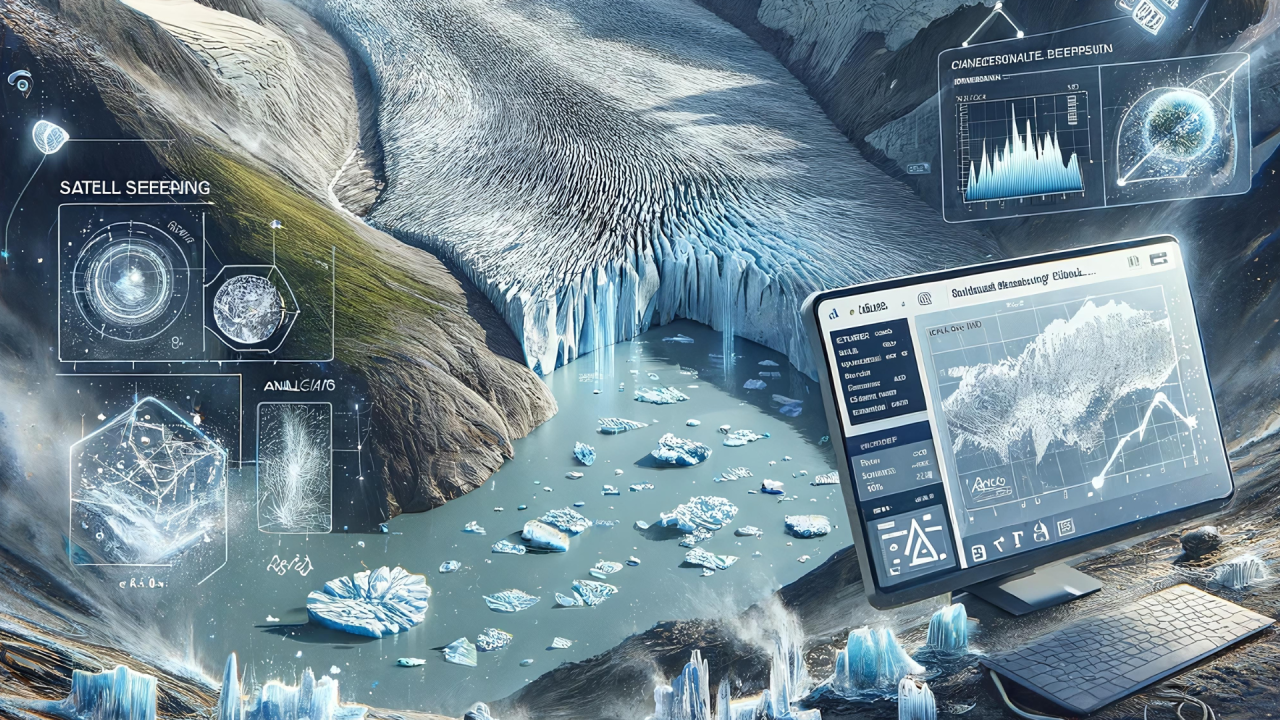
Studying ice dynamics requires analyzing vast amounts of environmental data. Satellite images, temperature records, and climate models generate enormous datasets that are difficult to process using traditional methods. AI excels at analyzing large datasets and identifying patterns. Machine learning algorithms can process satellite imagery to detect changes in ice coverage and movement. By comparing images taken over time, AI systems measure how ice sheets are shrinking or shifting. For example, satellites capture high-resolution images of glaciers and polar regions. AI analyzes these images to identify areas where ice is melting. Researchers can then quantify ice loss and track trends across different regions. AI also integrates data from multiple sources. Temperature measurements, ocean conditions, and atmospheric data are combined to create comprehensive models of ice behavior. This holistic approach improves scientific understanding of ice dynamics. By automating data analysis, AI allows researchers to focus on interpretation and strategy rather than manual data processing.
Satellite Technology and AI-Driven Analysis
Satellites provide essential information about Earth’s environment. They monitor ice coverage, surface temperatures, and geological changes across vast regions. However, satellite data is complex and requires advanced analysis techniques. AI-powered systems process satellite imagery to detect subtle environmental changes. For instance, small cracks in ice sheets may indicate structural instability. AI algorithms can identify these cracks and assess the risk of further ice breakup. Machine learning models also measure ice thickness and movement. By analyzing radar and laser-based satellite data, AI estimates how much ice is being lost and how quickly it is melting. This capability is particularly valuable in remote polar regions where ground-based observations are limited. Satellite data combined with AI analysis provides scientists with continuous, global monitoring of ice conditions. Such insights enhance climate research and improve predictions of future environmental changes.
Predicting Future Ice Loss
One of AI’s most important contributions to climate science is predictive modeling. By studying historical data and current environmental conditions, AI systems can forecast future trends in ice melting. Machine learning algorithms analyze relationships between temperature changes, ocean conditions, and ice behavior. These models help scientists estimate how ice sheets may respond to rising global temperatures. For example, if historical data shows that ice melting accelerates during specific temperature thresholds, AI can use this information to predict future melting scenarios. Researchers can then assess potential impacts on sea levels and ecosystems. Predictive models support long-term environmental planning. Governments and organizations can use these insights to develop adaptation strategies, such as infrastructure improvements and coastal protection measures. AI-driven predictions help societies prepare for environmental changes before they become severe.
Supporting Climate Research and Environmental Policy
Scientific research informs environmental policy. Governments rely on accurate data to develop strategies for climate adaptation and sustainability. AI enhances this process by providing detailed insights into environmental trends. Researchers use AI-generated data to study climate patterns and evaluate policy effectiveness. For example, if a region implements climate mitigation measures, AI can analyze environmental data to determine whether those measures are reducing ice loss. These insights support evidence-based decision-making. Policymakers can use AI-driven research to develop strategies that address climate challenges effectively. International collaboration also benefits from AI technology. Researchers and institutions around the world share data and models, improving global understanding of climate systems. By fostering scientific cooperation, AI contributes to collective environmental progress.
Challenges in AI-Based Ice Research
Although AI offers powerful analytical capabilities, there are challenges in its application. High-quality environmental data is essential for accurate analysis. In some regions, limited monitoring infrastructure may restrict data availability. Satellite systems and environmental sensors provide valuable information, but data gaps can affect predictive accuracy. Researchers must continuously improve data collection methods to enhance AI performance. Computational resources are another consideration. AI models require significant processing power to analyze large datasets. Developing efficient algorithms and infrastructure is important for scalable solutions. Additionally, AI is a tool that complements human expertise rather than replacing it. Scientists and environmental professionals interpret data and apply knowledge to real-world challenges. Successful ice research requires collaboration between technology and human expertise.
The Future of AI in Climate Science
The role of AI in environmental research will continue to expand. Advances in machine learning, satellite technology, and data analytics will improve scientific understanding of climate systems. Future AI models may provide real-time global monitoring of ice conditions. Continuous data analysis will enable scientists to detect environmental changes early and respond effectively. Integration with other technologies will further enhance research capabilities. Drones, autonomous sensors, and advanced climate models will complement AI-driven analysis. These innovations will support more accurate predictions and informed environmental strategies. By advancing scientific knowledge, AI contributes to global efforts to address climate change and protect natural ecosystems.
Closing Thoughts
Ice melting is a critical indicator of environmental change. Understanding its causes and consequences is essential for climate science and policy development. Artificial Intelligence is transforming ice research by analyzing complex datasets and providing deeper insights into environmental trends. From satellite imagery to predictive modeling, AI enhances scientific capabilities and improves decision-making. However, technology alone is not sufficient. Effective climate action requires collaboration between governments, researchers, and communities. AI provides valuable information, but human commitment drives meaningful environmental progress. By combining innovation with sustainable practices, societies can address climate challenges and work toward a more resilient future.