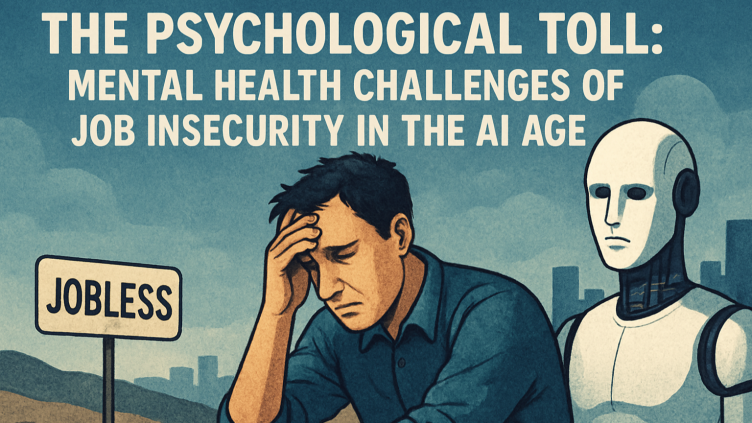
In the race toward automation and digital transformation, one aspect is often overlooked: the emotional cost to workers. As AI and automation disrupt industries, workers around the world are grappling with a new kind of uncertainty one rooted not in present hardship, but in future irrelevance.
Job insecurity has always existed. But AI makes it existential. When your replacement is not another human, but a system that never sleeps, doesn’t take breaks, and keeps getting smarter the anxiety can be overwhelming.
Article content
The Invisible Stress of Automation:
Unlike layoffs or downsizing, AI-related displacement often happens quietly. A role becomes more automated. A task is reassigned to software. A manager hints at "reskilling." For workers, this slow erosion of relevance creates chronic stress. It’s not the loss of a job that hurts most it’s the constant fear of losing it.
This form of stress, sometimes called “anticipatory unemployment,” affects sleep, concentration, motivation, and overall well-being. Workers may experience feelings of helplessness, disengagement, or even burnout not because they’ve been replaced, but because they’re waiting to be.
The Pressure to Always Be Learning:
In today’s workplace, adaptability is the new security. But the expectation to constantly learn and evolve, while necessary, also comes with its own psychological burden. Workers are told to "embrace AI," "learn coding," "reskill themselves" often with little guidance or support.
For some, this challenge is invigorating. For others especially mid-career professionals, single parents, or those in underserved communities it can be exhausting, even paralyzing. The mental load of keeping up becomes a job in itself.
Identity and Purpose in Flux
Work is more than a paycheck. It’s where people find structure, status, social interaction, and a sense of purpose. When AI threatens to take away a role, it also threatens identity. What does it mean to be a teacher, a journalist, or a driver when software can do parts of your job better or faster?
Even when new opportunities arise, identity doesn’t transfer overnight. A laid-off radiologist doesn’t immediately become a data analyst. A cashier displaced by automation doesn’t instantly become a customer success manager. The emotional journey is often long, and its toll is real.
Mental Health Support Must Be a Priority
Organizations need to recognize that technological change is emotional change. As they invest in AI tools, they must equally invest in mental health infrastructure: accessible counseling, stress management training, change coaching, and open channels of communication.
Government policies and educational programs must also integrate mental health into their workforce development strategies. It’s not enough to reskill people we must also support their emotional resilience as they navigate change.
Technology will reshape the future of work. But only by tending to the human side of disruption can we make that future truly sustainable and humane.
Log in with a verified account to post comments.
Log in · Register
Comments