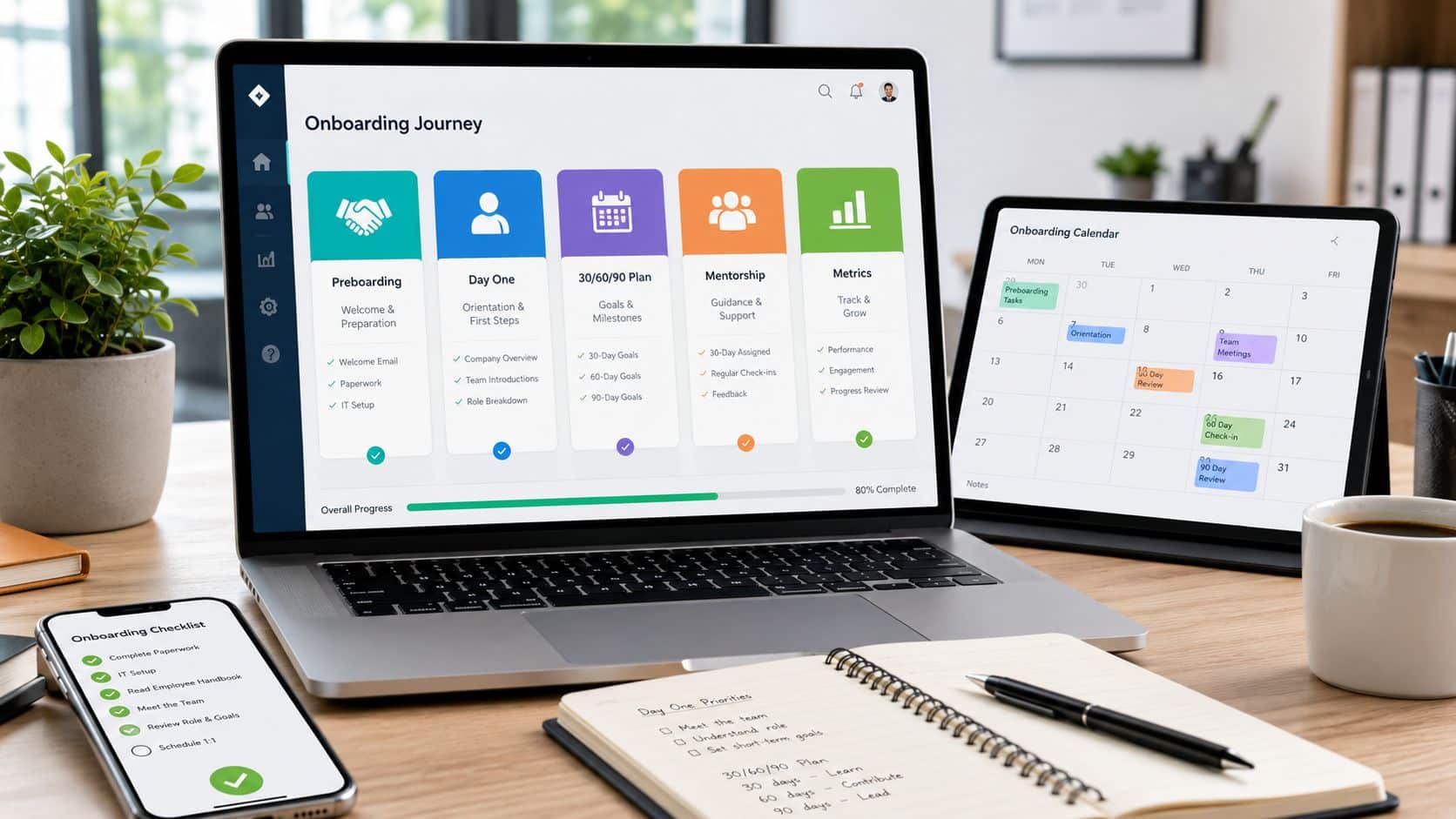
The First 90 Days with an Offshore Development Team: A Practical Onboarding Framework
Engaging an offshore development team can help businesses increase engineering capacity, access specialized technical skills, accelerate software delivery, and manage technology costs. However, the success of an offshore development partnership depends on more than selecting developers with the right technical expertise.
The first 90 days are particularly important. During this period, businesses establish working relationships, communicate expectations, introduce development processes, transfer technical knowledge, and determine how effectively the offshore team can contribute to project objectives.
Without a structured onboarding process, organizations may experience unclear responsibilities, delayed development, communication gaps, inconsistent code quality, and disagreements about deliverables. Even technically capable developers can struggle when requirements are poorly documented or access to essential systems is delayed.
A practical onboarding framework helps businesses avoid these problems by introducing the offshore team progressively, from initial planning and knowledge transfer to active development and performance evaluation.
For companies in Europe, Singapore, Hong Kong, and other international markets working with offshore software development partners, the objective is to establish a reliable engineering relationship that supports long-term business goals.
This article presents a practical 90-day framework for onboarding an offshore development team, with specific activities, milestones, responsibilities, and performance indicators for each phase.
Why the First 90 Days Matter
The initial months of an offshore development engagement establish the foundation for future collaboration.
During this period, developers learn how the business operates, how its software is structured, which technical standards must be followed, and how engineering decisions are made. The client also learns how the offshore team communicates, estimates work, manages dependencies, and responds to feedback.
Both sides need time to establish a shared working model.
A structured onboarding process helps organizations:
- Reduce delays caused by incomplete documentation and access issues.
- Align offshore developers with business objectives and product priorities.
- Establish consistent development, testing, and deployment practices.
- Clarify roles, responsibilities, and decision-making authority.
- Build effective communication across geographical and time-zone differences.
- Identify technical risks before they affect major delivery milestones.
- Evaluate the suitability of the engagement model.
- Establish a measurable basis for continuous improvement.
The first 90 days should not be treated as a period in which the offshore team must immediately deliver maximum output. Instead, the goal is to build the conditions for sustainable productivity, reliable delivery, and effective collaboration.
The appropriate pace depends on the complexity of the software, the experience of the developers, the quality of existing documentation, and the level of access required.
Phase 1: Days 1–30 — Establish the Foundation
The first month focuses on alignment, onboarding, technical understanding, and the establishment of working practices.
Businesses should avoid assigning substantial development responsibilities before the offshore team understands the project context and has access to the systems required to perform its work.
1. Define Business Objectives and Success Criteria
Before development begins, the client should communicate why the offshore team has been engaged and what the business expects to achieve.
For example, a SaaS company may be engaging offshore developers to accelerate product development, reduce a feature backlog, build new integrations, or improve application performance.
Each objective requires a different approach to onboarding and performance measurement.
If the objective is to accelerate product development, the onboarding plan should emphasize the product roadmap, existing backlog, development workflow, and release schedule.
If the objective is to modernize a legacy application, the team will need a deeper understanding of the existing architecture, technical debt, dependencies, and migration risks.
The client and development partner should agree on measurable objectives.
These may include:
- Establishing development environments and repository access.
- Completing initial architecture and codebase reviews.
- Understanding the product roadmap and prioritized backlog.
- Completing an initial development task through the agreed workflow.
- Establishing code review and testing procedures.
- Identifying major technical risks and dependencies.
- Agreeing on communication and delivery reporting practices.
The targets should reflect the actual project rather than arbitrary productivity expectations.
Practical recommendation: Prepare a short onboarding document that identifies the business objectives, project scope, key stakeholders, expected deliverables, technical constraints, and initial success criteria.
This document should become the shared reference point for the client and offshore team.
2. Establish Roles and Responsibilities
A successful offshore engagement requires clear ownership of business decisions, technical direction, development work, and delivery coordination.
Without clearly defined responsibilities, developers may wait for approvals, receive conflicting instructions, or spend time resolving questions that should have been addressed during planning.
A typical arrangement includes the following responsibilities.
Client-side product owner: Defines business priorities, clarifies requirements, and makes decisions about product functionality.
Client-side technical lead: Provides architectural direction, explains existing systems, and reviews important technical decisions.
Offshore team lead: Coordinates the offshore developers, manages technical questions, monitors delivery progress, and communicates risks.
Offshore developers: Implement features, write and maintain tests, participate in code reviews, document changes, and follow established engineering standards.
Quality assurance and DevOps personnel: Support testing, build pipelines, deployment processes, and operational requirements according to the agreed team structure.
These responsibilities can be combined in smaller teams. What matters is that the organization knows who owns each decision.
Businesses should also establish an escalation process for issues involving unclear requirements, technical disagreements, blocked tasks, security concerns, and changes to delivery priorities.
3. Complete Technical and Operational Onboarding
Technical onboarding should give offshore developers the knowledge and access required to work within the client's environment.
This process typically includes access to source-code repositories, project management systems, development tools, documentation, testing environments, and communication channels.
Developers should understand the technology stack, application architecture, coding conventions, branching strategy, testing requirements, and deployment procedures.
Where relevant, onboarding should also cover database structures, API documentation, integration dependencies, infrastructure configuration, and existing technical limitations.
A structured technical onboarding checklist may include:
- Repository access and version-control conventions.
- Local development environment setup.
- Required programming languages and frameworks.
- Build and test instructions.
- Database setup and migration procedures.
- API specifications and integration documentation.
- Coding standards and pull request requirements.
- CI/CD pipelines and deployment controls.
- Logging, monitoring, and error-reporting systems.
- Security policies and approved access procedures.
The team should validate the onboarding process by asking developers to build and run the application, execute the relevant tests, and submit a small change through the established workflow.
This practical exercise helps identify missing documentation and configuration problems before the team begins more complex work.
4. Transfer Product and Business Knowledge
Technical documentation alone is rarely sufficient to understand an existing software product.
Developers also need to understand business rules, customer workflows, important use cases, and the reasons behind previous technical decisions.
For example, a team working on an inventory management application should understand how stock movements are recorded, how minimum stock levels are calculated, how purchase orders are approved, and how inventory adjustments affect financial reporting.
Without this context, developers may implement functionality that appears technically correct but does not reflect the business's actual operating procedures.
Useful knowledge-transfer activities include:
- Product demonstrations.
- Architecture walkthroughs.
- Discussions with business stakeholders.
- Reviews of existing user stories and acceptance criteria.
- Demonstrations of important customer workflows.
- Reviews of known defects and technical limitations.
- Walkthroughs of previous design decisions.
Knowledge transfer should be documented rather than relying exclusively on meetings.
A shared knowledge base can include architecture diagrams, process documentation, frequently asked questions, technical decision records, and troubleshooting instructions.
5. Establish Communication and Collaboration Practices
The first month is also the time to establish how the internal and offshore teams will communicate.
Distributed teams need predictable methods for sharing updates, clarifying requirements, resolving blockers, and documenting decisions.
The client and development partner should agree on:
- Core overlapping working hours.
- Meeting schedules and participants.
- Daily or asynchronous progress updates.
- Response expectations for routine questions.
- Escalation procedures for urgent issues.
- Documentation and decision-recording practices.
- Sprint planning and review arrangements.
- Reporting formats and delivery metrics.
For example, a team working across Europe and Sri Lanka may have a limited period of overlapping working hours, depending on the countries involved and seasonal time changes.
The team can use this period for planning, technical discussions, and decisions that require real-time collaboration. Routine updates and less urgent questions can be handled asynchronously.
The objective is to make communication predictable without requiring every team member to be available throughout the entire working day of another country.
Expected Outcomes by Day 30
By the end of the first month, the business should aim to have:
- Established the engagement objectives and initial priorities.
- Confirmed roles and decision-making responsibilities.
- Provided the required technical access.
- Completed essential product and architecture onboarding.
- Established communication and reporting practices.
- Confirmed the development and testing workflow.
- Identified significant technical risks and dependencies.
- Completed an initial development task or other agreed technical milestone.
The offshore team should have a practical understanding of how the project operates and how work moves from requirements to implementation and validation.
Phase 2: Days 31–60 — Build Delivery Momentum
The second month focuses on moving from onboarding to consistent development.
By this stage, offshore developers should have sufficient context to contribute to the prioritized backlog, although they may still require guidance on complex business rules and unfamiliar areas of the codebase.
The client should begin evaluating not only whether tasks are being completed, but also how effectively the team works within the existing development process.
6. Start with Clearly Defined Development Tasks
The first development assignments should be selected carefully.
Tasks should provide meaningful value while allowing the team to become familiar with the codebase and engineering standards.
Suitable examples may include:
- Implementing a well-defined API endpoint.
- Developing a specific user interface component.
- Fixing a documented defect.
- Adding automated tests to an existing module.
- Implementing a straightforward integration.
- Improving a clearly identified performance issue.
- Completing a small enhancement with defined acceptance criteria.
The objective is not to restrict offshore developers to minor tasks indefinitely. It is to establish confidence in the workflow before assigning more complex responsibilities.
Each task should include the expected behavior, relevant business context, acceptance criteria, dependencies, and testing requirements.
Where possible, the team should choose work that can be completed and reviewed without excessive coordination across multiple internal departments.
7. Integrate the Team into Agile Delivery
If the client already uses Scrum, Kanban, or another Agile approach, the offshore team should work within the existing process or an explicitly agreed variation.
For Scrum-based teams, this may involve backlog refinement, sprint planning, daily coordination, sprint reviews, and retrospectives.
For Kanban-based teams, it may involve shared work queues, explicit workflow policies, work-in-progress limits, and regular delivery reviews.
The offshore team should understand how work is prioritized and how new requirements are introduced.
One common problem occurs when offshore developers receive new tasks directly from multiple stakeholders while continuing to work on existing commitments.
This creates competing priorities and makes delivery performance difficult to evaluate.
A clear intake process helps ensure that new work is assessed against existing commitments and assigned through the agreed workflow.
8. Introduce Code Reviews and Quality Standards
Code reviews should become a routine part of development during the second month.
The internal and offshore teams should use the same quality expectations, including coding standards, maintainability, test coverage, security, and architectural consistency.
Pull requests should contain enough information for reviewers to understand the purpose of the change and assess its impact.
A typical pull request should identify:
- The problem being addressed.
- The implementation approach.
- The relevant work item.
- Tests added or updated.
- Potential risks or dependencies.
- Configuration or database changes.
- Any documentation that requires updating.
Reviewers should provide clear, constructive feedback, while developers should address comments and document important technical decisions.
The business should monitor the time required for reviews. If pull requests remain unreviewed for several days, the problem may be a shortage of internal review capacity rather than an issue with the offshore developers.
The team should therefore treat code review as a shared responsibility.
9. Integrate Automated Testing and CI/CD
During the second month, offshore developers should become familiar with the project's automated quality and delivery pipeline.
Changes should pass the required build checks, tests, and code-quality validations before being merged.
The team should also understand how software moves through development, testing, staging, and production environments.
For example, an offshore developer implementing a new customer reporting feature should understand how to run relevant unit tests, submit the change for review, validate the feature in a test environment, and resolve pipeline failures.
Where suitable, the team can identify opportunities to improve test automation, reduce manual deployment steps, and make build failures easier to diagnose.
However, process improvements should be introduced carefully. An offshore team should not replace established deployment mechanisms or modify production infrastructure without the appropriate technical approval.
The priority is consistent participation in the existing engineering workflow.
10. Review the First Delivery Milestones
By the end of the second month, the client should conduct a structured review of the team's progress.
The review should examine delivery outcomes, code quality, communication, onboarding effectiveness, and the team's ability to operate with an appropriate level of independence.
Useful questions include:
- Are developers completing tasks according to the agreed acceptance criteria?
- Are requirements sufficiently clear before implementation begins?
- Are code reviews completed within a reasonable timeframe?
- Are automated tests identifying defects early?
- Are communication gaps creating avoidable delays?
- Are technical questions being resolved efficiently?
- Are there recurring issues with environment setup or documentation?
- Is the team identifying risks proactively?
- Are priorities and responsibilities understood by everyone?
The purpose of this review is to identify improvements rather than simply classify performance as good or bad.
For example, if delivery is slower than expected, the cause may be unclear requirements, delayed access to internal systems, slow approvals, unfamiliar architecture, or unrealistic estimates.
Addressing the underlying cause is more effective than automatically increasing the number of developers or placing additional pressure on the team.
Expected Outcomes by Day 60
By the end of the second month, the business should aim to have:
- Completed several meaningful development tasks or agreed milestones.
- Integrated offshore developers into the established planning process.
- Established consistent code review and testing practices.
- Validated participation in the CI/CD workflow.
- Identified and addressed major onboarding bottlenecks.
- Developed a clearer understanding of delivery capacity.
- Completed an initial performance and collaboration review.
- Agreed on improvements for the final 30-day phase.
The team should now be contributing to actual delivery rather than focusing primarily on onboarding.
Phase 3: Days 61–90 — Establish Sustainable Performance
The final month focuses on increasing appropriate independence, evaluating the working relationship, and establishing a longer-term operating model.
At this stage, offshore developers should be able to handle familiar work with less day-to-day guidance, subject to the complexity of the project and the team's experience.
The business should also have sufficient evidence to evaluate whether the current engagement model is suitable.
11. Expand Responsibility Based on Demonstrated Capability
As developers become familiar with the product and development process, the business can assign more complex tasks and broader responsibilities.
This may include developing complete features, handling integrations, improving test automation, maintaining selected modules, or contributing to technical design discussions.
The expansion should be based on demonstrated capability rather than an arbitrary timeline.
For example, developers who have successfully implemented and maintained several API endpoints may be ready to take responsibility for a larger service-level feature.
Developers who have demonstrated strong familiarity with the deployment process may contribute to CI/CD improvements under the appropriate controls.
Technical leadership and product ownership should remain clearly assigned, particularly for decisions involving system architecture, sensitive data, production reliability, and major changes to business functionality.
The objective is to build a team that can contribute independently within agreed boundaries while remaining aligned with the client's technical direction.
12. Improve Estimation and Delivery Predictability
During the third month, the team should have enough delivery experience to begin refining its planning assumptions.
Early estimates may be affected by unfamiliar technology, incomplete requirements, and unexpected dependencies.
As the team gains experience, developers and technical leads can improve estimates by comparing planned work with actual delivery outcomes and identifying recurring sources of uncertainty.
For Agile teams, this may involve reviewing sprint completion patterns, cycle time, blocked work, and the frequency of unplanned changes.
For Kanban-based teams, the review may focus on throughput, cycle time, work-in-progress levels, and the causes of delays.
These metrics should be interpreted in context.
For example, a longer cycle time may reflect complex approval requirements or delayed access to a client-controlled system rather than inefficient development.
The purpose of measurement is to improve planning and identify constraints, not to create unrealistic expectations that every task should take the same amount of time.
13. Evaluate the Quality of the Working Relationship
The 90-day review should consider the quality of collaboration as well as technical delivery.
A productive offshore partnership requires both parties to fulfill their responsibilities.
The client must provide clear requirements, timely decisions, appropriate access, and sufficient technical guidance. The offshore team must communicate progress, raise risks, follow agreed standards, and deliver work according to the engagement terms.
The review should consider:
Technical quality: Is the team producing maintainable code that meets the agreed standards?
Delivery reliability: Are commitments realistic, and are risks communicated early?
Communication: Are questions, decisions, and blockers handled effectively?
Collaboration: Are internal and offshore developers working toward shared objectives?
Knowledge retention: Is relevant technical knowledge being documented and shared?
Security and governance: Are access controls, confidentiality requirements, and delivery approvals being followed?
Adaptability: Can the team respond to changing priorities without creating unnecessary disruption?
The review should identify both strengths and areas for improvement.
If problems exist, the client and development partner should agree on specific corrective actions, responsible owners, and review dates.
14. Decide Whether to Continue, Expand, or Adjust the Engagement
The first 90 days should provide a stronger evidence base for decisions about the future of the partnership.
Several outcomes are possible.
Continue the existing arrangement. This may be appropriate when the team is meeting expectations and the current capacity matches business needs.
Expand the team. Additional developers or specialists may be justified when the backlog, delivery roadmap, and available management capacity support expansion.
Change the team composition. The business may need different technical skills or a revised balance of frontend, backend, QA, DevOps, data, or AI expertise.
Improve the operating model. Changes to requirements management, code reviews, communication, technical leadership, or delivery reporting may be necessary.
Narrow or redefine the scope. If business priorities have changed, the engagement may need to focus on a smaller set of objectives.
Conclude the engagement. If the arrangement is not suitable, the client should follow the agreed contractual terms and complete the necessary knowledge and asset handover.
The decision should be based on documented performance, business requirements, and the total cost of the arrangement rather than informal impressions alone.
Expected Outcomes by Day 90
By the end of the third month, the business should aim to have:
- An offshore team contributing consistently to agreed development objectives.
- Established working relationships and clear responsibilities.
- A repeatable process for planning, implementation, testing, and delivery.
- Better visibility into delivery capacity and recurring bottlenecks.
- Documented technical knowledge and development procedures.
- A clear understanding of collaboration and quality performance.
- An agreed improvement plan for the next quarter.
- A decision about the future size, scope, and structure of the engagement.
The exact results will depend on the software's complexity, the original state of the project, and the amount of work planned for the first three months.
A Practical 90-Day Offshore Team Onboarding Checklist
The following checklist can help business leaders and technical managers monitor onboarding progress.
| Area | Days 1–30 | Days 31–60 | Days 61–90 |
|---|---|---|---|
| Business alignment | Confirm objectives and priorities | Review progress against objectives | Agree on next-quarter priorities |
| Roles and responsibilities | Define ownership and escalation | Resolve responsibility gaps | Confirm long-term operating model |
| Technical onboarding | Provide access and explain architecture | Resolve recurring environment issues | Improve documentation and setup |
| Agile collaboration | Introduce planning and communication | Participate in regular delivery cycles | Refine planning and coordination |
| Development workflow | Explain branching and coding standards | Apply standards consistently | Improve workflow efficiency |
| Testing and quality | Understand testing requirements | Follow agreed automated checks | Review defect trends and quality |
| CI/CD and deployment | Explain pipelines and release controls | Validate participation in delivery workflow | Identify appropriate improvements |
| Communication | Establish meeting and update practices | Review blockers and response times | Improve asynchronous collaboration |
| Performance evaluation | Define initial success criteria | Review early delivery evidence | Conduct structured engagement review |
| Knowledge management | Begin documenting key information | Expand technical documentation | Confirm continuity and handover readiness |
This checklist should be adapted to the size of the engagement. A small staff-augmentation arrangement may require a simpler process than a dedicated team responsible for a complex enterprise application.
Key Metrics to Track During the First 90 Days
A structured onboarding framework should include a small number of meaningful indicators that reveal whether the engagement is progressing effectively.
The following metrics can provide useful insight when interpreted alongside project context.
Time to first meaningful contribution: Measures how long it takes for a developer to complete an agreed task that provides practical value. This helps identify onboarding and environment setup problems.
Cycle time: Measures how long work takes to progress through the defined development workflow. It can reveal delays in implementation, review, testing, or approval.
Code review turnaround time: Measures the time between a pull request becoming ready for review and receiving the required review. Long delays may indicate a shortage of reviewer capacity.
Defect trends: Tracks the number, severity, and recurrence of defects found during testing or after release. The results help evaluate quality and the effectiveness of testing practices.
Sprint predictability: Examines how consistently the team completes planned work, taking changing priorities and external dependencies into account.
Blocked-work duration: Tracks how long tasks remain blocked by missing requirements, access issues, decisions, or external dependencies.
Knowledge and documentation coverage: Evaluates whether critical setup instructions, architectural decisions, deployment procedures, and operational information are documented and accessible.
Stakeholder feedback: Collects structured feedback from product owners, technical leads, developers, and other relevant stakeholders.
Not every metric needs to be tracked from the first day. The team should prioritize indicators that help explain delivery performance and support practical decisions.
Metrics should not be used to rank individual developers mechanically. Their purpose is to identify systemic constraints and improve collaboration.
Common Mistakes to Avoid During the First 90 Days
Even a capable offshore development team can struggle when onboarding is poorly managed.
Expecting Immediate Full Productivity
New developers need time to understand the codebase, business requirements, technical standards, and organizational processes.
Better approach: Set progressive expectations, beginning with onboarding and clearly defined tasks before expanding responsibility.
Providing Incomplete Requirements
Developers cannot consistently deliver the intended result when business rules and acceptance criteria are unclear.
Better approach: Ensure that product owners and technical leads clarify requirements before work begins and remain available for important decisions.
Delaying System Access
Late access to repositories, development environments, documentation, or testing systems can prevent developers from contributing during the first weeks.
Better approach: Prepare access requirements in advance and use a checklist to verify that each developer has the appropriate permissions.
Assigning Work Without Technical Context
A task description may explain what to build without explaining the system constraints or business purpose.
Better approach: Combine clear user stories with relevant architecture documentation, product demonstrations, and technical guidance.
Measuring Success Only by Completed Tickets
A large number of completed tasks does not necessarily mean the team is producing reliable software or contributing to important business objectives.
Better approach: Evaluate delivery, code quality, reliability, collaboration, and business outcomes together.
Ignoring Internal Team Responsibilities
An offshore engagement can struggle when client-side stakeholders do not have sufficient time to answer questions, review code, or make decisions.
Better approach: Allocate internal ownership and review capacity before the engagement begins.
Expanding Too Quickly
Increasing team size before the working model is stable can introduce additional coordination costs and technical inconsistency.
Better approach: Expand capacity after reviewing actual workload, delivery constraints, and the team's ability to integrate additional developers.
Neglecting Long-Term Knowledge Retention
Important information can remain concentrated among a small number of developers if documentation and knowledge sharing are not part of the workflow.
Better approach: Establish documentation, shared ownership, and knowledge-transfer practices from the beginning.
How Bluechip Technologies Asia Can Help Businesses Build Offshore Development Teams
Selecting an offshore development partner is an important decision, but the relationship should be evaluated beyond technical skills and pricing. Businesses also need an engagement model that supports clear communication, effective onboarding, appropriate quality controls, and alignment with existing development processes.
Bluechip Technologies Asia is a Sri Lankan software development and technology outsourcing company offering custom software development, AI and machine learning solutions, cloud technologies, data engineering, dedicated development teams, and technology outsourcing.
Depending on project requirements, businesses can explore external engineering support for new software products, application enhancements, SaaS development, cloud initiatives, data platforms, AI-powered applications, and digital transformation projects.
For companies establishing a new offshore development relationship, the onboarding process should begin with clear objectives, agreed responsibilities, an understanding of the existing technology environment, and a realistic delivery plan.
A structured engagement can then establish the working arrangements required for productive collaboration, including technical onboarding, development standards, communication practices, testing expectations, documentation, and delivery reviews.
Businesses evaluating an offshore partnership should discuss the required technical capabilities, expected team structure, project scope, engagement duration, security requirements, and long-term maintenance responsibilities before deciding on the appropriate model.
The objective is to establish a development relationship that can adapt to business needs while maintaining transparency, technical quality, and clear ownership of project outcomes.
Final Thoughts
The first 90 days with an offshore development team are an opportunity to establish the foundation for a productive and sustainable engineering partnership.
The first month should focus on business alignment, technical onboarding, knowledge transfer, and clear working arrangements. The second month should establish consistent development delivery, code review, testing, and integration into existing workflows. The third month should focus on improving independence, evaluating performance, and determining the right long-term engagement model.
This phased approach helps businesses identify problems early, improve collaboration, and make decisions based on actual delivery experience.
However, the 90-day framework should not be treated as a rigid deadline. Complex enterprise systems, highly regulated environments, and projects with significant technical debt may require longer onboarding periods.
The objective is to build a shared understanding of the product, establish reliable engineering practices, and create a working relationship in which both the client and offshore team can contribute effectively.
With clear expectations, appropriate technical governance, effective communication, and continuous improvement, offshore development teams can become a valuable extension of an organization's engineering capabilities.
For businesses looking to scale software development, a structured onboarding process is not simply an administrative exercise. It is an investment in delivery reliability, knowledge continuity, and long-term technology success.
#OffshoreDevelopment #SoftwareDevelopmentOutsourcing #DedicatedDevelopmentTeams #SoftwareEngineering #AgileDevelopment #DevOps #RemoteEngineeringTeams #TechnologyOutsourcing #SoftwareProjectManagement #DigitalTransformation #CustomSoftwareDevelopment #EngineeringManagement #BluechipTechnologiesAsia
Log in with a verified account to post comments.
Log in · Register
Comments