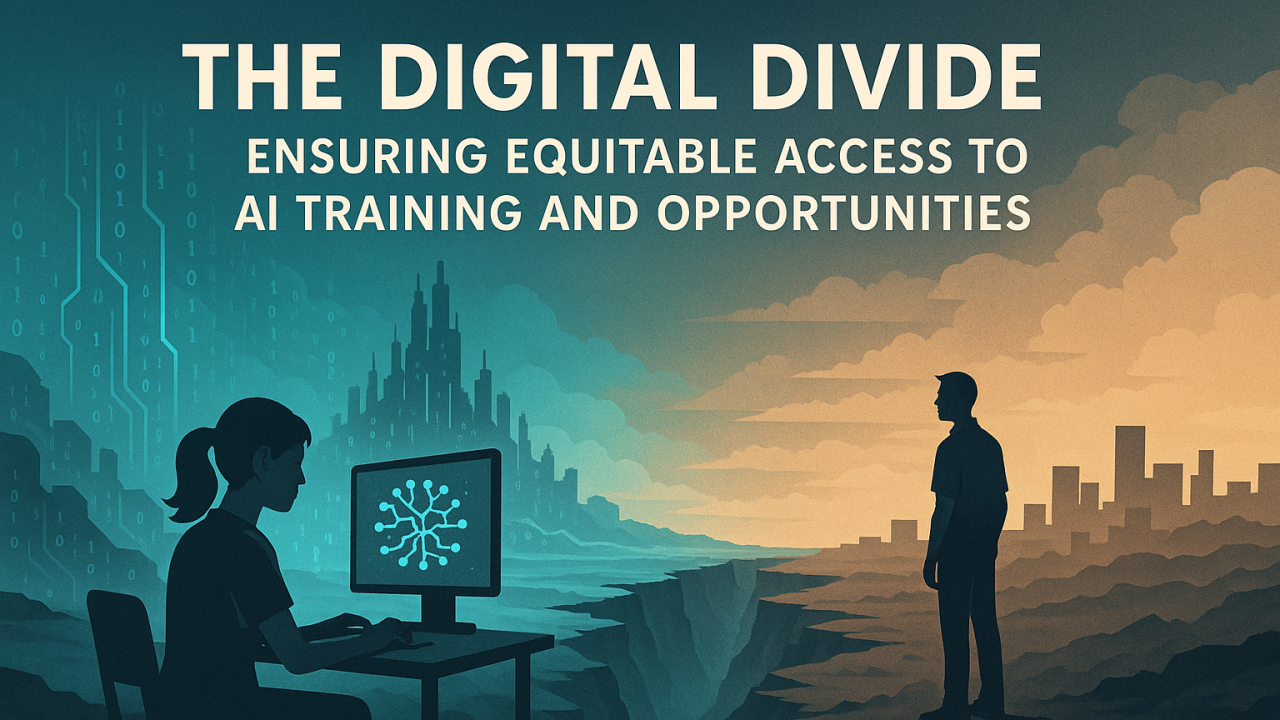
The age of AI is not arriving equally. While some individuals and regions enjoy cutting-edge education, training, and career opportunities in AI and digital transformation, many others are being left behind. This disparity, often referred to as the “digital divide,” is becoming one of the most critical fault lines in the global labor economy.
If AI is to be a truly transformative and inclusive force, we must confront and bridge this divide not just with technology, but with policy, investment, and intentional action.
Article content The Uneven Distribution of Opportunity Access to AI education, data infrastructure, and digital literacy varies dramatically between urban and rural regions, high-income and low-income populations, and developed and developing nations. While elite universities and tech hubs offer specialized AI degrees and hands-on experience with real-world datasets, many educational institutions still lack the tools to teach even basic programming.
This inequality isn’t just academic. It plays out in the job market. AI is reshaping industries from manufacturing to marketing, and workers without access to foundational training risk becoming economically obsolete, even as new opportunities emerge around them.
Education as the Equalizer Addressing the digital divide starts with rethinking how and where we deliver AI-related education. Online platforms, vocational programs, and public-private partnerships have the potential to decentralize access. However, broadband infrastructure, language accessibility, and localized curricula are critical to their success.
Governments must prioritize investment in digital learning infrastructure, especially in underserved regions. Likewise, companies can contribute by opening their internal AI learning resources, supporting apprenticeships, and funding scholarship programs for historically marginalized groups.
Inclusive Training for the Workforce AI training shouldn't be reserved for engineers. Customer service representatives, factory workers, healthcare assistants, and logistics professionals will all interact with AI systems in the coming years. Equipping them with relevant digital skills from understanding AI outputs to collaborating with intelligent systems is vital.
Crucially, this training must be culturally sensitive, job-relevant, and accessible to individuals with varying educational backgrounds. Without inclusive strategies, the very technologies that promise to empower could deepen existing socioeconomic inequalities.
A Collective Responsibility Ensuring equitable access to AI opportunity is not the responsibility of any one institution. It’s a collective mandate for educators, employers, governments, and technologists. Only by working together can we make sure that the future of work is not just automated but also fair, inclusive, and human-centered.
Log in with a verified account to post comments.
Log in · Register
Comments