How to Find a Reliable AI Development Partner for Your Business
Artificial intelligence is becoming an increasingly important part of business technology. Companies are using AI to automate repetitive work, improve customer experiences, analyse business data, support employees, and build new digital products.
However, adopting AI successfully is not simply a matter of selecting an AI tool or asking a developer to build a chatbot. Businesses need to understand their objectives, data, technology environment, security requirements, and long-term plans. For many organisations, this means working with an experienced AI development partner.
Choosing the right partner can have a significant impact on the success of an AI initiative. The right development team can help identify practical use cases, select appropriate technologies, integrate AI with existing systems, and develop a solution that delivers measurable business value.
Start With the Business Problem
Before looking for an AI development company, clearly define the business problem you want to solve.
AI should not be introduced simply because it is a growing technology trend. A successful AI project should address a specific operational, customer, financial, or strategic requirement.
For example, a company may want to reduce the time employees spend processing documents. Another organisation may want an AI assistant that can answer questions from internal business information. A sales organisation may want to analyse customer interactions, while a manufacturer may want predictive analytics for equipment or production processes.
Starting with the business problem makes it easier to evaluate whether a potential development partner understands your requirements rather than simply trying to sell a particular technology.
Look for Experience With Real Business Applications
AI development requires more than familiarity with AI models.
A reliable partner should understand how AI is integrated into real business environments. This includes application development, databases, APIs, cloud platforms, authentication, data processing, security, monitoring, and user interfaces.
Ask potential partners about the types of AI applications they have developed and the business problems those applications addressed.
Experience can be particularly valuable when the project involves existing enterprise systems. An AI solution may need to connect with CRM platforms, ERP systems, document repositories, websites, databases, communication platforms, or internal applications.
The partner should therefore demonstrate both AI expertise and broader software engineering capability.
Evaluate Their Understanding of AI Technologies
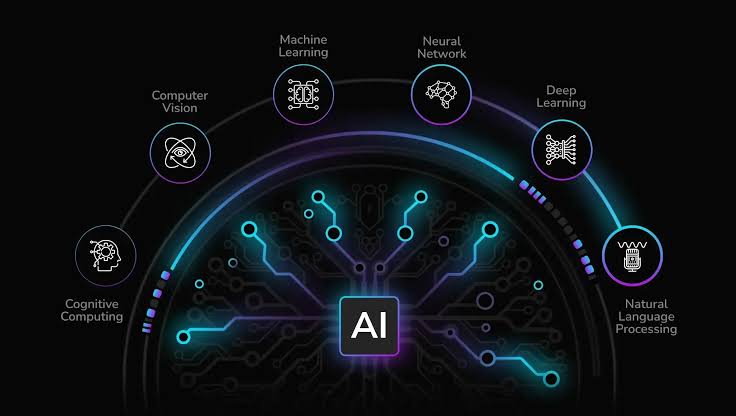
AI development covers a broad range of technologies. Depending on the project, a solution may involve large language models, machine learning, natural language processing, computer vision, speech technologies, recommendation systems, predictive analytics, or retrieval-augmented generation.
A capable AI development partner should be able to explain why a particular technology is appropriate for your use case.
They should also be willing to discuss alternatives. Sometimes an organisation does not need a custom AI model. An existing AI service, an open-source model, a retrieval-based system, or a combination of conventional software and AI may provide a more practical solution.
The goal should be solving the business problem effectively rather than using the most complex technology available.
Ask How They Approach AI Discovery
A reliable partner should not immediately begin development without understanding the business environment.
A good AI discovery process typically examines the existing workflow, users, data sources, systems, security requirements, expected outputs, and success criteria.
This process can identify where AI can provide genuine value and where conventional automation or software development may be more appropriate.
For example, if employees currently spend several hours manually reviewing documents, the partner should examine the complete workflow before recommending an AI document-processing solution. There may be opportunities to combine document extraction, workflow automation, human approval, and AI classification instead of relying on a single AI component.
Review Their Software Engineering Capability
AI systems still need to operate as software products.
A technically impressive AI prototype can have limited business value if it cannot be deployed, maintained, secured, and integrated with the organisation's existing systems.
Evaluate the partner's capabilities in areas such as backend development, frontend development, APIs, databases, cloud infrastructure, DevOps, testing, and application security.
This is particularly important for businesses that expect their AI solution to become part of daily operations.
Understand How They Handle Business Data
Data is one of the most important considerations in an AI project.
A development partner may need access to documents, customer information, financial records, operational data, employee information, product data, or other confidential business content.
Before sharing sensitive information, understand how the partner handles data throughout the project.
Discuss where data will be stored, who can access it, how environments are separated, how credentials are managed, and how information is protected during development and deployment.
The partner should also be able to explain how the selected AI services process business data and what controls are available for your specific requirements.
Consider Data Protection and Compliance
AI projects may involve personal or commercially sensitive information, making privacy and regulatory considerations important.
European businesses in particular may need to consider GDPR requirements when AI systems process personal data. Depending on the industry and application, additional regulatory or contractual requirements may also apply.
A development partner should be willing to discuss privacy, data retention, access controls, audit requirements, and other relevant considerations during the planning stage.
The responsibility for compliance does not disappear when development is outsourced. Both the business and its technology partners need to understand their respective responsibilities.
Examine Their Approach to AI Security
AI applications introduce security considerations that may differ from conventional software systems.
For example, an AI assistant connected to internal company documents needs appropriate authentication and access controls. Users should not be able to retrieve information they are not authorised to access.
AI applications can also require protection against prompt injection, inappropriate data exposure, insecure integrations, excessive permissions, and other application-specific risks.
A reliable partner should treat AI security as part of the architecture rather than something added after development is complete.
Look Beyond the Initial AI Prototype
Many AI projects begin as proof-of-concepts.
A prototype can demonstrate whether an idea is technically possible, but production deployment introduces additional requirements.
The system may need monitoring, logging, error handling, access management, performance optimisation, testing, user management, data pipelines, and integration with existing applications.
When evaluating a partner, ask what happens after the prototype.
A strong development approach should provide a path from discovery to prototype, production implementation, deployment, and ongoing improvement.
Ask About AI Model Selection
There is rarely one AI model that is appropriate for every business requirement.
Depending on the use case, a solution might use a commercial model through an API, an open-source model, a smaller specialised model, or multiple models working together.
The choice can affect cost, performance, privacy, latency, deployment requirements, and scalability.
Your development partner should be able to explain the reasoning behind model selection rather than presenting one model as the solution for every problem.
Evaluate Their Integration Capabilities
The value of an AI system often depends on how well it connects with existing business processes.
Consider an AI customer-support assistant. If it only generates answers without accessing the company's product information, customer records, or support documentation, its usefulness may be limited.
Similarly, an AI reporting system may need to connect with databases, spreadsheets, ERP systems, or business intelligence platforms.
Look for a partner that has experience working with APIs, databases, enterprise applications, cloud services, and third-party platforms.
Understand Their Development and Testing Process
AI systems require structured testing because outputs can vary depending on the input and context.
A development partner should establish appropriate evaluation methods for the specific application. This might include testing factual accuracy, retrieval quality, classification performance, response consistency, latency, security, and failure scenarios.
For generative AI applications, testing should also consider hallucinations and inappropriate responses.
The partner should be able to explain how the system will be evaluated before it is released to users.
Check Communication and Project Management
Technical capability is important, but communication can determine whether a project progresses smoothly.
Before selecting a partner, understand how communication will work. Determine who will manage the project, how frequently progress will be reported, how requirements will be documented, and how technical decisions will be communicated to business stakeholders.
AI projects often evolve as users interact with early versions of the system. A development partner should therefore be comfortable with iterative development and structured feedback.
Look for Transparency in Pricing
AI development costs can vary significantly depending on the scope of the project.
The initial development cost is only one part of the total cost. Businesses may also need to consider cloud infrastructure, AI model usage, data storage, monitoring, maintenance, support, and future development.
A reliable partner should explain what is included in the development estimate and identify potential ongoing costs.
Instead of focusing only on the lowest initial quotation, businesses should understand the complete cost structure of operating and maintaining the AI solution.
Review Previous Projects Carefully
Case studies and previous projects can provide useful evidence of a partner's capabilities.
However, businesses should look beyond screenshots or general descriptions.
Ask what problem the project solved, what technologies were used, how the solution was integrated, what challenges were encountered, and what role the development partner played.
Where appropriate, discussing previous projects with references or clients can provide additional insight into communication, delivery quality, and ongoing support.
Consider the Team Behind the Project
The company name is only one part of the evaluation. The actual people working on the project are equally important.
Understand who will be responsible for AI engineering, software development, data engineering, cloud infrastructure, quality assurance, and project management.
A business should know whether the proposed team will remain involved throughout the project or whether the initial technical team will be replaced after the agreement is signed.
Continuity can be particularly important for AI projects because the development team gradually builds an understanding of the organisation's data, workflows, and business requirements.
Start With a Clearly Defined Pilot
For businesses beginning their AI journey, a focused pilot can reduce unnecessary risk.
Rather than attempting to transform an entire business process immediately, an organisation can select one well-defined use case and evaluate its technical and business feasibility.
A pilot might involve an internal knowledge assistant, document-processing workflow, customer-support assistant, sales analysis system, predictive model, or another clearly defined application.
The objective should not simply be to demonstrate that AI works. The pilot should establish whether the solution provides enough value to justify broader implementation.
Define Success Before Development Begins
AI projects should have measurable objectives.
Depending on the use case, success could involve reducing manual processing time, improving response times, increasing data accessibility, reducing operational errors, improving customer service, or supporting better decision-making.
The specific measurements should be established before development begins.
This gives both the business and the technology partner a common definition of success and makes it easier to evaluate the project objectively.
Make Sure the Partner Understands Your Industry
Industry knowledge can be valuable, particularly when the AI system operates in a regulated or specialised environment.
Healthcare, finance, manufacturing, logistics, retail, education, and professional services can have very different data structures, workflows, compliance requirements, and user expectations.
A partner does not necessarily need to have years of experience in your exact industry. However, they should demonstrate the ability to understand domain-specific requirements and work closely with your subject-matter experts.
Think About Long-Term Support
AI systems require ongoing attention.
Models and AI services evolve, business data changes, user requirements develop, and new integrations may become necessary.
A development partner should therefore be able to provide an approach for maintenance and continuous improvement.
This can include monitoring system performance, updating integrations, improving prompts or retrieval mechanisms, evaluating model changes, resolving issues, and implementing new functionality.
Choosing a partner that can support the solution beyond the initial development phase can help prevent the AI system from becoming an isolated experiment.
Treat the AI Development Partner as a Technology Partner
The strongest relationship is often not simply between a company and an outsourced developer. It is between a business and a technology partner that understands its long-term objectives.
The partner should be able to challenge assumptions when appropriate, identify technical risks, suggest practical alternatives, and explain complex AI concepts in business terms.
At the same time, the business should retain ownership of its objectives, processes, data, and strategic decisions.
The development partner provides technical expertise; the business provides domain knowledge and defines the outcomes that matter.
Questions to Ask Before Selecting an AI Development Partner
Before signing an agreement, businesses should be able to answer several practical questions.
Can the partner explain the proposed AI architecture clearly? Can they demonstrate relevant software and AI development experience? How will sensitive business data be protected? Which AI models and services will be used, and why? How will the system be tested? How will it integrate with existing applications? What happens after the initial deployment? Who will maintain the system? What ongoing infrastructure and AI usage costs should be expected?
Clear answers to these questions can reveal whether a potential partner is approaching the project as a serious technology implementation rather than simply an AI demonstration.
Build AI With a Business-First Approach
Finding an AI development partner should not begin with the question, "Which AI technology should we use?"
It should begin with, "What business problem are we trying to solve?"
From there, the organisation can evaluate potential partners based on their ability to understand the problem, design an appropriate solution, work securely with business data, integrate with existing systems, develop reliable software, and provide ongoing support.
AI technology will continue to evolve rapidly. A reliable development partner should therefore provide more than knowledge of today's AI tools. They should provide the engineering capability, business understanding, and flexibility needed to adapt as the technology and business requirements change.
Bluechip Technologies Asia as an AI Development Partner
Bluechip Technologies Asia provides AI development and implementation services for businesses looking to move from AI concepts and proof-of-concepts to practical business solutions. Its current AI services cover strategy and consulting, AI accelerators, end-to-end AI implementation, MLOps, custom AI product development, and enterprise AI solutions.
Bluechip's approach begins with understanding the business requirement and identifying suitable AI use cases. The company can support focused discovery and pilot initiatives before broader implementation, allowing organisations to evaluate technical feasibility, business value, data requirements, and operational considerations before scaling an AI programme.
The technical scope can extend beyond the AI model itself. Bluechip supports the development and integration of AI solutions into existing business environments, including custom applications, data workflows, cloud environments, and operational systems. Its MLOps capability also addresses the requirements of moving AI solutions into ongoing production and maintaining their performance over time.
For organisations developing AI products, Bluechip can also support the progression from prototyping and feasibility testing to minimum viable products and scalable, market-ready solutions. This provides an option for businesses that need both AI expertise and broader software engineering capability within the same technology engagement.
For European and international companies evaluating AI development partners, Bluechip Technologies Asia provides a Sri Lankan technology delivery option that combines AI strategy, engineering, implementation, and ongoing AI operations. The appropriate engagement can be structured around the organisation's business objectives, technical environment, data readiness, and expected outcomes.
Learn more at www.bluechiptech.asia
Conclusion
Selecting an AI development partner is an important technology decision. The right partner can help a business move from an initial AI idea to a practical solution that is secure, scalable, integrated, and aligned with business objectives.
Businesses should evaluate technical expertise, software engineering capability, data security, AI model knowledge, integration experience, project management, communication, pricing transparency, and long-term support.
Most importantly, the evaluation should focus on whether the partner understands the business problem and can translate it into a sustainable technology solution.
AI adoption is not simply about implementing artificial intelligence. It is about applying the technology where it can create meaningful value for the organisation.
About Bluechip Technologies Asia
Bluechip Technologies Asia is a technology company providing AI implementation, AI development, custom software development, data engineering, automation, and digital transformation solutions for businesses.
Our approach focuses on understanding business requirements first and then identifying practical technologies that can address those requirements. We work with organisations to explore AI use cases, develop AI-powered applications, integrate AI with existing systems, and build custom technology solutions.
Learn more at www.bluechiptech.asia
#ArtificialIntelligence #AI #AIDevelopment #AIDevelopmentCompany #AIPartner #AIDevelopmentPartner #AIImplementation #AIConsulting #AIConsultingServices #BusinessAI #EnterpriseAI #AIForBusiness #ArtificialIntelligenceForBusiness #AITransformation #DigitalTransformation #DigitalInnovation #BusinessTechnology #TechnologyPartner #TechnologyConsulting #SoftwareDevelopment #CustomSoftwareDevelopment #SoftwareEngineering #SoftwareDevelopmentCompany #ITServices #ITConsulting #TechnologySolutions #AIEngineering #MachineLearning #GenerativeAI #LargeLanguageModels #LLM #NaturalLanguageProcessing #NLP #ComputerVision #PredictiveAnalytics #DataAnalytics #DataEngineering #DataScience #RAG #RetrievalAugmentedGeneration #AIAutomation #BusinessAutomation #ProcessAutomation #WorkflowAutomation #IntelligentAutomation #CloudComputing #CloudDevelopment #CloudAI #AIIntegration #SystemIntegration #APIIntegration #EnterpriseSoftware #SaaSDevelopment #DigitalBusiness #BusinessInnovation #SMEs #EuropeanSMEs #MidSizedBusinesses #GlobalTechnology #TechnologyOutsourcing #OffshoreDevelopment #SoftwareOutsourcing #BluechipTechnologies
Log in with a verified account to post comments.
Log in · Register
Comments