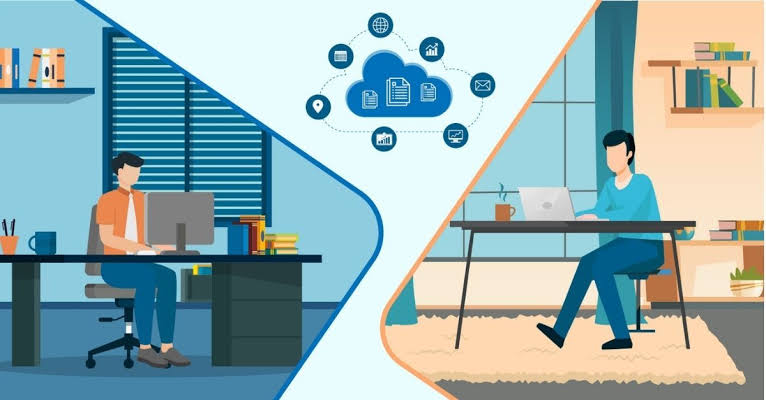
How to Build a Hybrid Engineering Model Combining Internal Teams and External Specialists
Building and maintaining software products requires more than hiring developers. Businesses need the right combination of technical expertise, product knowledge, engineering capacity, and delivery processes to develop reliable software while responding to changing market demands.
For many organisations, relying exclusively on an internal engineering team can create challenges. Recruiting specialised talent takes time, permanent hiring increases fixed operating costs, and existing engineers may struggle to balance product development with maintenance, technical improvements, and customer requirements.
At the same time, outsourcing all software development to an external provider may create concerns about product ownership, technical decision-making, institutional knowledge, and long-term dependency.
A hybrid engineering model offers an alternative.
By combining an internal engineering team with external software developers and technical specialists, businesses can retain control over their products while accessing additional skills and development capacity when needed.
This approach is particularly relevant for SaaS companies, technology startups, established businesses undergoing digital transformation, and organisations managing multiple software development initiatives.
However, a hybrid engineering model requires careful planning. Businesses must determine which responsibilities should remain internal, which activities can be delegated, how teams should collaborate, and how technical quality and accountability will be maintained.
This article explains how to design, implement, and manage a hybrid engineering model that supports sustainable software development and long-term business growth.
What Is a Hybrid Engineering Model?
A hybrid engineering model is a software development operating model in which an organisation combines its internal engineering capabilities with external developers, specialist teams, or technology partners.
Instead of treating outsourcing as a separate function, the organisation integrates external expertise into its broader product development strategy.
Internal employees and external specialists collaborate on shared objectives, follow agreed engineering standards, and contribute to a coordinated product roadmap.
The exact structure depends on the organisation's needs.
For example, a SaaS company may retain product management, software architecture, and core business logic internally while engaging an external team to develop integrations, expand automated testing, or build additional application features.
An enterprise may maintain an internal team responsible for its core business applications while using external specialists for cloud migration, data engineering, cybersecurity, or artificial intelligence projects.
A startup may begin with a small internal product team and gradually introduce an external development team as its product requirements and customer base expand.
In each case, the objective is to combine internal ownership with flexible access to external engineering capabilities.
How a Hybrid Model Differs from Traditional Outsourcing
Traditional outsourcing often involves assigning a defined project or function to an external provider. The provider may operate independently, with its own project management structure, delivery processes, and technical resources.
A hybrid model places greater emphasis on collaboration between internal and external contributors.
The internal team generally retains ownership of product direction, business priorities, and critical architectural decisions, while external specialists contribute development capacity or expertise within the agreed operating model.
This does not mean external teams cannot manage complete projects or take responsibility for technical decisions. Their responsibilities depend on the engagement structure and the organisation's requirements.
The key distinction is that internal and external engineering capabilities are designed to complement each other rather than operate as disconnected functions.
Why Businesses Are Adopting Hybrid Engineering Models
The decision to adopt a hybrid model is often driven by a combination of talent availability, delivery requirements, cost considerations, and the need for specialised expertise.
Access to a Broader Engineering Talent Pool
Businesses may struggle to recruit experienced engineers in areas such as cloud architecture, machine learning, data engineering, mobile application development, and platform engineering.
Even when suitable candidates are available, recruitment can take time and involve substantial effort.
External engineering partners can provide access to relevant skills without requiring the organisation to recruit every specialist as a permanent employee.
This is especially useful when a capability is required for a particular initiative rather than continuously throughout the year.
For example, a company developing an AI-enabled customer service platform may have strong internal application developers but limited experience in machine learning deployment and model integration.
An external AI engineering specialist can support that initiative while the internal team retains responsibility for the product and its long-term development.
Greater Flexibility in Engineering Capacity
Product development requirements change over time.
A company may need additional engineers before a major product launch, specialists during a cloud migration, or additional testing capacity before a significant release.
Maintaining a permanent workforce large enough to handle every possible peak in demand may be impractical.
A hybrid model allows businesses to adjust external engineering capacity according to project requirements, delivery priorities, and available budgets.
This flexibility can help organisations respond to demand without continually restructuring their permanent teams.
However, external capacity should be planned in advance where possible. Onboarding, knowledge transfer, access provisioning, and technical orientation still require time.
Retention of Product Knowledge and Business Control
Internal engineers often possess valuable knowledge about the business, customers, architecture, legacy systems, and product decisions.
Keeping these capabilities within the organisation helps preserve continuity and ensures that important product knowledge remains accessible.
External specialists can then supplement internal capabilities rather than replace them entirely.
For example, internal engineers may retain responsibility for the core transaction engine of a financial application, while an external team develops a reporting module or a customer-facing integration.
This arrangement allows the organisation to expand delivery capacity while maintaining internal ownership of critical systems.
Support for Multiple Product Initiatives
Businesses increasingly need to develop new features while maintaining existing applications and infrastructure.
Without sufficient capacity, internal teams may be forced to choose between maintaining current systems and progressing future initiatives.
A hybrid model can distribute responsibilities across several workstreams.
Internal engineers might focus on core product development, while external developers support integrations, quality engineering, data pipelines, or a separate application module.
When work is divided effectively, the organisation can make progress on multiple priorities without overloading a small internal team.
A More Deliberate Approach to Technology Costs
Permanent employees and external engineering services have different cost structures.
Permanent employment involves salary, benefits, recruitment, training, management, and other workforce-related costs. External services may involve agreed hourly rates, monthly team fees, project charges, onboarding expenses, and coordination overhead.
A hybrid model allows organisations to decide which capabilities justify permanent investment and which can be accessed through external engagements.
The objective should not be to minimise the cost of every individual engineering hour. It should be to achieve an appropriate balance between cost, capability, continuity, delivery quality, and business risk.
Decide Which Capabilities Should Remain Internal
One of the most important decisions in a hybrid engineering model is determining which responsibilities should remain within the organisation.
There is no universal division that works for every business. The decision depends on product complexity, intellectual property, regulatory requirements, internal expertise, and the strategic importance of each capability.
Nevertheless, several principles can guide the process.
Retain Product Ownership and Business Prioritisation
The organisation should maintain clear ownership of its product strategy and business priorities.
Internal product leaders are usually best positioned to understand customer needs, commercial objectives, market conditions, and the relative importance of competing initiatives.
Their responsibilities may include defining product requirements, prioritising the backlog, approving scope changes, and determining whether completed functionality meets business expectations.
External engineering teams can contribute technical recommendations and help evaluate implementation options, but business priorities should remain clearly accountable to the organisation.
Maintain Strategic Architectural Oversight
Software architecture influences system reliability, maintainability, security, scalability, and the long-term cost of development.
Businesses should ensure that important architectural decisions have an accountable owner.
This may be an internal software architect, engineering manager, principal engineer, or technical lead. In organisations without these roles, an appropriately qualified external architect may provide the necessary leadership, provided responsibilities and knowledge transfer are clearly defined.
The goal is to prevent different teams from making incompatible technical decisions that create integration problems or unnecessary complexity.
Protect Critical Business Knowledge
Some capabilities are closely connected to an organisation's competitive advantage.
These may include proprietary algorithms, specialised business rules, core pricing logic, unique operational processes, or important customer workflows.
The organisation should evaluate whether these capabilities need to remain primarily internal or can be shared with external specialists under appropriate contractual and security controls.
The decision should reflect actual business risk rather than an assumption that all external development is inherently unsafe.
Well-defined access controls, intellectual property agreements, documentation, and technical governance can make many outsourced activities manageable.
Identify Capabilities That Can Be Shared or Outsourced
External engineering support is often effective for work that can be defined clearly and integrated into established development practices.
Examples include:
- Developing independent application modules.
- Building APIs and third-party integrations.
- Expanding automated testing and regression coverage.
- Implementing cloud infrastructure improvements.
- Developing data pipelines and analytics components.
- Creating web or mobile application features.
- Supporting software maintenance and technical debt reduction.
- Implementing AI capabilities within an established product.
- Providing specialist performance optimisation or migration support.
These activities are not automatically suitable for outsourcing. Their suitability depends on system dependencies, security requirements, internal review capacity, and the clarity of the implementation scope.
Design the Right Internal and External Team Structure
Once the organisation has identified its capability requirements, it needs to establish a structure that supports effective collaboration.
Several configurations are possible.
Model 1: Internal Product Team with External Development Capacity
In this structure, the organisation maintains an internal product manager, technical lead, and core engineering team while external developers provide additional implementation capacity.
The internal team manages priorities, architecture, and product-specific decisions. External developers work within the established engineering environment.
This arrangement is suitable for businesses that already have effective engineering leadership but need more developers to meet their roadmap commitments.
For example, a company may have an internal team responsible for a SaaS platform but require external frontend and backend engineers to accelerate the development of new features.
Model 2: Internal Core Engineering Team with External Specialist Pods
A specialist pod is a small team organised around a particular technical capability or delivery objective.
An organisation might maintain an internal core engineering team while engaging external specialists in separate areas.
Possible configurations include:
- An AI engineering pod supporting intelligent product features.
- A data engineering pod developing analytics pipelines.
- A cloud engineering pod improving infrastructure and deployment automation.
- A quality engineering pod strengthening automated testing.
- An integration pod connecting the product to third-party systems.
Each pod should have a clearly defined purpose, appropriate technical leadership, and agreed interfaces with the internal team.
This model is particularly useful when the organisation needs several specialised capabilities but does not require all of them as permanent internal functions.
Model 3: Internal Product Ownership with a Dedicated External Development Team
In this arrangement, the organisation retains product ownership while an external team provides a sustained development capability.
The team may include developers, a technical lead, QA engineers, and other specialists, depending on the scope.
The internal product owner defines business priorities and acceptance criteria, while the external team manages its assigned development work within the agreed delivery framework.
This model can suit organisations that need a predictable engineering capacity for continuous product development but do not want to recruit an equivalent permanent team.
It requires effective backlog management, shared engineering standards, regular planning, and clear accountability for delivery.
Model 4: Hybrid Delivery Across Multiple Products
Businesses managing several applications may use different internal-external arrangements for different products.
For example, the internal team may maintain a business-critical enterprise platform, while a dedicated external team develops a new customer portal. Specialist external engineers may also support shared cloud infrastructure or data services.
This approach can provide flexibility, but the organisation must establish common standards for security, architecture, identity management, integration, and operational support.
Without shared governance, multiple teams may introduce inconsistent technologies, duplicated capabilities, and unnecessary maintenance costs.
Establish Clear Roles and Responsibilities
A hybrid engineering model becomes difficult to manage when internal and external contributors are unsure who owns each decision or activity.
Businesses should define responsibilities before development begins.
A typical arrangement may include the following roles.
Product owner: Defines business objectives, prioritises the backlog, clarifies requirements, and approves product outcomes.
Engineering manager or technical lead: Coordinates technical implementation, manages dependencies, reviews engineering quality, and ensures alignment with architectural standards.
Internal engineers: Maintain core product knowledge, develop strategic components, review contributions, and support system continuity.
External developers: Implement agreed features, integrations, improvements, or maintenance tasks according to the shared development standards.
Quality assurance engineers: Define and execute testing activities, maintain automated tests, and verify that changes meet acceptance criteria.
DevOps or platform engineers: Support build pipelines, deployment processes, infrastructure, observability, and operational reliability.
Security and compliance stakeholders: Establish relevant security requirements, review access and data-handling practices, and oversee controls where required.
These roles can be combined in smaller organisations. What matters is that each responsibility has an identifiable owner.
For recurring activities such as architecture approval, code review, incident response, and release authorisation, a responsibility matrix can clarify who performs the work, who is accountable, and who must be consulted.
Build Shared Engineering Standards
Internal and external developers should follow a consistent set of engineering practices.
If the two groups use different coding conventions, testing procedures, deployment processes, or documentation standards, the organisation may spend more time integrating and maintaining software.
A shared engineering framework should cover the following areas.
Source Control and Code Review
Both teams should use agreed repository structures, branching strategies, pull request procedures, and code review requirements.
Code reviews should assess correctness, readability, maintainability, security, and consistency with architectural standards.
Access to source code should be controlled according to individual responsibilities, and ownership of repositories should remain clear.
Testing and Quality Assurance
The organisation should define expectations for unit tests, integration tests, regression tests, and relevant non-functional testing.
The appropriate requirements will depend on the application and its risk profile.
For example, a business-critical financial system may require stronger testing and release controls than a low-risk internal prototype.
External engineers should understand these expectations before implementation begins rather than discovering them during final review.
Continuous Integration and Deployment
Where appropriate, both teams should work within shared continuous integration and continuous delivery pipelines.
Automated builds, test execution, static analysis, and deployment checks can reduce manual handoffs and make quality expectations more consistent.
Production deployment permissions should be controlled, and release procedures should reflect the organisation's operational and security requirements.
Documentation and Knowledge Management
Technical documentation should be treated as part of the engineering deliverable.
This may include API specifications, architecture decisions, setup instructions, data models, deployment procedures, and troubleshooting guidance.
The level of documentation should be proportionate to the complexity and operational importance of the system.
A well-maintained knowledge base reduces dependency on individual developers and helps both internal and external engineers understand the product.
Integrate External Specialists into Existing Workflows
The most effective hybrid engineering teams do not operate through disconnected development processes.
They work within a coordinated delivery framework that makes priorities, dependencies, and responsibilities visible.
Use a Shared Product Backlog
Internal and external developers should have access to a consistent view of the work they are expected to deliver, subject to appropriate information access controls.
Each task should include a clear objective, acceptance criteria, relevant technical context, and known dependencies.
The product owner should regularly review priorities to ensure that external engineering capacity is directed towards the most valuable work.
Agree on a Common Development Workflow
The organisation should define how work moves from requirements through implementation, review, testing, and release.
For example, a feature may move through these stages:
- Product requirements and acceptance criteria are confirmed.
- Technical design and dependencies are reviewed.
- Development tasks are assigned to internal or external contributors.
- Developers implement the changes and submit them for review.
- Automated and manual tests verify the expected behaviour.
- Changes are integrated into the main codebase.
- Release approval and deployment follow the agreed procedure.
- Documentation and operational handover are completed where required.
The process should be sufficiently structured to maintain quality without introducing unnecessary approval steps.
Manage Dependencies Explicitly
Some tasks can be completed independently, while others require coordination between internal and external engineers.
For example, a frontend developer may need a stable API contract before implementing a customer dashboard.
Agreeing on the API specification early can allow frontend and backend development to proceed in parallel, even when different teams are responsible for each component.
Dependency tracking should identify which decisions, interfaces, environments, or deliverables are needed before a task can progress.
Keep Communication Focused on Delivery
Regular meetings help maintain alignment, but excessive meetings can reduce engineering productivity.
A practical communication structure may include brief daily coordination for highly interdependent teams, weekly delivery reviews, regular backlog refinement, and periodic technical planning sessions.
The frequency should reflect the complexity of the work and the degree of collaboration required.
The purpose is to resolve blockers, communicate changes, and make decisions—not to create a separate reporting process for external developers.
Manage Security, Intellectual Property, and Compliance
A hybrid model introduces additional participants into the software development environment. Businesses must therefore establish appropriate controls for code, systems, data, and confidential information.
Apply Least-Privilege Access
Each engineer should receive only the access required to perform their assigned work.
Development environments, source repositories, cloud accounts, deployment systems, and production data should have appropriate access restrictions.
Where possible, use managed identities, multifactor authentication, approved secrets-management systems, and auditable access procedures.
Access should be reviewed periodically and removed promptly when responsibilities change or an engagement ends.
Define Intellectual Property Ownership
Contracts should clearly address ownership of source code, documentation, designs, custom software, and other deliverables.
They should also distinguish newly created intellectual property from pre-existing tools, libraries, frameworks, and reusable components owned by either party or third parties.
The organisation should understand the licence obligations associated with open-source dependencies and any restrictions affecting the use or distribution of delivered software.
Clear contractual arrangements reduce uncertainty about the organisation's rights to maintain, modify, distribute, and commercialise its product.
Protect Sensitive Business and Customer Data
External engineers should not automatically receive access to real customer data simply because they are working on the application.
Use synthetic, anonymised, or appropriately masked data for development and testing where practical.
If access to sensitive information is necessary, establish suitable contractual, technical, and organisational safeguards based on applicable laws and regulatory obligations.
Establish Incident and Offboarding Procedures
The organisation should define how security incidents are reported and managed across internal and external teams.
When an external engineer leaves the engagement, access to repositories, systems, communication channels, and other resources should be reviewed and revoked as appropriate.
Documentation, credentials, outstanding tasks, and operational responsibilities should be transferred to authorised personnel.
These measures help maintain continuity and reduce the risks associated with distributed engineering teams.
Measure the Performance of the Hybrid Engineering Model
Businesses should evaluate the combined engineering system rather than measuring internal and external teams as if they were competing departments.
The purpose of performance measurement is to determine whether the model improves delivery, quality, flexibility, and business outcomes.
Delivery Predictability
Track the proportion of agreed milestones completed within the planned period.
Review the reasons for missed commitments, including changing requirements, dependencies, underestimated work, and delayed decisions.
This helps distinguish problems caused by insufficient capacity from those caused by planning or governance.
Engineering Flow
Metrics such as cycle time, lead time for changes, work in progress, and blocked-task duration can reveal how efficiently work moves through the development process.
Compare results over time and investigate significant changes rather than assuming that a single measurement proves success or failure.
Software Quality
Monitor defect rates, escaped defects, test coverage where meaningful, change failure rate, and recovery time after failed deployments.
The objective is to ensure that greater delivery capacity does not come at the expense of reliability or maintainability.
Collaboration and Integration
Assess whether internal and external teams can work together without excessive rework or coordination delays.
Useful indicators include the time required to resolve cross-team dependencies, the frequency of integration problems, and the amount of work returned for clarification or correction.
Qualitative feedback from developers and technical leaders can provide important context for these measurements.
Cost and Capacity Utilisation
Review the total cost of the hybrid model, including permanent staffing, external engineering fees, onboarding, management, coordination, infrastructure, and ongoing maintenance.
Compare this with the delivery capacity and business outcomes achieved.
Avoid relying exclusively on hourly rates or the number of tasks completed. A low-cost engagement that generates extensive rework may be less valuable than a higher-cost engagement that delivers reliable, maintainable software.
Common Mistakes to Avoid
A hybrid engineering model can provide substantial flexibility, but several mistakes can undermine its effectiveness.
Treating external specialists as temporary outsiders. Excluding external engineers from relevant technical discussions and product context can lead to misunderstandings, duplicated work, and poor integration.
Outsourcing without internal technical ownership. Delegating development without retaining appropriate product and architectural oversight can make it difficult to maintain consistency and long-term control.
Creating separate engineering standards. Different code review, testing, security, and documentation practices increase the cost of integrating contributions from multiple teams.
Adding capacity without addressing delivery constraints. More developers will not necessarily solve unclear requirements, slow approvals, unstable architecture, or overloaded testing processes.
Allowing critical knowledge to remain undocumented. If only one internal or external engineer understands an important service, the organisation remains vulnerable to delays and knowledge loss.
Failing to plan for changing capacity needs. External team size and specialist requirements should be reviewed as the product evolves. Maintaining unnecessary capacity can increase costs, while reducing capacity too quickly can disrupt delivery.
Measuring internal and external teams using different standards. Inconsistent performance expectations can create friction and encourage behaviour that benefits one group rather than the product as a whole.
A successful hybrid model establishes shared goals, clear accountability, consistent standards, and a practical approach to collaboration.
A Practical 90-Day Plan for Building a Hybrid Engineering Model
Businesses can introduce a hybrid engineering model in stages rather than attempting to redesign their entire development organisation at once.
Days 1–30: Assess and Design
Begin by reviewing the product roadmap, internal engineering capabilities, current delivery performance, and upcoming technical requirements.
Identify the most important capacity gaps and determine which responsibilities should remain internal.
Select a suitable engagement model, such as staff augmentation, a dedicated external development team, or specialist support for a defined workstream.
During this period, establish the initial scope, responsibilities, security requirements, expected outcomes, and success measures.
The result should be a clear operating plan that explains why external support is required and how it will integrate with the existing team.
Days 31–60: Integrate and Deliver
Onboard the external engineers into the relevant repositories, development environments, communication channels, and project workflows.
Provide the technical documentation and business context necessary for them to contribute effectively.
Start with a manageable workstream that has clear requirements and identifiable acceptance criteria.
Review code quality, communication, delivery progress, and integration issues regularly. Address problems early rather than waiting until the end of the engagement.
The objective is to establish an effective working relationship while producing useful engineering outcomes.
Days 61–90: Evaluate and Optimise
Compare delivery performance against the baseline established during the initial assessment.
Review milestone completion, cycle time, defects, blocked work, collaboration, and total engagement costs.
Identify which responsibilities are working well across the internal-external boundary and which require clearer ownership or better technical coordination.
Use the findings to determine whether to maintain, expand, modify, or reduce external capacity.
By the end of the initial period, the organisation should have a more evidence-based understanding of how hybrid engineering contributes to its product development objectives.
The 90-day period is a practical starting framework, not a guarantee that every organisation will achieve full operating maturity within that time.
How Bluechip Technologies Asia Supports Hybrid Engineering Models
Bluechip Technologies Asia is a Sri Lankan software development and technology outsourcing company providing software development, AI and machine learning, cloud, data engineering, and dedicated development team services.
For organisations seeking to combine internal engineering capabilities with external specialists, Bluechip can be considered as a technology partner for additional development capacity, defined software projects, and specialised technical requirements.
Depending on the engagement, external support may include custom application development, web and mobile development, AI-enabled features, system integrations, cloud engineering, data platforms, or dedicated software development resources.
A hybrid engagement should begin with an assessment of the organisation's product objectives, existing technical capabilities, delivery constraints, and available resources. This helps determine where external support can add value without creating unnecessary overlap or weakening internal ownership.
For example, a business may retain product management and core architecture internally while engaging an external team to develop a new application module. Another organisation may maintain its existing software engineering team while bringing in external AI or data engineering specialists for a specific initiative.
In both cases, effective collaboration depends on agreed responsibilities, shared technical standards, secure development practices, transparent communication, and appropriate knowledge transfer.
The goal is to help businesses build an engineering structure that aligns with their product roadmap and long-term technology strategy.
Learn more about Bluechip Technologies Asia and its software development and technology outsourcing services.
Final Thoughts
A hybrid engineering model allows businesses to combine the continuity and product knowledge of internal employees with the flexibility and specialised capabilities of external engineering teams.
When designed effectively, this model can help organisations address skill shortages, expand development capacity, manage changing workloads, and deliver multiple product initiatives without relying exclusively on permanent recruitment.
However, its success depends on more than selecting an external development partner. Businesses must determine which capabilities to retain internally, establish clear technical and business ownership, integrate teams into shared workflows, protect intellectual property, and measure delivery performance consistently.
The strongest hybrid models treat internal and external engineers as contributors to the same product objectives. Each team brings relevant capabilities, while shared standards and clear accountability ensure that their work remains aligned.
For organisations seeking sustainable software development capacity, a well-managed hybrid engineering model provides a practical way to balance control, flexibility, technical expertise, and long-term growth.
#SoftwareDevelopment #SoftwareOutsourcing #HybridEngineering #DedicatedDevelopmentTeams #OffshoreDevelopment #StaffAugmentation #SoftwareEngineering #ProductEngineering #TechnologyOutsourcing #EngineeringManagement #DigitalTransformation #AIEngineering #BluechipTechnologiesAsia
Log in with a verified account to post comments.
Log in · Register
Comments