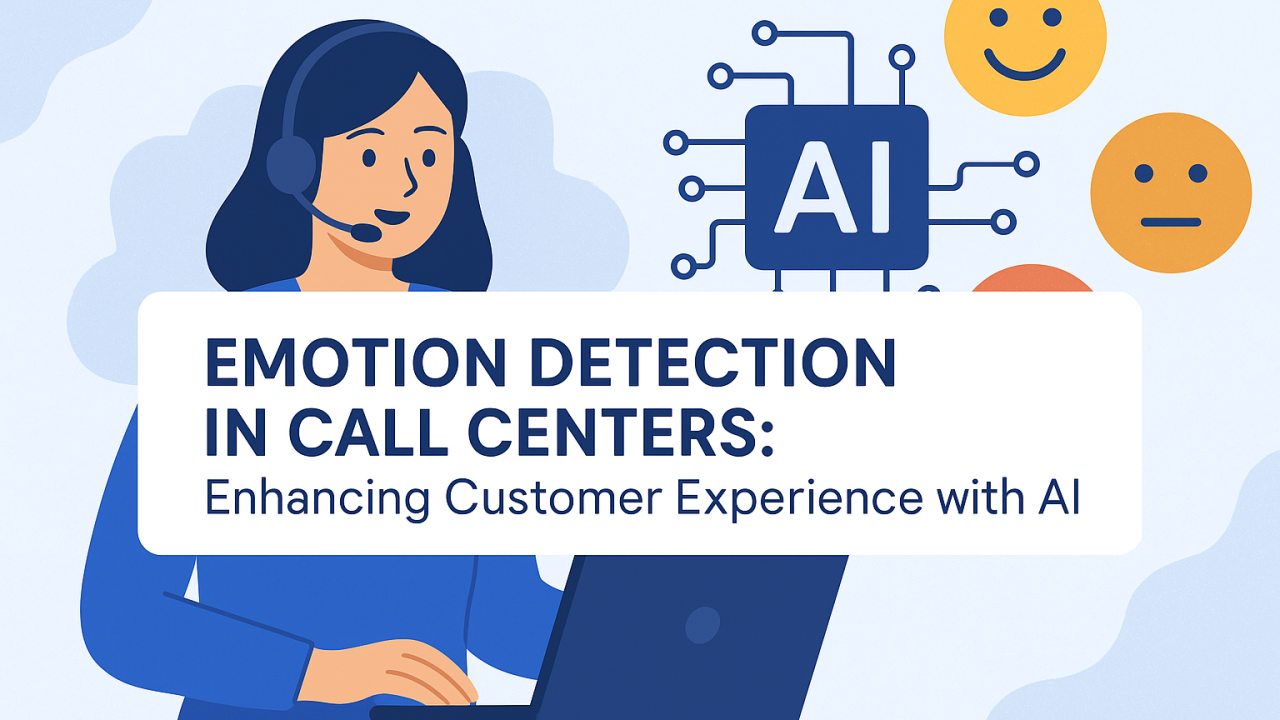
Artificial intelligence is revolutionizing customer service by enabling real-time emotion detection in call centers. Previously, a caller's emotional state depended entirely on the human agent's communication skills and intuition. Today, AI- based emotion recognition software can analyze vocal tones, speech patterns, and linguistic cues to detect customer emotions such as frustration, satisfaction, anger, or confusion allowing agents to respond more effectively and improving the overall customer experience.
Emotion detection reinforces the human element in customer support by rendering it more empathetic, attuned, and personalized. AI systems deployed in call center functions can review live and recorded calls, highlight emotionally charged conversations, and provide agents or supervisors with real-time feedback and direction. This leads to faster conflict resolution, reduced customer churn, and improved service quality.
Article content The Role of AI in Emotion Recognition At the heart of emotion detection lie complex machine learning and natural language processing (NLP) models. These systems process both the acoustic characteristics of speech tone, pitch, speed, and pauses as well as the semantic content of conversation. AI can pick up on subtle emotional cues, such as increased pitch for frustration or longer pauses for uncertainty.
These AI models can, in real-time, provide on-screen suggestions to call center agents on how to modify their tone, offer empathy, or escalate the issue. Post-call analysis allows supervisors to review emotional trends, agent performance, and common issues, simplifying training and quality control.
Multimodal emotion recognition, which includes voice as well as facial recognition in video-based customer service, is also increasing. While voice-only products are more characteristic of call centers, the combination of text, speech, and biometric cues has been found to significantly enhance emotion classification accuracy.
Real-World Applications and Industry Impact Many organizations already feel the benefit of emotion AI. Leading telecom, financial institution, and retail companies use such technologies to promote customer loyalty and reduce service escalation. For instance, emotion AI can detect escalating customer frustration and trigger automated action, such as offering a discount or transferring the call to an experienced representative.
Some call center software integrates sentiment dashboards to track customer satisfaction via thousands of interactions. This allows businesses to see service quality and detect systemic issues, such as a product defect causing customer complaints.
AI emotion analysis extends to agent well-being, too, identifying emotionally draining interactions and recommending breaks or assistance. This dual benefit for both customer and employee experience makes emotion AI a valuable tool in contact center management.
Challenges and Future Outlook Though it has its advantages, emotion detection technology has its disadvantages. Emotional expressions vary greatly from individual to individual, culture to culture, and situation to situation, making it challenging to have models that work universally. System performance is also affected by accents, noise, and language peculiarities.
Privacy and ethics take top priority. Customers should be informed about how their data voice recordings and emotional cues are collected and utilized. Being in compliance with laws like GDPR is a top priority.
The future of call center emotion detection is bright. With improvements in AI algorithms and increased availability of varied training data, emotion recognition will get better, adapt, and become more inclusive. Integration with customer relationship management (CRM) platforms, chatbots, and virtual assistants will lead to hybrid, emotionally intelligent service platforms.
At its essence, AI-driven emotion sensing is never intended to replace human empathy but enhance it. By equipping call centers with emotional intelligence at scale, organizations can foster greater customer connections, resolve disputes better, and forge brand loyalty within a more competitive economy.
Log in with a verified account to post comments.
Log in · Register
Comments