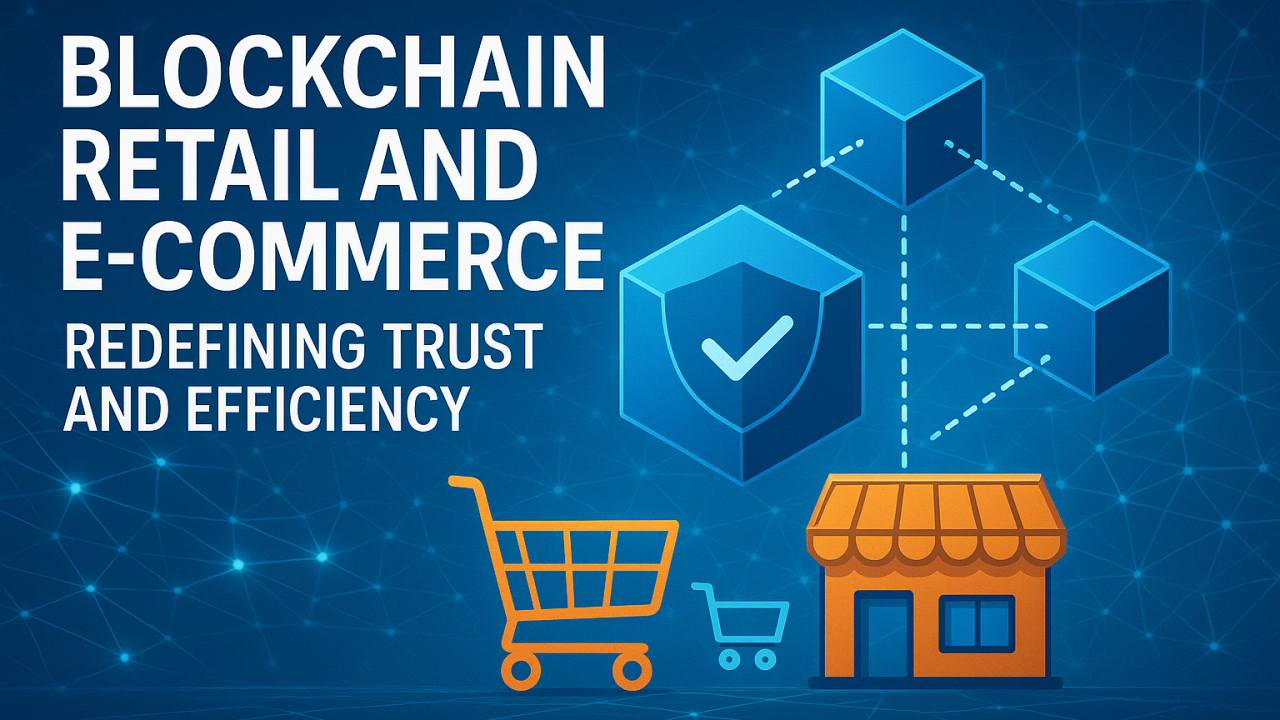
Blockchain and the Future of Retail
Retail and e-commerce industries are rapidly evolving, driven by changing consumer expectations and digital transformation. However, issues like counterfeit goods, data breaches, and inefficient logistics continue to hinder growth. Blockchain introduces a decentralized framework that boosts transparency, security, and traceability. It reimagines retail operations and customer relationships for the digital age.
What is Blockchain? A Quick Dive into Trusted Retail
Blockchain is a decentralized ledger that records transactions across a network in a secure, tamper-proof format. In retail, it tracks product movement, verifies authenticity, and secures customer data. Each entry is time-stamped and permanent, ensuring integrity at every stage. This builds a system of trust between retailers and consumers without needing middlemen.
Article content
The Struggles of Traditional Retail Systems
1.Lack of Product Transparency
Consumers often have no way to verify the origin or authenticity of products, especially online. This leads to uncertainty and affects brand credibility. Blockchain provides a full product history, from sourcing to sale. Transparency builds trust and informs better buying decisions.
2.Counterfeit and Fake Goods
Fake products in fashion, electronics, and health goods flood the market, damaging customer trust and brand value. Traditional supply chains struggle to verify authenticity. Blockchain creates a permanent digital record that proves a product's origin and journey. This helps eliminate counterfeits at scale.
3.Data Breaches and Privacy Issues
Retailers collect vast amounts of personal and payment data, often stored in vulnerable centralized servers. Cyberattacks can lead to massive breaches and identity theft. Blockchain stores data in encrypted, decentralized systems. It empowers users with control over their own information.
4.Inefficient Inventory and Logistics
Inventory mismatches, delivery delays, and returns cause operational friction and customer dissatisfaction. Disconnected systems prevent real-time updates. Blockchain connects all stakeholders with a single source of truth. It enables smarter inventory control and seamless order fulfillment.
Blockchain in Action: Smarter, Safer Shopping
1.Provenance Tracking – Know What You Buy
With blockchain, consumers can trace a product's journey from raw material to finished good. Scanning a QR code reveals sourcing, manufacturing, and shipping data. This proves ethical sourcing and quality assurance. Informed buyers are confident buyers.
2.Loyalty and Rewards – Reinvented
Blockchain allows retailers to issue tokenized loyalty points that are secure, portable, and usable across different platforms. Customers gain more control and flexibility with their rewards. Tokens can be traded or redeemed in new ways. It creates a more engaging loyalty experience.
3.Fraud-Proof Payments – Safer Transactions
Blockchain enables secure, irreversible payments using cryptocurrencies or smart contracts. This protects against fraud, chargebacks, and identity theft. It also reduces dependency on costly intermediaries. Transactions become faster, cheaper, and safer for both parties.
4.Supply Chain Transparency – Real-Time Insight
Retailers can monitor supply chain events in real time, including delays, damage, or bottlenecks. Blockchain records every event immutably, ensuring accountability. This improves inventory forecasting and customer satisfaction. It drives operational excellence from the warehouse to doorstep.
Real-World Blockchain Retail Success Stories
Walmart – Safer food and smarter sourcing
Walmart uses blockchain to trace food items across its supply chain, reducing recall time from days to seconds. It ensures safety and quality while building consumer confidence. Blockchain helps Walmart verify sources and reduce waste. This sets a new standard for transparency in grocery retail.
Amazon (Patent) – Crypto-backed product verification
Amazon has filed patents for using blockchain to verify the authenticity of products sold on its platform. This would help detect fakes and verify the legitimacy of third-party sellers. It protects both consumers and brands from fraud. Blockchain could soon power backend trust at scale.
LVMH – Anti-counterfeiting in luxury goods
Luxury brand group LVMH developed a blockchain platform, AURA, to verify the authenticity of high-end products. Customers can trace items like handbags and watches to confirm their origin. It strengthens trust in luxury retail. Blockchain becomes a guarantee of quality and prestige.
OpenBazaar – Decentralized e-commerce marketplace
OpenBazaar is a blockchain-based marketplace with no central authority or fees. Buyers and sellers transact directly using cryptocurrency. Smart contracts handle payments and disputes. It represents a new, peer-to-peer model for online commerce.
Blockchain’s Unmatched Benefits
1.Transparent Supply Chains
Blockchain provides a verified record of every product’s life cycle. Consumers and regulators can trace each step with confidence. This improves accountability and ethical sourcing. Transparency becomes a key value proposition for brands.
2.Enhanced Data Security
Data stored on blockchain is encrypted, decentralized, and resistant to hacks. This protects sensitive customer and transaction data. Retailers avoid data breaches and build trust. Consumers gain more control over their privacy.
3.Elimination of Counterfeits
By assigning a unique digital identity to every product, blockchain prevents tampering and duplication. Customers can instantly verify authenticity. This safeguards brand integrity and buyer trust. Anti-counterfeiting becomes automatic and scalable.
4.Streamlined Payments
Blockchain enables instant, low-cost payments without traditional processing fees. Smart contracts automate refunds and dispute resolution. Cross-border shopping becomes smoother. Payments evolve into secure, programmable transactions.
5.Consumer Trust and Engagement
Blockchain fosters transparency, control, and security, which builds customer confidence. Verified stories behind products engage buyers emotionally and ethically. It turns transactions into relationships. Trust becomes a differentiator in the digital marketplace.
6.Smarter Business Operations
Blockchain supports better inventory tracking, real-time logistics updates, and seamless coordination with suppliers. It reduces delays, losses, and inefficiencies. Retailers operate leaner and respond faster to demand shifts. Business intelligence is powered by truth, not assumptions.
Article content
Future Trends in Retail and E-Commerce
1.Crypto Payments – Embracing digital currencies
Retailers are beginning to accept cryptocurrencies like Bitcoin and stable coins for online purchases. These offer faster, more secure checkouts with fewer fees. Blockchain handles payment authentication and fraud prevention. Digital currency is becoming mainstream in e-commerce.
2.NFT-Based Products and Loyalty – Digital engagement
Brands are issuing NFTs that represent limited-edition products, loyalty badges, or access to exclusive experiences. These tokens are verified on blockchain and cannot be faked. It adds collectibility and value to brand interaction. Loyalty goes from points to prized assets.
3.Decentralized Marketplaces – Power to the users
Platforms like OpenBazaar and Origin Protocol enable direct transactions between buyers and sellers. Users retain ownership of data and avoid platform fees. Blockchain enforces trust without middlemen. Retail becomes peer-to-peer, borderless, and democratic.
4.Supply Chain Tokenization – Tradeable logistics assets
Companies are tokenizing parts of the supply chain, like shipping slots or inventory units for investment or faster liquidity. These tokens represent real-world value and can be exchanged or staked. It unlocks new financing models for retailers. Blockchain brings capital efficiency to logistics.
5.AI + Blockchain – Predictive, transparent commerce
Combining AI with blockchain allows retailers to forecast demand, detect fraud, and personalize offers using verified data. AI makes sense of customer behavior while blockchain ensures the integrity of data input. It results in smarter automation and insights. The future of retail is intelligent and trusted.
Conclusion: A New Age of Commerce Begins
Blockchain is reshaping retail and e-commerce by embedding trust, traceability, and transparency into every transaction. It secures payments, verifies authenticity, and empowers consumers to make informed choices. With blockchain, retailers build deeper, more credible connections with their customers.
Smart contracts and decentralized systems eliminate intermediaries, reduce costs, and enable new business models like tokenized loyalty and peer-to-peer marketplaces. Consumers benefit from more control, privacy, and value. Retailers operate with greater agility and accountability.
As blockchain integrates with AI, NFTs, and DeFi, the retail experience becomes more immersive, secure, and inclusive. Blockchain doesn’t just enhance online commerce it rewrites its foundation. The future of retail is open, ethical, and decentralized.
Log in with a verified account to post comments.
Log in · Register
Comments