Introduction
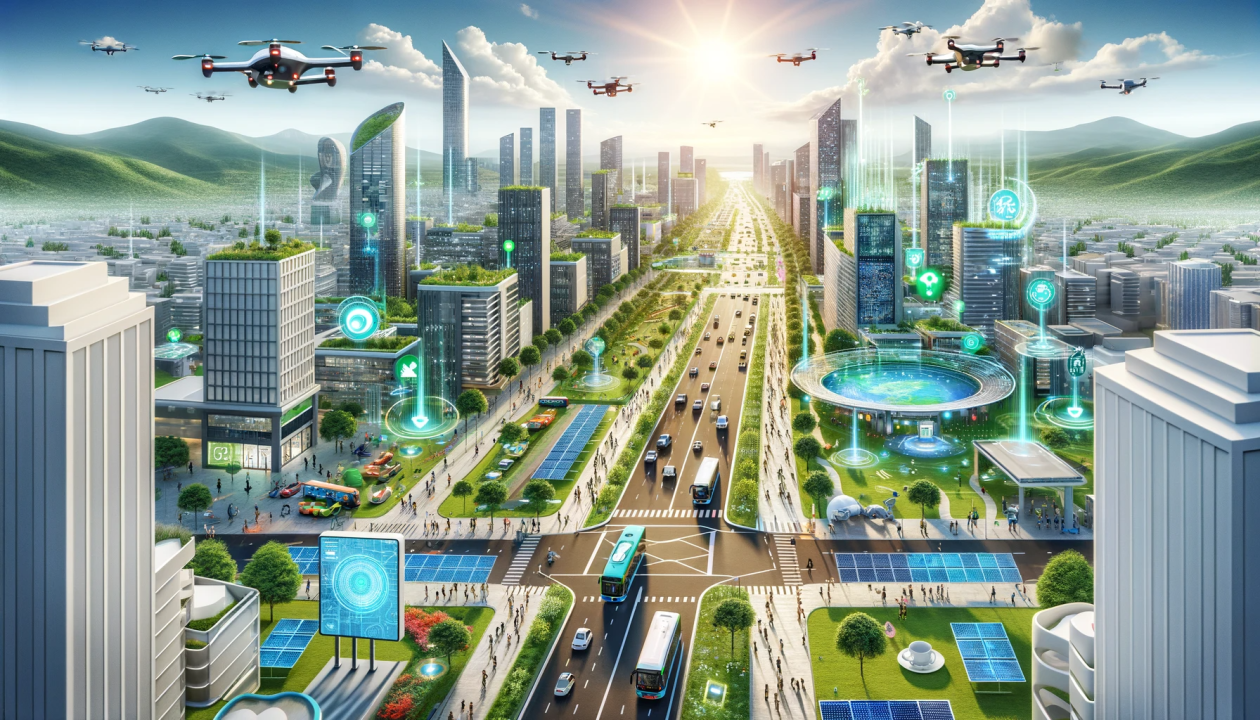
Urbanization is increasing at an unprecedented rate. Cities around the world are expanding rapidly as more people migrate in search of better employment opportunities and improved living standards. While urban growth brings economic development, it also creates significant challenges. Traffic congestion, environmental pollution, inefficient energy consumption, waste management problems, and public safety concerns are becoming major obstacles for city administrators. Traditional methods of urban management often struggle to handle these complex issues effectively. Conventional systems rely heavily on manual processes and static planning, which are not always adaptable to changing urban conditions. As cities grow, the demand for smarter, more responsive solutions increases. Artificial Intelligence (AI) has emerged as a transformative technology that enables cities to operate more intelligently, efficiently, and sustainably. A smart city is an urban environment that uses advanced digital technologies such as AI, Internet of Things (IoT), big data analytics, and cloud computing to enhance infrastructure and public services. AI functions as the core intelligence system within a smart city. It collects data from sensors, cameras, transportation networks, and public services, analyzes patterns, and supports real-time decision-making. Instead of reacting to problems after they occur, AI enables cities to predict and prevent issues before they escalate. The integration of AI into urban environments is not merely about automation. It represents a fundamental shift toward data-driven governance and intelligent infrastructure. By leveraging AI, cities can improve transportation systems, optimize energy consumption, enhance public safety, and provide better services to citizens. The result is a more sustainable and efficient urban ecosystem that improves the quality of life for residents.
AI Applications in Urban Transportation
Transportation is one of the most critical aspects of urban life. Efficient transportation systems enable economic activity and allow citizens to move freely within cities. However, traffic congestion remains a persistent problem in many urban areas. Congested roads lead to delays, increased fuel consumption, and higher carbon emissions. Traditional traffic management systems often rely on fixed signal timings and manual monitoring, which are not always effective in dynamic traffic conditions. AI-powered traffic management systems provide intelligent solutions to these challenges. By analyzing real-time data from road sensors, GPS devices, and surveillance cameras, AI systems can monitor traffic flow and identify congestion points. Traffic signals can be adjusted dynamically based on vehicle movement, reducing waiting times and improving road efficiency. For example, during peak hours, AI algorithms can prioritize major traffic routes, while off-peak hours can be used to optimize signal timings for smoother traffic flow. In addition to traffic signal optimization, AI supports route planning and congestion prediction. By analyzing historical and real-time data, AI systems can predict traffic buildup before it occurs. This allows drivers to receive alternative route suggestions, reducing congestion on major roads. Navigation applications powered by AI provide real-time traffic updates and route recommendations, helping commuters save time and fuel. Public transportation systems also benefit from AI integration. Bus and train schedules can be optimized using AI algorithms that analyze passenger demand patterns. During peak hours, additional services can be deployed to reduce overcrowding. Route optimization ensures that public transport operates efficiently while minimizing operational costs. Over time, improved public transportation services encourage citizens to use buses and trains instead of private vehicles, reducing traffic congestion and environmental pollution. Autonomous vehicles represent another significant advancement in urban transportation. Self-driving cars use AI to navigate roads, detect obstacles, and make driving decisions. Autonomous transportation systems have the potential to reduce accidents caused by human error and improve traffic efficiency. While fully autonomous transportation is still evolving, ongoing research and technological advancements indicate that it will play a major role in future urban mobility.
AI in Energy and Resource Management
Energy consumption in cities is extremely high. Traditional energy distribution systems often struggle to balance supply and demand efficiently. Power outages and energy wastage are common problems in urban environments. AI-powered smart grids provide intelligent solutions by analyzing energy consumption patterns and optimizing electricity distribution. Smart grids use AI algorithms to monitor energy usage in real time. By predicting peak demand periods, energy distribution can be adjusted to prevent overloads and blackouts. Renewable energy sources such as solar and wind power can also be integrated more effectively. AI systems analyze weather conditions and energy generation patterns to optimize the use of renewable resources. This reduces dependence on fossil fuels and supports environmental sustainability. Street lighting systems in smart cities also benefit from AI technology. Traditional street lights often remain switched on throughout the night, consuming unnecessary electricity. AI-powered smart lighting systems use motion sensors to detect pedestrian and vehicle movement. Lights can be automatically adjusted based on activity levels, reducing energy consumption while maintaining public safety. Water management is another critical area where AI contributes to resource optimization. Urban water systems often experience leakage and wastage due to aging infrastructure. AI-enabled monitoring systems detect water leaks and usage anomalies, allowing authorities to take corrective action. Efficient water management ensures sustainable resource utilization and reduces operational costs.
Waste Management and Environmental Monitoring
Urban waste management is a growing challenge as population density increases. Traditional waste collection systems often operate on fixed schedules, regardless of actual waste levels. This can lead to inefficiencies and unnecessary operational costs. AI-powered waste management systems provide smarter solutions by using sensor-equipped smart bins that monitor fill levels in real time. When a smart bin reaches capacity, it automatically notifies waste collection services. AI algorithms then determine the most efficient collection routes, reducing fuel consumption and labor costs. This ensures timely waste removal and contributes to cleaner urban environments. Improved waste management practices also reduce environmental pollution and enhance public hygiene. Environmental monitoring systems powered by AI play a vital role in maintaining urban sustainability. Air pollution is a significant concern in densely populated cities. AI systems collect data from environmental sensors to measure air quality and identify pollution hotspots. Authorities can use this information to implement targeted interventions, such as reducing industrial emissions or promoting green transportation initiatives. Climate monitoring and predictive analytics further support environmental protection. AI models analyze historical climate data and real-time environmental conditions to forecast extreme weather events. Early warnings allow cities to prepare for natural disasters such as floods or heatwaves, minimizing damage and protecting public safety.
Public Safety and Urban Security
Public safety is a fundamental requirement for urban development. Smart cities use AI-powered surveillance and security systems to enhance law enforcement and emergency response capabilities. Intelligent video monitoring systems analyze surveillance footage in real time to detect unusual activities or potential security threats. For example, AI systems can identify abandoned objects in public areas or recognize patterns associated with criminal behavior. Law enforcement agencies benefit from AI-driven crime analytics. By analyzing historical crime data, AI systems can identify high-risk areas and predict potential incidents. This enables police departments to allocate resources more effectively and implement preventive measures. Predictive analytics does not replace human judgment but supports data-driven decision-making in public safety management. Emergency response systems also utilize AI for faster and more efficient operations. During emergencies, time is critical. AI systems analyze traffic conditions and geographic data to determine the fastest routes for ambulances, fire services, and disaster response teams. This reduces response times and improves the effectiveness of emergency services. Disaster management is another area where AI contributes to urban resilience. Flood prediction models use historical rainfall data and environmental sensors to forecast potential flooding events. Early warnings allow authorities to implement preventive measures and evacuate affected areas if necessary. AI-driven disaster preparedness strategies help cities minimize damage and protect citizens.
Challenges of Implementing AI in Smart Cities
While AI offers significant benefits, implementing smart city technologies presents several challenges. High infrastructure costs can be a barrier for many cities, particularly in developing regions. Smart city projects require investment in sensors, data networks, and AI systems. Governments and private organizations must collaborate to develop sustainable funding models. Data privacy and cybersecurity are also major concerns. Smart cities rely on collecting and analyzing large amounts of data. Ensuring that citizen information is protected and used responsibly is essential. Strong cybersecurity measures and transparent data governance policies are necessary to build public trust. AI systems also require skilled professionals for development and maintenance. Cities must invest in education and training programs to develop a workforce capable of managing advanced technologies. Ethical considerations, such as fairness and transparency, must also be addressed to prevent misuse of AI systems.
Future of AI in Smart Cities
The future of AI in urban environments is highly promising. Emerging technologies such as 5G networks, autonomous vehicles, and advanced robotics will further enhance smart city capabilities. Fully automated transportation systems, intelligent energy networks, and predictive urban planning models will transform urban governance. In the coming years, cities may operate with self-learning systems that automatically adjust services based on real-time conditions. AI-driven infrastructure will enable more responsive public services and sustainable development. Urban planning will become more data-driven, allowing cities to grow efficiently while maintaining high living standards. The integration of AI with human governance will remain essential. While AI provides powerful analytical capabilities, human decision-making ensures ethical and socially responsible outcomes. Collaboration between technology and governance will shape the future of urban development.
Conclusion
Artificial Intelligence is revolutionizing urban environments by transforming traditional cities into smart, efficient, and sustainable ecosystems. AI enhances transportation systems, optimizes energy consumption, improves waste management, and strengthens public safety. By leveraging data-driven insights, cities can address complex challenges and provide better services to citizens. Although challenges such as cost, privacy, and ethical considerations exist, the benefits of AI integration are substantial. As technology continues to evolve, smart cities will become more resilient and adaptive. AI-driven urban environments will improve the quality of life for residents and support sustainable development for future generations. The journey toward smarter cities is ongoing. With continued innovation and responsible implementation, AI will play a central role in shaping the cities of tomorrow.
Log in with a verified account to post comments.
Log in · Register
Comments