Introduction
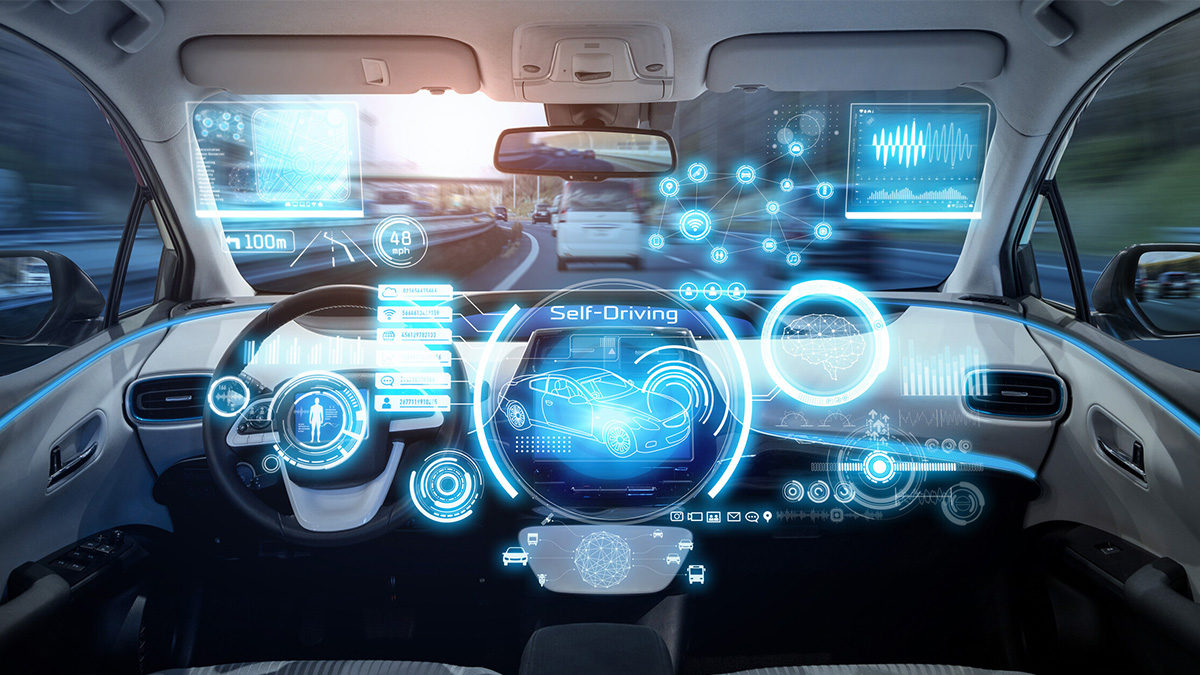
Transportation has always been a vital part of human development. From horse-drawn carriages to modern automobiles, technological advancements have continuously improved mobility and connectivity. Today, Artificial Intelligence (AI) is driving the next major revolution in transportation through autonomous vehicles. Autonomous vehicles, also known as self-driving cars, use AI to navigate roads, detect obstacles, and make driving decisions without human intervention. These vehicles rely on advanced sensors, machine learning algorithms, and real-time data processing to understand their surroundings. Instead of depending on human drivers, AI systems analyze traffic conditions and respond dynamically to changing environments. The development of autonomous vehicles aims to improve road safety, reduce traffic congestion, and enhance transportation efficiency. Human error is a leading cause of road accidents. AI-driven vehicles can minimize accidents by making precise and data-based decisions. Additionally, autonomous transportation has the potential to transform urban mobility and logistics systems. Although fully autonomous vehicles are still evolving, significant progress has been made in self-driving technology. Major automotive and technology companies continue to invest in research and development. The future of transportation will likely feature intelligent vehicles that operate safely and efficiently with minimal human involvement.
How Autonomous Vehicles Use AI
Autonomous vehicles depend on Artificial Intelligence to interpret sensory data and navigate complex environments. Unlike traditional cars that require human drivers, self-driving vehicles use AI algorithms to process information and make driving decisions. Sensors play a crucial role in autonomous navigation. Cameras capture visual data, while radar and LiDAR systems measure distances and detect objects. These sensors provide real-time information about road conditions, pedestrians, and surrounding vehicles. AI systems analyze this data to understand the environment and identify potential hazards. Machine learning algorithms enable autonomous vehicles to improve over time. By learning from vast amounts of driving data, AI systems recognize patterns and refine decision-making capabilities. For example, self-driving cars can learn to identify traffic signs, detect pedestrians, and respond to road conditions. Decision-making is another essential aspect of autonomous driving. AI systems evaluate multiple factors, such as vehicle speed, traffic signals, and surrounding obstacles. Based on this analysis, the vehicle determines the safest and most efficient driving actions. Autonomous vehicles do not rely on pre-programmed instructions for every scenario. Instead, they use AI to adapt to dynamic conditions. This flexibility allows self-driving cars to operate in diverse environments, including urban streets and highways.
AI Sensors and Perception Systems
Perception is fundamental to autonomous vehicle functionality. AI-powered perception systems allow vehicles to "see" and understand their surroundings. These systems rely on multiple sensors to collect and interpret environmental data. Cameras provide visual information similar to human eyesight. AI algorithms process images to identify objects such as vehicles, pedestrians, and traffic signs. Computer vision techniques enable autonomous systems to recognize road markings and lane boundaries. LiDAR (Light Detection and Ranging) technology enhances depth perception. LiDAR sensors emit laser pulses and measure reflected signals to create detailed three-dimensional maps. This helps autonomous vehicles detect objects with high precision. Radar systems measure object speed and distance. Unlike cameras and LiDAR, radar performs well in adverse weather conditions. By combining data from multiple sensors, autonomous vehicles achieve reliable environmental awareness. Sensor fusion integrates information from different sources. AI systems combine camera, radar, and LiDAR data to create a comprehensive understanding of the driving environment. This multi-sensor approach improves accuracy and reduces the risk of perception errors.
Navigation and Path Planning
Navigation is a critical function of autonomous vehicles. AI systems determine optimal routes and plan safe driving paths. Unlike traditional navigation tools, autonomous systems dynamically adjust routes based on real-time conditions. Path planning algorithms calculate the safest trajectory for movement. These algorithms consider factors such as road geometry, traffic conditions, and surrounding obstacles. By analyzing multiple possibilities, AI selects the most efficient driving path. GPS technology assists navigation by providing location data. However, GPS alone is insufficient for autonomous driving. AI systems combine GPS information with sensor data to achieve precise positioning and route planning. Traffic awareness is another important aspect of autonomous navigation. AI systems monitor traffic flow and adjust driving behavior accordingly. For example, vehicles can slow down in congested areas or change lanes to optimize movement. Autonomous navigation aims to improve efficiency and safety. By reducing human errors and optimizing driving decisions, AI-powered vehicles contribute to better transportation systems.
Road Safety and Accident Prevention
Road safety is one of the primary motivations for autonomous vehicle development. Human error contributes to a significant number of traffic accidents. Distracted driving, fatigue, and poor decision-making often result in collisions. AI-driven vehicles can reduce accidents by making data-based decisions. Autonomous systems continuously monitor the environment and respond quickly to hazards. For example, self-driving cars can detect pedestrians and apply brakes automatically to prevent collisions. Predictive analytics enhances accident prevention. AI systems analyze traffic patterns and identify potential risks. If a dangerous situation is detected, the vehicle takes preventive actions to avoid accidents. Autonomous vehicles also eliminate risks associated with distracted driving. Since AI systems handle driving tasks, human distractions do not affect vehicle operation. This improves overall road safety. While autonomous technology is not yet perfect, it has the potential to significantly reduce traffic accidents. Continued advancements in AI will further enhance road safety and transportation reliability.
Challenges of Autonomous Vehicles
Despite their advantages, autonomous vehicles face several challenges. Technical limitations remain a major concern. AI systems must handle complex driving scenarios, including unpredictable human behavior and adverse weather conditions. Safety and reliability are critical requirements. Autonomous vehicles must perform consistently in diverse environments. Extensive testing and validation are necessary to ensure system dependability. Regulatory frameworks also influence autonomous adoption. Governments must establish legal standards for self-driving technology. Clear regulations are essential for safe and responsible deployment. Public acceptance is another important factor. Many people remain cautious about autonomous vehicles. Building trust through transparency and safety improvements is crucial for widespread adoption. Cybersecurity is a growing concern. Autonomous systems rely on digital networks and data communication. Protecting vehicles from cyber threats is essential to prevent unauthorized access and system vulnerabilities. Addressing these challenges requires collaboration between technology developers, policymakers, and industry stakeholders.
Impact on Transportation and Society
Autonomous vehicles have the potential to transform transportation systems. Self-driving technology can improve traffic efficiency by reducing congestion and optimizing road usage. AI-driven vehicles communicate with each other to coordinate movement and minimize delays. Logistics and delivery services also benefit from automation. Autonomous trucks and delivery vehicles can transport goods efficiently, reducing operational costs and improving supply chain performance. Urban mobility will evolve with self-driving technology. Smart cities may integrate autonomous transportation networks to enhance public transit and reduce traffic congestion. AI-powered mobility solutions will shape the future of urban infrastructure. Society will experience broader economic and environmental benefits. Reduced accidents lower healthcare costs and improve road safety. Efficient transportation systems decrease fuel consumption and environmental impact. Autonomous vehicles represent a significant step toward intelligent transportation. Their adoption will influence economic development and urban planning in the coming decades.
Future of Autonomous Vehicles
The future of autonomous vehicles is promising. AI technology continues to advance, enabling more sophisticated self-driving capabilities. Fully autonomous transportation systems may become common in the coming years. Vehicle-to-everything (V2X) communication will enhance autonomous operations. AI systems will communicate with infrastructure, traffic signals, and other vehicles to improve coordination. This technology will create smarter and safer transportation networks. Electric and autonomous vehicles are expected to converge. Electric propulsion combined with AI automation will promote sustainable transportation. Reduced emissions and energy efficiency will support environmental goals. Ongoing research and innovation will shape the evolution of autonomous mobility. While challenges remain, technological progress continues to bring self-driving vehicles closer to widespread adoption.
Conclusion
Artificial Intelligence is revolutionizing transportation through autonomous vehicles. Self-driving technology enhances road safety, improves efficiency, and transforms mobility systems. AI-powered vehicles use advanced sensors and decision-making algorithms to navigate complex environments. Although challenges such as safety, regulation, and public acceptance exist, autonomous technology continues to progress. The future of transportation will feature intelligent systems that operate with minimal human intervention. Autonomous vehicles represent more than technological innovation. They offer opportunities to create safer and more sustainable transportation networks. As AI continues to evolve, self-driving technology will play a central role in shaping the future of mobility.
Log in with a verified account to post comments.
Log in · Register
Comments