Introduction
Agriculture has always been the foundation of human civilization. For centuries, farmers relied on traditional methods and manual observation to grow crops and manage farmland. While these methods served humanity well, modern agriculture faces new challenges. Growing populations require higher food production, climate change affects crop yields, and resource limitations demand more efficient farming practices. Artificial Intelligence (AI) is transforming agriculture by introducing data-driven and automated solutions. Precision farming, also known as smart farming, uses AI and advanced technologies to optimize agricultural processes. Instead of applying uniform farming techniques, precision agriculture analyzes soil conditions, weather patterns, and crop health to make informed decisions. AI-driven farming improves productivity while reducing resource waste. Farmers can use data insights to apply fertilizers and water only where needed, monitor crop growth in real time, and detect plant diseases early. These innovations enhance agricultural efficiency and sustainability. Precision farming represents the future of agriculture. By combining human expertise with AI technology, the agricultural sector can meet global food demands while protecting environmental resources.
How AI Enhances Agriculture
AI improves agriculture through data analysis, automation, and predictive modeling. Traditional farming often relies on experience and observation. While these methods remain valuable, AI provides additional insights that support better decision-making. Machine learning algorithms analyze large datasets collected from farms. These datasets include information about soil composition, weather conditions, and crop performance. AI systems identify patterns and generate recommendations for improving farming practices. For example, AI can predict optimal planting times based on weather forecasts. Farmers can plant crops when conditions are most favorable, increasing the likelihood of successful harvests. Predictive analytics also helps farmers anticipate potential risks such as droughts or pest infestations. Automation further enhances agricultural efficiency. AI-powered machinery and robots perform tasks such as planting seeds, harvesting crops, and monitoring field conditions. These systems reduce manual labor requirements and increase operational productivity. AI does not replace farmers but empowers them with advanced tools. Human expertise remains essential for strategic decisions, while AI supports data-driven operations.
Precision Farming and Resource Optimization
Precision farming focuses on using resources efficiently. Traditional agriculture often applies water, fertilizers, and pesticides uniformly across fields. However, different areas of farmland may require varying levels of resources. AI-driven precision agriculture addresses this challenge by analyzing soil and crop data. Soil sensors measure moisture levels and nutrient content, providing real-time information about field conditions. AI systems interpret this data and recommend targeted resource application. For example, irrigation systems can deliver water only to areas that need it. This reduces water waste and improves crop growth. Similarly, fertilizers can be applied precisely where nutrients are required, minimizing environmental impact. Precision farming also reduces chemical usage. AI systems detect early signs of pest infestations or plant diseases. Farmers can take preventive measures before problems spread, reducing the need for excessive pesticide application. Resource optimization benefits both agriculture and the environment. Efficient farming practices conserve water, reduce chemical pollution, and improve soil health.
AI in Crop Monitoring and Disease Detection
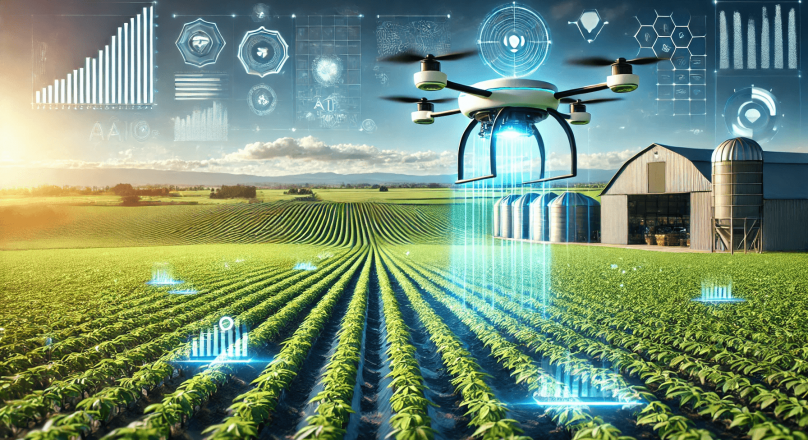
Crop health monitoring is essential for successful farming. Traditional methods rely on visual inspection, which may not detect problems at early stages. AI-powered systems provide continuous monitoring and early disease detection. Drones and satellite imaging capture high-resolution images of farmland. AI algorithms analyze these images to identify signs of crop stress or disease. For example, changes in leaf color may indicate nutrient deficiencies or infections. Early detection enables farmers to take corrective action. If a disease is identified, targeted treatment can prevent widespread crop damage. This improves yield quality and reduces financial losses. AI systems also monitor plant growth patterns. By analyzing historical data, AI predicts crop development and estimates potential harvest yields. Farmers can use this information for better planning and market strategies. Crop monitoring enhances agricultural productivity and reduces risks associated with unpredictable farming conditions.
Smart Irrigation Systems
Water is one of the most important resources in agriculture. However, inefficient irrigation practices often lead to water wastage. Traditional irrigation systems may overwater crops, reducing soil quality and increasing operational costs. AI-powered smart irrigation systems provide a solution. Soil moisture sensors collect real-time data about water levels. AI algorithms analyze this information and determine the optimal amount of irrigation required. Water is delivered only when necessary, ensuring efficient usage. This reduces water consumption while maintaining crop health. Smart irrigation systems are particularly valuable in regions facing water scarcity. Climate conditions also influence irrigation strategies. AI systems consider weather forecasts and evaporation rates to adjust watering schedules. If rainfall is expected, irrigation can be reduced or delayed. Efficient water management supports sustainable agriculture and protects valuable natural resources.
Autonomous Agricultural Machinery
Automation is transforming modern agriculture. AI-powered machines and robots perform tasks that traditionally required human labor. These technologies increase operational efficiency and reduce manual workload. Autonomous tractors can plow fields and plant seeds with precision. GPS-based navigation ensures accurate movement across farmland. Machines operate efficiently, reducing time and labor costs. Harvesting robots also play a significant role in precision farming. These robots identify ripe crops and harvest them without damaging plants. Automation improves harvesting speed and reduces human dependency. AI-driven machinery operates continuously, enabling farms to maintain productivity. Automation does not replace human workers but complements agricultural operations. Farmers can focus on strategic decision-making while AI handles repetitive tasks.
Environmental Sustainability
AI-driven agriculture supports environmental sustainability. Traditional farming methods sometimes contribute to soil degradation and chemical pollution. Precision farming reduces these negative impacts. Targeted resource application minimizes fertilizer and pesticide usage. This protects soil health and prevents contamination of water sources. Sustainable practices improve long-term agricultural productivity. AI also helps combat climate change. Efficient farming techniques reduce greenhouse gas emissions associated with agricultural operations. Smart agriculture promotes responsible resource usage and environmental conservation. Sustainability is essential for future food security. AI-driven solutions ensure that agriculture remains productive without harming ecosystems.
Challenges of AI in Agriculture
Despite its advantages, AI adoption in agriculture presents challenges. High implementation costs can be a barrier for small-scale farmers. Advanced technologies require investment in sensors, machinery, and data systems. Data quality is another concern. AI systems rely on accurate and comprehensive datasets. Incomplete or incorrect data may lead to unreliable recommendations. Technical expertise is also required for effective AI utilization. Farmers must learn to use digital tools and interpret data insights. Training and education programs are necessary to bridge this knowledge gap. Cybersecurity is another important consideration. Agricultural data must be protected from unauthorized access and digital threats. Addressing these challenges is essential for successful AI integration in agriculture.
Future of AI in Agriculture
The future of agriculture will be increasingly data-driven and automated. AI technology will continue to evolve, offering more advanced solutions for farming challenges. Autonomous farming systems will become more sophisticated. Machines will perform complex agricultural tasks with minimal human intervention. Smart farming networks will optimize operations across entire agricultural ecosystems. Predictive analytics will further enhance agricultural planning. AI models will forecast market trends and crop demand, helping farmers make informed business decisions. Climate-smart agriculture will gain importance. AI will support strategies that adapt to environmental changes and promote sustainable food production. The combination of human expertise and AI innovation will shape the future of agriculture.
Conclusion
Artificial Intelligence is revolutionizing agriculture and precision farming. AI-driven technologies enhance productivity, optimize resource usage, and improve crop health monitoring. Precision agriculture enables data-based decision-making, supporting efficient and sustainable farming practices. Automation and predictive analytics transform traditional agricultural methods. Farmers gain access to intelligent tools that improve operational efficiency and reduce environmental impact. While challenges such as implementation costs and technical requirements exist, the benefits of AI adoption are significant. Smart agriculture ensures food security and environmental sustainability. The future of farming lies in innovation. AI and precision agriculture will continue to shape modern food production, creating a more efficient and sustainable agricultural ecosystem.