API-First Development: How Connected Software Systems Create More Flexible Businesses
Modern businesses rarely operate through a single software application. Customer relationship management systems, accounting platforms, inventory applications, e-commerce stores, payment gateways, marketing tools, and analytics platforms often work together to support everyday operations.
However, when these systems cannot exchange information effectively, employees end up transferring data manually, maintaining duplicate records, and switching between applications to complete routine tasks. These disconnected workflows can slow down operations, increase errors, and make it difficult for businesses to respond to changing requirements.
API-first development offers a practical approach to solving this problem. Instead of treating integrations as an afterthought, it makes application programming interfaces (APIs) a fundamental part of software design. Applications are designed around clearly defined interfaces that allow other systems, services, and applications to access data and business capabilities in a controlled and consistent way.
For businesses investing in digital transformation, API-first development can make software more adaptable, simplify system integration, and create opportunities to introduce new digital services without rebuilding existing applications.
This article explores what API-first development means, how it differs from traditional software development, the business benefits it offers, and the technical decisions companies should consider when building connected software systems.
What Is API-First Development?
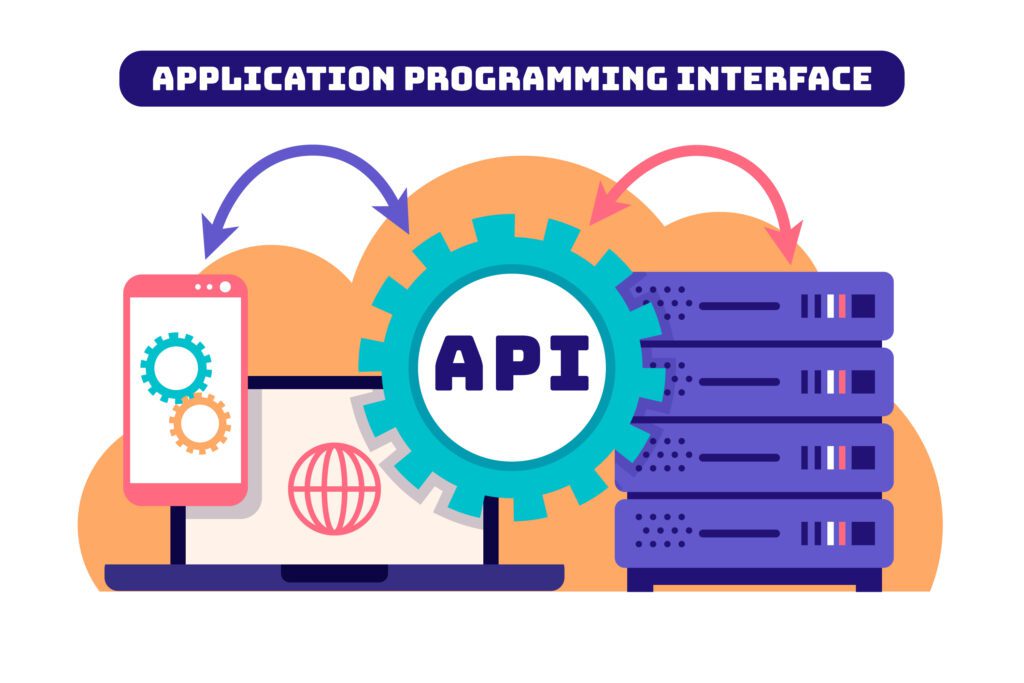
An application programming interface, or API, defines how one software system can communicate with another. It specifies the available operations, the information that can be exchanged, and the rules that govern those interactions.
For example, an inventory management system might expose APIs that allow an e-commerce platform to check product availability, retrieve product details, and submit new orders.
When a customer places an order through the online store, the store can send the order information to the inventory system through an API. The inventory system can then validate the request, record the order, and return a response.
Without this integration, employees might need to transfer order information manually between the two applications.
API-first development means designing and defining these interfaces early in the software development process, before or alongside the implementation of the applications that use them.
The API becomes an agreed contract between software components. Developers can use that contract to build frontend applications, mobile applications, backend services, partner integrations, and automation workflows.
This approach differs from building an application first and adding APIs only when an integration requirement appears.
In an API-first model, the development team considers how the system will communicate with other applications from the beginning. This helps establish consistent data structures, authentication requirements, error-handling rules, and service boundaries.
API-first development does not mean every application must expose a public API or use a microservices architecture. APIs can be internal interfaces used by different parts of an application, private interfaces connecting company systems, or public interfaces made available to approved external developers and business partners.
The appropriate design depends on the product's requirements, security needs, and expected integration scenarios.
Why Businesses Need Connected Software Systems
Many organisations have invested in specialised applications to support individual business functions. Their CRM system manages customer relationships, their accounting platform records financial transactions, their inventory software tracks stock, and their marketing platform manages campaigns.
Each application may work well independently. The challenge emerges when information needs to move between them.
Consider a distributor that receives orders through an online store, manages stock through an inventory system, issues invoices through accounting software, and tracks customer interactions in a CRM.
If these applications operate independently, the organisation may need employees to:
- Copy customer details into multiple systems.
- Update stock quantities manually after orders are received.
- Enter invoice information into accounting software.
- Notify sales teams about important customer activities.
- Reconcile inconsistencies between sales and inventory records.
- Prepare reports by combining information from separate systems.
These tasks consume time and create opportunities for human error.
An API-based integration architecture can allow the applications to exchange information automatically, subject to appropriate business rules and validation.
For example, a completed order could trigger an inventory update, create an accounting transaction, and update the customer's order history. Each system continues to perform its designated role while sharing relevant information through defined interfaces.
The result is a more connected business environment in which employees spend less time coordinating software and more time performing activities that require judgement, expertise, and customer interaction.
1. Design APIs Before Building the Application
One of the central principles of API-first development is to define the interface before finalising the implementation.
This begins by identifying the business capabilities the software should provide and determining how other components will interact with them.
For example, a logistics application might need APIs for creating delivery orders, assigning vehicles, retrieving delivery statuses, updating tracking information, and calculating estimated arrival times.
Instead of creating endpoints independently as each feature is developed, the team defines a consistent API contract.
That contract should specify:
- Available endpoints or operations.
- Required and optional request fields.
- Response structures and data types.
- Authentication and authorisation requirements.
- Validation rules.
- Error responses and status codes.
- Pagination and filtering behaviour where applicable.
- Rate limits and usage restrictions.
- Compatibility and versioning expectations.
Specifications such as OpenAPI can document HTTP-based REST APIs in a structured, machine-readable format. This allows developers to review the interface, generate documentation, and use supporting tools to generate client libraries or validate requests.
Defining the contract early also helps frontend and backend developers work in parallel. The frontend team can develop against an agreed response structure while backend engineers implement the underlying business logic.
This reduces uncertainty and makes it easier to identify integration problems before they become expensive to resolve.
2. Choose the Right API Architecture
API-first development is an approach to designing software interfaces, not a single technology. Several API styles can support this approach, and the right choice depends on the system's use cases.
REST APIs
Representational State Transfer (REST) is a widely used architectural style for APIs that operate over HTTP.
REST APIs commonly represent business entities as resources and use HTTP methods to retrieve or modify them.
For example, an inventory application might provide operations to retrieve products, create orders, update order statuses, and check stock availability.
REST is often a practical choice for web applications, mobile applications, SaaS platforms, and integrations between business systems.
Its broad tooling support and familiarity make it suitable for many commercial applications.
However, API designers still need to establish consistent resource structures, authentication policies, pagination rules, and error responses. Using HTTP does not automatically produce a well-designed REST API.
GraphQL APIs
GraphQL allows clients to request specific fields from a defined data graph.
This can be useful when applications need to retrieve related information from multiple data sources or when different clients require different combinations of fields.
For example, a business dashboard might need a customer's profile, recent orders, and outstanding invoices in one request.
GraphQL can provide flexibility in how clients request data, but it introduces its own design and operational considerations, including query complexity controls, caching strategies, authorisation, and performance monitoring.
It is not automatically more efficient than REST for every workload.
Webhooks and Event-Driven Integration
Not every integration needs to wait for a client to request information.
Webhooks allow one system to notify another when a particular event occurs. For example, a payment provider might notify an e-commerce platform when a payment succeeds or fails.
Event-driven architectures can also use message brokers or event streams to distribute business events between services.
These approaches are useful when systems need to respond to changes asynchronously, such as order creation, payment confirmation, stock updates, or document processing.
However, asynchronous integration requires careful handling of duplicate messages, delivery failures, retries, ordering, and event processing status.
A business may use REST APIs for direct requests, webhooks for notifications, and a messaging platform for high-volume background processing. These approaches can complement one another.
3. Separate Business Logic from the User Interface
Traditional applications sometimes tightly couple business rules to the interface through which users interact with the system.
For example, an order calculation might be implemented inside a web application's backend in a way that assumes all orders originate from that particular website.
If the business later introduces a mobile application, a partner portal, or a separate ordering interface, the development team may need to duplicate or restructure the logic.
An API-first architecture encourages a clearer separation between the user interface, business logic, and data access.
The same order-processing capabilities can potentially serve multiple interfaces through a consistent service layer.
For example, a retailer might operate:
- A customer-facing e-commerce website.
- A mobile application.
- An internal sales dashboard.
- A business-to-business ordering portal.
- A partner integration for approved distributors.
Each interface can use the relevant APIs without independently implementing core business rules.
This approach can reduce duplication and make it easier to introduce new channels.
However, an API should not simply expose database tables or internal functions without considering business requirements. A well-designed interface represents meaningful business capabilities and enforces the rules required to perform them safely.
4. Integrate Existing Business Systems Without Replacing Them
A common challenge in digital transformation is deciding whether to replace an existing application or connect it to newer systems.
Replacing a business-critical application can involve significant migration effort, employee retraining, operational disruption, and financial risk.
API-first development provides another option: retain systems that still deliver value and build controlled interfaces between them.
Consider a company using an established accounting application, a separate CRM, and a newly developed customer portal.
The business may not need to replace its accounting software to provide customers with access to invoices or payment status.
Instead, the portal could retrieve authorised information through an integration layer connected to the accounting system.
Similarly, a CRM might exchange customer and sales information with a marketing platform without requiring employees to maintain separate records manually.
This approach can help organisations modernise incrementally.
The integration design must still account for the limitations of existing systems. Some older applications have restricted APIs, incomplete documentation, limited event support, or data models that do not align with newer applications.
Where direct APIs are unavailable, integration may require supported connectors, middleware, scheduled file exchanges, or carefully controlled adapters.
The objective is to create a reliable path for information exchange while minimising unnecessary disruption to existing operations.
5. Establish Consistent Data Contracts
A successful integration requires more than connecting two endpoints. The participating systems must agree on what the exchanged information means.
For example, one application may represent a customer's status as active, inactive, or suspended, while another uses different labels. One system may store dates in a local format, while another expects timestamps in a standardised format.
If these differences are not addressed, connected systems can exchange technically valid information that is interpreted incorrectly.
API-first development helps teams define data contracts that specify the meaning, structure, and validation rules of exchanged information.
Important considerations include:
Consistent naming: Field names and resource structures should follow agreed conventions.
Data types: Numbers, dates, identifiers, currencies, and Boolean values should be represented consistently.
Validation rules: APIs should define acceptable values, required fields, and constraints.
Business semantics: Terms such as customer, order, payment, and completed should have clear meanings across systems.
Identifier management: The architecture should establish how records are identified and mapped between applications.
Data ownership: Teams should know which system is authoritative for each category of information.
Error handling: Responses should communicate whether a request failed because of invalid data, missing permissions, unavailable dependencies, or a temporary service problem.
Data contracts become especially important when multiple development teams or external partners build systems that need to communicate over several years.
6. Build Security into Every API
APIs provide convenient access to software capabilities, but they can also expose sensitive information and business operations if designed incorrectly.
An API-first strategy should therefore incorporate security from the beginning rather than treating it as a final testing activity.
Authentication and Authorisation
Authentication establishes who or what is making a request. Authorisation determines whether that user or system is permitted to perform the requested action.
A properly authenticated user should not automatically receive unrestricted access to every API operation.
For example, a sales employee may be authorised to retrieve customer information but not to modify financial records or access administrative settings.
APIs should enforce permissions on the server side and validate access to individual resources where required.
Standards and protocols such as OAuth 2.0 and OpenID Connect can support delegated authorisation and identity-related use cases when implemented appropriately.
Protect Sensitive Information
APIs should expose only the information required for a legitimate use case.
Sensitive fields should not be returned unnecessarily, and secrets such as API keys, access tokens, and credentials must be stored and handled securely.
Encryption in transit, secure secret management, access logging, and appropriate data-retention controls are important components of a secure integration architecture.
Apply Rate Limits and Abuse Protection
Rate limiting can help protect services against excessive requests, accidental overload, and certain forms of automated abuse.
The platform may also need request-size limits, input validation, timeouts, and controls for expensive operations.
Validate Every Request
An API should treat incoming data as untrusted, even when requests originate from another internal application.
Validation should check the request structure, field values, resource permissions, and relevant business rules before processing changes.
Monitor API Activity
Monitoring and audit logging can help teams identify unusual traffic, repeated authentication failures, unexpected data access, and integration problems.
Security testing should include common API weaknesses, such as broken object-level authorisation, excessive data exposure, and inadequate rate limiting.
A useful reference is the OWASP API Security Top 10, which describes major categories of API security risk.
Security is particularly important for platforms serving multiple customers because a weakness in a shared API can potentially affect many organisations.
7. Plan for API Versioning and Backward Compatibility
Business requirements change over time. New features may require additional fields, revised validation rules, or changes to how information is represented.
However, external applications and business partners may depend on the existing API contract.
If an update unexpectedly changes that contract, connected systems can fail even when the core application is functioning correctly.
API versioning and compatibility management help reduce this risk.
A well-managed API lifecycle should distinguish between changes that preserve compatibility and changes that require consumers to update their integrations.
Adding an optional response field may be compatible with many clients, while renaming an existing field or changing its meaning may break them.
Before introducing a breaking change, the development team should assess which consumers are affected, communicate the transition plan, and provide an appropriate migration period.
Useful practices include:
- Documenting API changes.
- Maintaining automated contract tests.
- Monitoring usage of older versions.
- Communicating deprecation dates.
- Providing migration guidance for developers.
- Removing obsolete versions through a controlled process.
Not every API needs multiple versions from the beginning. Nevertheless, every API should have a clear approach to managing change.
For SaaS providers and companies building partner ecosystems, compatibility can be an important part of maintaining customer trust.
8. Use API Gateways and Integration Layers Where Appropriate
As the number of connected applications grows, managing every integration independently can become difficult.
An API gateway or integration layer can provide a central point for selected cross-cutting capabilities.
Depending on the architecture, these capabilities may include request routing, authentication enforcement, rate limiting, traffic monitoring, API key management, and usage analytics.
For example, a SaaS provider offering APIs to customers and business partners may use an API gateway to apply consistent traffic policies across several backend services.
An integration layer can also help connect applications with different data formats, authentication mechanisms, and communication patterns.
However, introducing a gateway does not eliminate the need for security checks within backend services. Nor does it automatically solve data inconsistencies or unreliable business processes.
The architecture should distinguish between responsibilities that belong at the gateway and responsibilities that belong within the application.
A small application may not require a dedicated gateway at all. As the number of services, consumers, and external integrations increases, a central management layer may become more valuable.
The best approach is to introduce integration infrastructure in response to real requirements rather than adding components simply because they are common in large enterprise architectures.
9. Enable Faster Product Development Through Reusable APIs
One of the major benefits of API-first development is the ability to reuse existing business capabilities across multiple products and channels.
Suppose a company develops an API that supports customer registration, subscription management, and order processing.
These capabilities may serve the main website, a mobile application, an internal sales tool, and a partner portal.
The company does not need to independently rebuild the underlying business logic for every interface.
This can improve development efficiency and reduce inconsistencies between channels.
API reuse can also support parallel development. Once an interface contract has been agreed upon, different teams can build the components that consume and implement the API independently.
Mock servers and test data can help frontend developers and integration teams begin work before the full backend implementation is available.
However, reusable APIs should represent stable business capabilities rather than becoming collections of overly generic endpoints that are difficult to understand and maintain.
Effective reuse depends on clear ownership, documentation, consistent behaviour, and a willingness to maintain the interface over time.
10. Connect APIs with Workflow Automation and AI
APIs can provide the integration foundation for business automation and AI-powered applications.
Many automation platforms use APIs or prebuilt connectors to exchange information between systems, while AI applications may need to retrieve business data or trigger approved operations.
For example, a customer service workflow could retrieve order information from an e-commerce platform, check delivery status through a logistics API, and prepare a response for an employee to review.
An AI-powered internal assistant might retrieve approved information from a CRM, generate a summary, and create a follow-up task through a separate business application API.
A finance workflow could receive invoice information from a document-processing system and submit validated records to an accounting platform.
In these scenarios, APIs provide a controlled way for applications to access business capabilities.
AI does not remove the need for sound integration design. AI-generated actions should still be validated, authorised, and monitored. High-impact operations, such as approving payments, changing financial records, or deleting business data, may require additional controls or human approval.
APIs used by AI agents should expose only the capabilities the agent needs, with permissions limited to the intended tasks.
For businesses exploring intelligent automation, a well-designed API architecture can make it easier to introduce new workflows without tightly coupling AI functionality to individual applications.
11. Measure API Performance and Reliability
Once applications depend on APIs for important business operations, interface reliability becomes an operational concern.
A slow or unavailable API can interrupt order processing, customer onboarding, payment confirmation, reporting, and other connected workflows.
Businesses should therefore define appropriate performance and reliability expectations for their APIs.
Useful indicators include:
- Request volume.
- Response time and latency percentiles.
- Error rates.
- Service availability.
- Rate-limit activity.
- Timeout frequency.
- Failed integration attempts.
- Queue depth for asynchronous operations.
- Dependency failures.
Monitoring should cover both the API itself and the systems it depends on.
For example, a slow inventory API may be caused by database contention rather than the API interface. A payment integration failure may originate from an external provider.
Distributed tracing, structured logs, metrics, and alerts can help engineering teams identify the source of problems.
Reliability also requires sensible timeout settings, controlled retries, and clear handling of temporary failures.
Retries should be designed carefully because repeating a request can sometimes create duplicate transactions. For operations such as creating orders or recording payments, idempotency mechanisms can help ensure that repeated requests do not unintentionally execute the same business action multiple times.
These measures become particularly important when APIs support revenue-generating or business-critical workflows.
12. Avoid Common API-First Development Mistakes
Although API-first development can improve flexibility, poorly designed APIs can create a new layer of complexity.
Several mistakes are worth avoiding.
Designing APIs around database tables: Exposing raw data structures without considering business operations can make interfaces difficult to maintain and insecure. APIs should reflect meaningful capabilities and enforce business rules.
Building too many endpoints too early: Defining interfaces for hypothetical future requirements can delay delivery and create unnecessary maintenance work. Prioritise real use cases while leaving room for sensible evolution.
Ignoring the needs of API consumers: Interfaces should be understandable and practical for the teams and applications that use them. Developer experience, documentation, predictable errors, and consistent naming all matter.
Treating internal APIs as automatically secure: Internal network access is not a substitute for authentication, authorisation, and appropriate service-to-service controls.
Overlooking data consistency: Two systems may update related records at different times. The architecture should define which system owns the data and how changes are reconciled.
Ignoring operational costs: API traffic, third-party usage charges, monitoring, data transfer, and infrastructure consumption can increase as adoption grows.
Failing to manage change: Uncontrolled modifications can break existing integrations and damage relationships with customers or partners.
Choosing microservices without a clear need: API-first design does not require every business function to become a separate service. A modular application can provide well-defined interfaces without the operational overhead of a distributed architecture.
The goal is not to maximise the number of APIs. It is to create a clear, reliable, and secure way for software systems to work together.
13. A Practical Roadmap for Adopting API-First Development
Businesses do not need to redesign every application at once to benefit from API-first principles.
A phased approach can help introduce the necessary practices while maintaining existing operations.
Phase 1: Identify Integration Priorities
Map the software applications currently used across the organisation and identify where manual data transfers, duplicate records, and disconnected workflows create the greatest operational problems.
Prioritise integrations based on business value, implementation effort, security requirements, and the frequency of the process.
Phase 2: Define the Data and Interface Contracts
Identify which application owns each category of information and determine how the participating systems should exchange it.
Define API operations, request and response formats, validation rules, authentication requirements, and error-handling behaviour.
Phase 3: Build and Test a High-Value Integration
Start with a focused use case, such as synchronising customer records, updating inventory after an order, or transferring validated invoice data to accounting software.
Use automated tests to verify expected behaviour, permissions, error handling, and data consistency.
Phase 4: Introduce Monitoring and Operational Controls
Establish logging, performance monitoring, access controls, rate limits, and alerting appropriate to the integration's business importance.
Document recovery procedures and determine how failures will be detected and resolved.
Phase 5: Expand the Integration Architecture
Once the first integration is stable, apply the lessons learned to additional systems.
Standardise documentation, testing, authentication, versioning, and deployment practices so that new integrations become easier to build and maintain.
Phase 6: Support New Digital Capabilities
With reliable interfaces in place, evaluate opportunities to introduce mobile applications, partner portals, workflow automation, customer self-service features, and AI-powered business applications.
Each new capability should use the relevant interfaces while preserving established security and business rules.
This approach allows businesses to improve connectivity incrementally rather than committing to a disruptive, organisation-wide replacement programme.
How Bluechip Technologies Asia Supports API-Driven Software Development
Bluechip Technologies Asia is a Sri Lankan software development and technology outsourcing company supporting businesses with custom software development, AI and machine learning, cloud technologies, data engineering, and dedicated development teams.
For businesses seeking to connect existing systems or develop new digital products, API-first development can provide a foundation for more flexible software architecture.
Depending on the project requirements, Bluechip can support the development of custom applications, backend APIs, third-party integrations, cloud-based services, data exchange workflows, and AI-powered capabilities.
An engagement may involve designing APIs for a new SaaS product, integrating a CRM with operational systems, connecting an e-commerce platform to inventory and accounting applications, or modernising an existing application so that other systems can use its business capabilities.
A structured approach begins by identifying the business problem, understanding the existing technology environment, defining the integration requirements, and selecting an appropriate architecture.
The development team can then work through interface design, implementation, testing, security controls, deployment, and ongoing improvements.
For international businesses, working with an external development partner can provide additional engineering capacity without requiring every specialist capability to be recruited permanently.
The objective is to create connected software that supports the business's current requirements while making future integrations, products, and workflows easier to introduce.
Conclusion: Build Software That Can Evolve with Your Business
API-first development helps businesses treat software integration as a core architectural consideration rather than a series of disconnected technical tasks.
By defining clear interfaces, establishing consistent data contracts, enforcing security, and planning for compatibility, organisations can make their applications easier to connect, extend, and maintain.
The benefits extend beyond technical convenience. Connected software can reduce manual work, improve data consistency, support new customer channels, enable business partnerships, and create a foundation for workflow automation and AI.
However, effective API-first development requires more than exposing endpoints. It requires a clear understanding of business capabilities, data ownership, security boundaries, operational reliability, and the needs of the applications that will consume each interface.
Businesses should begin with their most valuable integration requirements, establish sound design practices, and expand their API architecture as their needs evolve.
With the right technical decisions and engineering approach, connected software systems can help businesses respond more quickly to changing market demands, launch new digital services, and build a more flexible technology foundation for long-term growth.
#APIFirstDevelopment #APIDevelopment #SoftwareIntegration #RESTAPI #SoftwareArchitecture #DigitalTransformation #CustomSoftwareDevelopment #CloudComputing #BusinessAutomation #AIIntegration #TechnologyOutsourcing #SaaSDevelopment #BluechipTechnologiesAsia
Log in with a verified account to post comments.
Log in · Register
Comments