Introduction
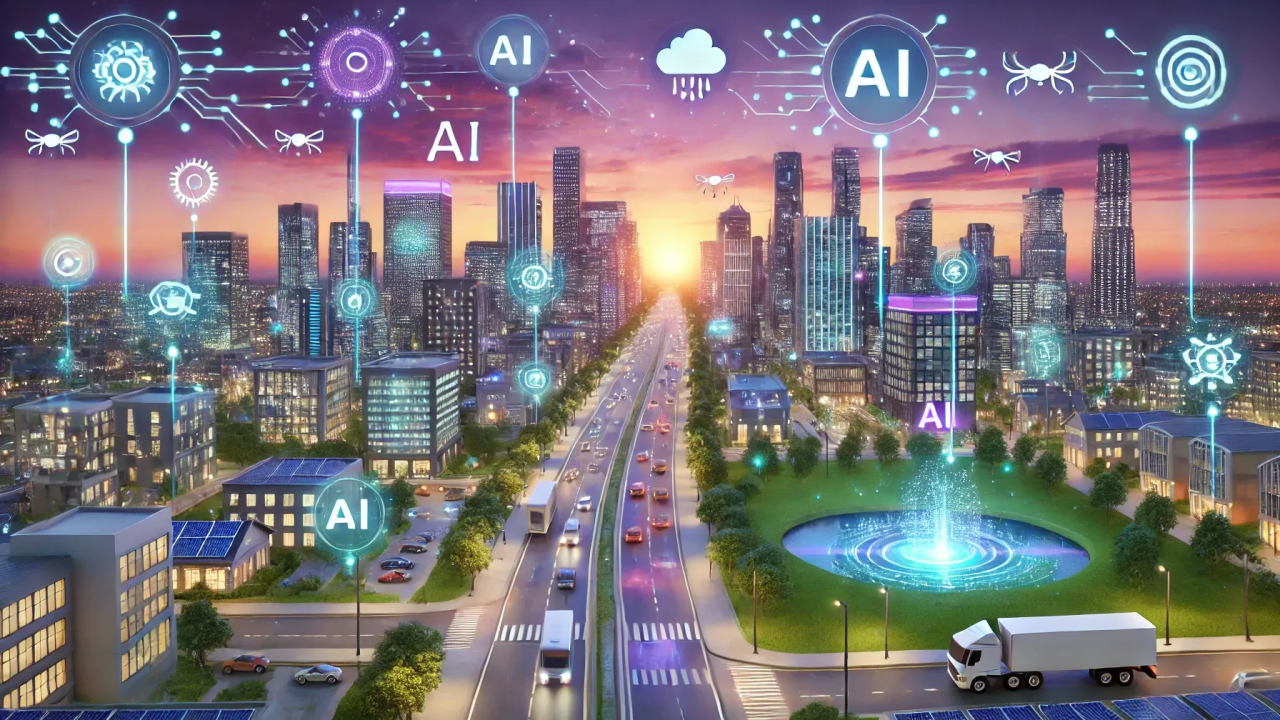
Urban areas are growing rapidly, and cities now house more than half of the world’s population. While cities drive economic growth and innovation, they also consume large amounts of energy and contribute significantly to environmental pollution. Buildings, transportation systems, and industrial activities generate greenhouse gas emissions that affect climate conditions. Managing urban environments in a sustainable way is essential for reducing environmental impact and improving quality of life. Traditional city management systems often rely on manual processes and static infrastructure. However, modern cities require dynamic solutions that respond to real-time environmental conditions. Artificial Intelligence (AI) is transforming urban management through the concept of smart cities. AI-powered technologies help cities optimize energy consumption, improve transportation systems, and enhance environmental sustainability. By analyzing data and automating decision-making, AI supports climate-friendly urban development.
Understanding Smart Cities and Climate Control
A smart city uses digital technologies to improve urban services and infrastructure. Sensors, data analytics, and automation systems collect information about traffic, energy usage, air quality, and public services. This data helps city administrators make informed decisions. Climate control is a critical aspect of smart city development. Urban areas experience unique environmental challenges such as heat islands, air pollution, and energy inefficiency. The urban heat island effect occurs when cities become significantly warmer than surrounding rural areas due to human activities and infrastructure. Buildings and roads absorb heat during the day and release it at night, increasing local temperatures. Higher temperatures lead to increased energy consumption for cooling systems and contribute to greenhouse gas emissions. AI helps address these challenges by optimizing urban systems and reducing environmental impact. Smart cities use AI to improve energy efficiency, manage resources, and create sustainable urban environments.
AI and Energy Efficiency in Urban Areas
Energy consumption is one of the largest contributors to urban emissions. Buildings require electricity for lighting, heating, and cooling, while transportation systems depend on fuel and energy. AI enhances energy efficiency by analyzing consumption patterns and optimizing energy distribution. Smart building systems use AI to monitor temperature and occupancy levels. Based on this data, heating and cooling systems adjust automatically to minimize energy waste. For example, if a building is unoccupied, AI systems can reduce energy usage by lowering heating or turning off non-essential systems. This approach reduces electricity consumption and lowers operational costs. Smart grids are another important application of AI in energy management. A smart grid uses data analytics to balance electricity supply and demand. AI systems monitor energy usage patterns and distribute electricity efficiently across the network. By improving energy management, smart cities reduce environmental impact and support sustainable urban development.
AI in Transportation and Traffic Management
Transportation systems play a major role in urban emissions. Vehicles produce greenhouse gases and contribute to air pollution. Traffic congestion further increases emissions by causing vehicles to idle in traffic. AI helps cities optimize transportation systems and reduce emissions. Smart traffic management systems use sensors and data analytics to monitor traffic flow. AI algorithms analyze this data and adjust traffic signals to reduce congestion. For example, if traffic density increases in a particular area, AI systems can modify signal timing to improve traffic movement. This reduces vehicle idling time and lowers fuel consumption. Public transportation systems also benefit from AI technology. Predictive analytics helps transportation planners optimize bus and train schedules based on passenger demand. Efficient public transportation reduces reliance on private vehicles and decreases urban emissions. By improving transportation efficiency, AI contributes to sustainable urban mobility.
AI and Environmental Monitoring
Monitoring environmental conditions is essential for climate control in smart cities. Air quality, temperature, and pollution levels affect public health and environmental sustainability. AI-powered environmental sensors collect data about urban conditions. These sensors measure air pollution, temperature, and humidity in real time. AI systems analyze this information to identify environmental trends and potential risks. For example, if air pollution levels increase, city authorities can implement measures to reduce emissions. Traffic restrictions, industrial regulations, and public awareness campaigns help improve air quality. AI also supports urban planning by identifying areas that require environmental improvements. Data-driven insights help city administrators develop strategies for sustainable development. Environmental monitoring enhances urban resilience and climate adaptation.
Smart Buildings and Sustainable Infrastructure
Buildings are significant contributors to urban energy consumption. Heating, cooling, and lighting systems require large amounts of electricity. Traditional infrastructure often lacks efficiency, leading to energy waste. Smart buildings use AI to optimize energy usage and improve environmental performance. Sensors monitor temperature, occupancy, and energy consumption. AI systems analyze this data and adjust building operations automatically. For example, lighting systems can turn off in unused areas, and climate control systems can adapt to occupancy levels. These adjustments reduce energy consumption without compromising comfort. Sustainable infrastructure design also supports climate control. Urban planners use AI-driven insights to design energy-efficient buildings and public spaces. Green architecture and renewable energy systems further enhance sustainability. Smart infrastructure development promotes long-term environmental benefits.
Data-Driven Decision Making in Urban Management
Effective urban management requires data-driven decision-making. AI collects and analyzes information about city operations, providing insights that support strategic planning. For example, data analytics helps city administrators understand population trends and infrastructure needs. This information guides urban development and resource allocation. AI also improves public services by identifying areas for optimization. Waste management systems use data to optimize collection routes and reduce operational costs. Water management systems monitor usage patterns and prevent resource waste. Data-driven solutions enhance urban efficiency and sustainability.
Challenges in Implementing Smart City Technologies
While AI offers significant benefits, implementing smart city technologies presents challenges. Infrastructure development requires investment in sensors, networks, and data systems. Developing countries may face financial constraints in adopting advanced technologies. Data privacy and security are also important considerations. Smart city systems collect large amounts of information, and protecting sensitive data is essential. Additionally, technology alone cannot solve urban challenges. Human expertise and policy frameworks play critical roles in urban development. Successful smart city initiatives require collaboration between governments, technology providers, and communities.
The Future of Smart Cities and Climate Control
The future of urban development will increasingly rely on AI and sustainable technologies. Smart cities will integrate advanced data systems to optimize environmental performance. Autonomous systems may manage urban infrastructure, improving efficiency and reducing human intervention. AI-driven urban planning will support sustainable growth and resource management. Renewable energy integration will further enhance climate control. Solar panels, wind energy, and energy storage systems will power urban infrastructure. By combining innovation and sustainability, cities can reduce environmental impact and improve quality of life.
Conclusion
Urbanization presents both opportunities and challenges. Cities drive economic progress, but they also contribute to environmental issues. Sustainable urban development is essential for addressing climate change. Artificial Intelligence is transforming smart cities by optimizing energy usage, improving transportation systems, and enhancing environmental monitoring. These technologies support climate control and sustainable urban growth. However, technology alone is not sufficient. Effective urban development requires collaboration between governments, organizations, and communities. By embracing AI-driven solutions and sustainable practices, cities can create resilient and environmentally friendly urban environments for the future.
Log in with a verified account to post comments.
Log in · Register
Comments