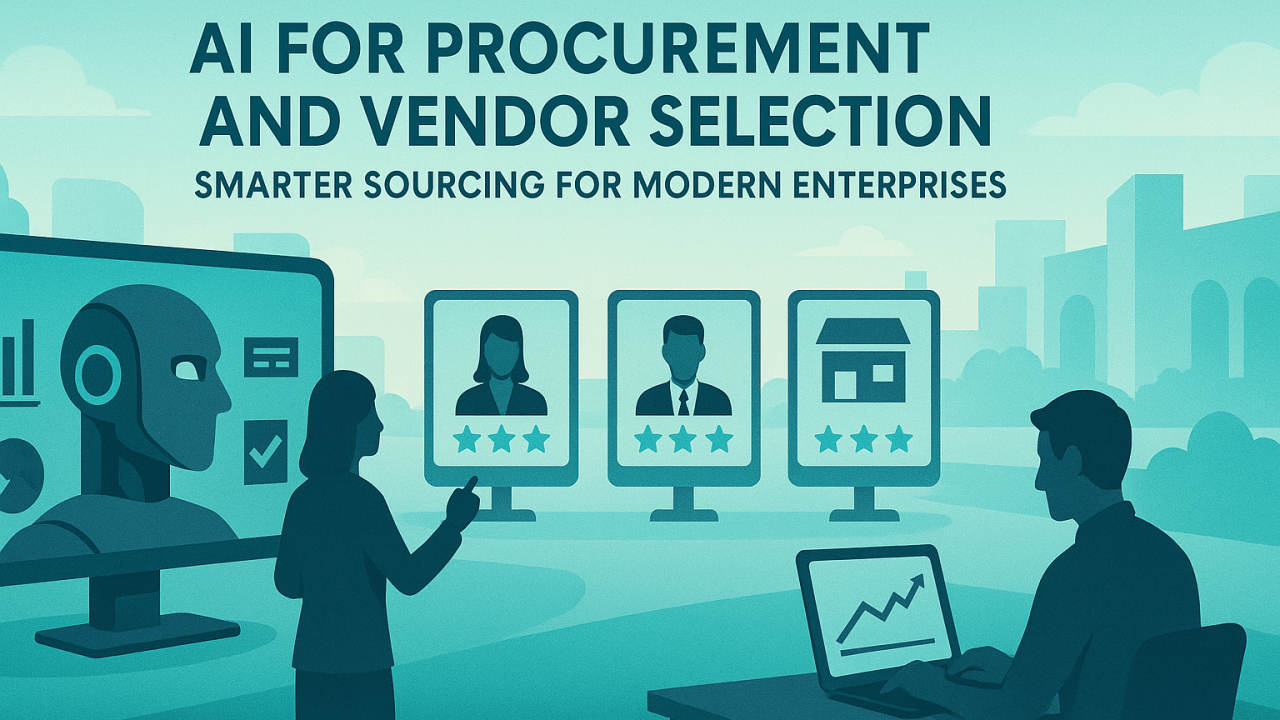
In today's fast-paced business landscape, procurement is no longer just a cost center, it’s a strategic function that directly impacts profitability, supply chain resilience, and competitive advantage. However, traditional procurement processes are often bogged down by manual evaluations, fragmented supplier data, and time-consuming negotiations. This is where Artificial Intelligence (AI) is making a powerful impact.
By leveraging AI for procurement and vendor selection, organizations can streamline sourcing, reduce risk, and make more data-driven decisions. Let’s explore how AI is transforming the way businesses approach supplier selection and procurement management.
Why Traditional Procurement Falls Short
Procurement teams have historically relied on manual processes to assess vendor proposals, negotiate contracts, and ensure compliance. These approaches are often:
Time-intensive: Manual vendor research and comparisons consume hours of labor.
Subjective: Supplier decisions are frequently influenced by incomplete or outdated data.
Risk-prone: Lack of early risk detection can lead to supplier failures or non-compliance.
Inefficient: Poor visibility into supplier performance hinders continuous improvement.
AI changes the game by enabling intelligent automation, predictive insights, and real-time decision-making.
Article content
How AI Enhances Procurement and Vendor Selection
1.Automated Supplier Discovery
AI-powered platforms can scrape, analyze, and rank thousands of suppliers based on pre-defined criteria such as quality ratings, financial stability, certifications, and delivery performance. This dramatically reduces the time it takes to build a qualified vendor shortlist.
Example: Natural Language Processing (NLP) algorithms scan supplier websites and documents to extract relevant data and match them to procurement requirements.
2.Vendor Risk Assessment
AI can assess vendor risk by analyzing both internal data (past performance, delivery times, contract breaches) and external sources (news, ESG scores, legal databases). It flags potential risks such as supply chain disruptions, geopolitical issues, or reputational damage.
Example: Machine learning models can detect patterns that signal financial distress in a supplier before it becomes a problem.
3.Smart Proposal Evaluation
AI can read and compare vendor proposals using NLP and machine learning. It scores proposals based on compliance, pricing, timelines, and quality metrics, removing bias and improving consistency.
Benefit: This reduces evaluation time from days to hours while ensuring objective and comprehensive comparisons.
4.Predictive Analytics for Demand and Pricing
AI models can forecast demand, raw material prices, and market fluctuations to inform better sourcing strategies. This ensures procurement teams negotiate with foresight and flexibility.
Example: Predictive algorithms may recommend delaying a bulk order based on an upcoming price drop or seasonal supplier discounts.
5.Contract Analysis and Compliance Monitoring
AI tools analyze existing contracts to extract key clauses, flag risky terms, and track compliance. This ensures that suppliers adhere to service level agreements (SLAs) and that risks are proactively managed.
Business Benefits of AI-Driven Procurement
· Faster Time-to-Decision: AI accelerates the procurement process by automating data collection, vendor evaluation, and proposal analysis. This reduces the time needed to shortlist and select suppliers, enabling procurement teams to make quicker, more confident decisions. Faster decisions help businesses respond promptly to market changes and project demands.
· Cost Savings: By analyzing vast amounts of data on pricing trends, supplier performance, and market conditions, AI uncovers the most cost-effective source options. It also identifies opportunities for negotiation and volume discounts that might be missed manually. Ultimately, this leads to smarter contracts and significant reductions in procurement costs.
· Improved Supplier Relationships: AI tools provide continuous insight into supplier performance, delivery reliability, and compliance with contract terms. This data enables procurement teams to proactively address issues and foster collaboration, creating stronger, more transparent partnerships. Better relationships lead to improved service quality and long-term value for both parties.
· Greater Risk Control: AI continuously monitors internal and external risk factors such as financial health, geopolitical events, and regulatory changes. It flags potential supplier risks early, allowing teams to take preventive actions before disruptions occur. This proactive risk management reduces supply chain vulnerabilities and protects business continuity.
· Scalability: As companies grow, managing an expanding supplier base manually becomes inefficient and error prone. AI-driven procurement platforms automate routine tasks and data analysis, enabling teams to scale sourcing operations without increasing headcount. This ensures consistent quality and control, even with larger and more complex vendor networks.
Use Cases Across Industries · Manufacturing: AI automates the sourcing of parts and raw materials by quickly identifying and evaluating suppliers worldwide. This helps manufacturers maintain steady production lines and avoid costly delays caused by shortages. The technology also optimizes supplier selection based on quality, cost, and delivery reliability.
· Retail: In retail, AI enhances vendor management by analyzing sales trends and predicting seasonal demand fluctuations. This allows businesses to negotiate better contracts and stock inventory more efficiently, reducing overstock and stockouts. As a result, retailers improve customer satisfaction while controlling costs.
· Healthcare: AI helps healthcare organizations ensure compliance with regulations and ethical standards by scrutinizing supplier credentials and certifications. It also monitors supplier performance to guarantee timely delivery of critical medical supplies. This minimizes risks in patient care and maintains trust in the supply chain.
· Construction: AI assists construction firms by pre-qualifying subcontractors based on safety records, certifications, and past project performance. This streamlines the bidding process and reduces risks associated with contractor reliability. Ultimately, AI supports safer job sites and on-time project completion.
Getting Started: Key Steps
· Digitize Your Procurement Data: Begin by centralizing all procurement-related information, including supplier details, contracts, and spending records. This digital foundation makes data accessible and ready for AI analysis. Having clean, organized data is crucial for unlocking the full benefits of AI in procurement.
· Choose the Right AI Tools: Select AI platforms that specialize in procurement intelligence and have a track record of successful deployments. Evaluate their capabilities such as supplier evaluation, risk assessment, and contract analysis. Picking the right tools ensures your AI investment delivers measurable value.
· Integrate with ERP Systems: Connect your AI procurement solution with existing ERP and business systems to enable smooth data exchange. This integration creates a unified ecosystem where procurement decisions are informed by real-time operational data. It reduces manual work and improves accuracy across processes.
· Start Small: Launch AI initiatives with a pilot project focused on a specific procurement category or vendor group. This approach allows you to test the technology, measure impact, and gather user feedback without overwhelming your team. Once proven, you can scale AI across other procurement areas effectively.
Article content
Final Thoughts
AI is not here to replace procurement professionals, it’s here to empower them. With AI tools handling data-heavy tasks and risk analysis, procurement teams can focus on strategic decisions, relationship-building, and innovation.
Organizations that embrace AI-driven procurement and vendor selection will not only reduce costs but also build a more agile, transparent, and competitive supply chain.
Log in with a verified account to post comments.
Log in · Register
Comments