Introduction
Drought is one of the most serious environmental challenges affecting many regions around the world today. It occurs when an area experiences a long period of low rainfall, resulting in water shortages that can damage agriculture, ecosystems, and human life. Climate change has increased the frequency and severity of droughts in many parts of the world. Rising temperatures, irregular rainfall patterns, and increased evaporation have made drought conditions more difficult to predict and manage. In the past, drought monitoring depended mainly on weather observations and historical climate data. While these traditional methods were useful, they were often slow and sometimes inaccurate. Today, Artificial Intelligence (AI) is transforming how scientists monitor, predict, and manage drought conditions. By analyzing large volumes of environmental data, AI can identify early signs of drought and help governments, farmers, and organizations take action before the situation becomes severe. AI technologies are helping experts better understand soil moisture levels, rainfall patterns, vegetation health, and water availability. These insights allow communities to prepare for drought conditions and reduce the negative impacts on agriculture, water resources, and food security.
Understanding Drought and Its Impact
Drought affects many aspects of life, especially agriculture and water supply. When rainfall decreases for a long period, rivers, lakes, and reservoirs begin to dry up. Farmers struggle to grow crops because there is not enough water for irrigation. Livestock may suffer from lack of water and food, and communities may face serious water shortages. There are several types of drought:
•Meteorological drought, which occurs when rainfall is significantly below normal levels.
•Agricultural drought, which happens when soil moisture becomes too low to support crop growth.
•Hydrological drought, which affects water levels in rivers, lakes, and groundwater sources.
Climate change has increased the risk of all these types of drought. Higher temperatures cause more evaporation, meaning that water disappears from soil and water bodies more quickly. This makes it even more important to monitor drought conditions accurately and respond quickly.
How AI Improves Drought Monitoring
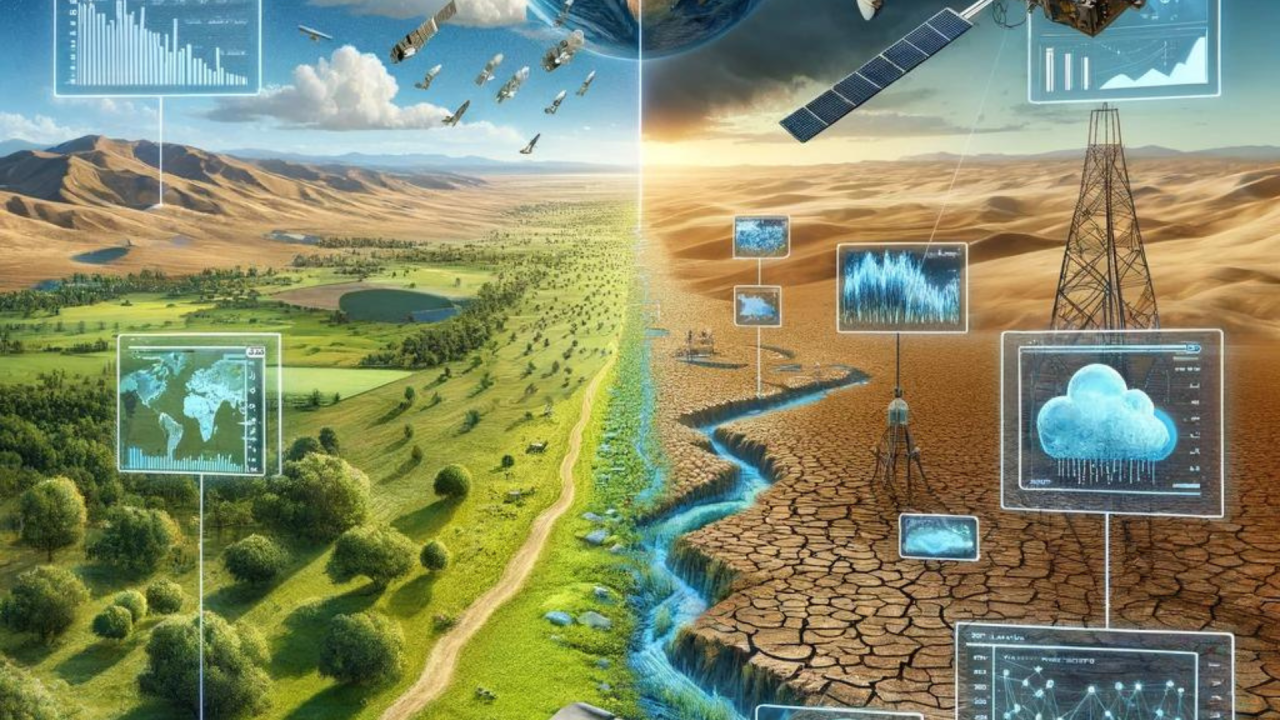
Artificial Intelligence plays an important role in analyzing environmental data to detect drought conditions early. AI systems can process huge amounts of information from satellites, weather stations, soil sensors, and climate models. This allows researchers to observe changes in the environment that may indicate the beginning of drought. Machine learning algorithms can study patterns in rainfall, temperature, soil moisture, and vegetation health. By identifying unusual patterns, AI can warn experts about possible drought conditions before they become severe. Early warnings allow governments and communities to prepare and reduce potential damage. For example, satellite images can show changes in vegetation color and growth. When plants begin to lose moisture, their color changes slightly. AI systems can analyze these images and detect signs of plant stress much earlier than humans can. This helps experts understand which areas are at risk of drought. AI can also monitor soil moisture levels. Sensors placed in the soil collect data about how much water is available for crops. AI analyzes this data and identifies areas where soil is drying faster than expected.
AI and Satellite Technology
Satellite technology plays a major role in drought monitoring, and AI helps analyze the large amount of data collected from satellites. Earth observation satellites continuously capture images of forests, farmland, rivers, and lakes around the world. AI algorithms can study these satellite images to measure vegetation health, water levels, and land surface temperatures. By comparing images taken over time, AI can identify areas where drought conditions are developing. For example, when plants do not receive enough water, their growth slows down. AI can detect these small changes in vegetation and send alerts to scientists and agricultural experts. This information helps them take early action to protect crops and manage water resources. Satellite-based AI systems are especially useful for monitoring remote areas where ground-based observations are limited. This makes drought monitoring more effective on a global scale.
Supporting Farmers with AI Drought Monitoring
Farmers are among the groups most affected by drought. When water becomes scarce, crop production decreases, leading to financial losses and food shortages. AI-powered drought monitoring tools help farmers make better decisions about irrigation and crop management. By analyzing weather forecasts, soil moisture levels, and crop conditions, AI systems can provide farmers with recommendations on when and how much to irrigate their fields. This helps farmers use water more efficiently and avoid wasting valuable resources. Some modern farming platforms use AI to send alerts to farmers through mobile apps. These alerts inform farmers about potential drought risks, allowing them to prepare in advance. For example, farmers may choose drought-resistant crops or adjust planting schedules to reduce the impact of water shortages. AI-based drought monitoring can also help governments support farmers by identifying regions that need emergency assistance or irrigation support.
Water Resource Management Using AI
AI is also improving how governments and organizations manage water resources during drought conditions. Water managers need to make important decisions about how to distribute limited water supplies among agriculture, industries, and communities. AI systems can analyze water consumption patterns, rainfall predictions, and reservoir levels to help authorities plan water usage more effectively. By predicting future water shortages, AI allows governments to take preventive actions such as water conservation measures or infrastructure improvements. For example, AI can help manage reservoirs by predicting how much water will be needed in the coming months. This allows water managers to release water carefully and maintain sufficient supplies for future needs. In cities, AI-based systems can also detect water leaks and inefficiencies in water distribution networks. Fixing these issues helps reduce water loss and improve overall water management during drought periods.
Global Drought Monitoring Systems
Several global organizations are already using AI to monitor drought conditions worldwide. AI-based drought monitoring platforms combine data from satellites, weather stations, and climate models to provide accurate drought forecasts. These systems help scientists track drought conditions across continents and identify regions that need urgent attention. International organizations use this information to plan humanitarian aid, support agriculture, and manage water resources more effectively. By sharing data across countries and research institutions, AI-powered monitoring systems are improving global cooperation in dealing with drought challenges.
Challenges of Using AI in Drought Monitoring
Although AI offers many advantages, there are also challenges in using these technologies for drought monitoring. One major challenge is the availability of reliable data. AI systems require large amounts of high-quality data to produce accurate predictions. In some developing regions, there may be limited weather stations or environmental sensors. This makes it more difficult to collect the data needed for AI analysis. Another challenge is the cost of implementing advanced AI technologies and satellite monitoring systems. Some countries may lack the financial resources or technical expertise required to develop these systems. However, as technology continues to improve and become more affordable, more countries are expected to adopt AI-based drought monitoring solutions.
The Future of AI in Drought Monitoring
The future of drought monitoring looks promising with the continued development of Artificial Intelligence. Advances in machine learning, satellite technology, and environmental sensors will allow scientists to detect drought conditions earlier and more accurately. AI systems may soon be able to predict drought months or even years in advance by analyzing long-term climate patterns. This will give governments and farmers more time to prepare and reduce the impacts of water shortages. Smart farming technologies will also become more common, allowing farmers to automatically adjust irrigation systems based on AI recommendations. This will help conserve water while maintaining crop productivity. In addition, international collaboration and data sharing will improve global drought monitoring efforts. By combining data from multiple sources, AI systems will provide a clearer picture of global water resources and climate conditions.
Conclusion
Drought is a major challenge that threatens agriculture, water supply, and food security around the world. Climate change has made drought conditions more frequent and unpredictable, increasing the need for advanced monitoring solutions. Artificial Intelligence is playing a crucial role in improving drought monitoring and management. By analyzing environmental data, satellite images, and climate models, AI helps scientists detect early signs of drought and provide accurate predictions. These technologies support farmers, governments, and water managers in making better decisions about water use and agricultural planning. Although there are still challenges in implementing AI systems, continued technological advancements will make drought monitoring more effective in the future. By combining AI with global cooperation and sustainable water management practices, societies can reduce the risks associated with drought and protect vital natural resources for future generations.
Log in with a verified account to post comments.
Log in · Register
Comments