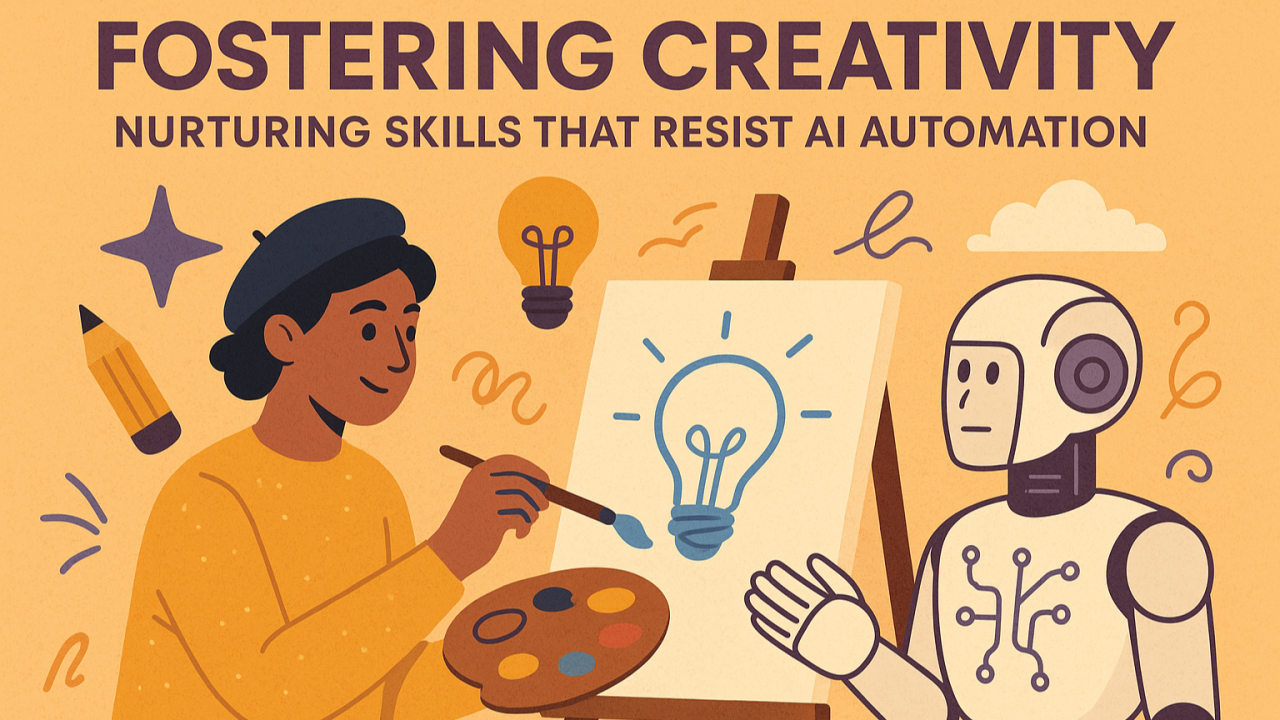
As artificial intelligence redefines the rules of work, one domain remains distinctly human: creativity. While machines excel at performing repetitive, rules-based tasks with impressive speed, they struggle when it comes to original thought, artistic vision, and emotional resonance. In this increasingly automated world, creativity is not a soft skill—it's a strategic advantage.
Article content
The Limitations of AI in Creativity
AI can generate images, compose music, and write articles. But what it creates is often based on pattern recognition and statistical likelihood, not intention or experience. These tools are trained on past human input, meaning they lack the ability to produce something truly new or to understand the cultural and emotional context that gives art its impact.
Creative work whether it’s writing a compelling story, designing a product that changes how we live, or building a brand that inspires loyalty draws on empathy, personal history, social dynamics, and intuition. These are not programmable features. They are lived human experiences.
Reimagining Education and Training for a Creative Future
To equip future generations for a world where AI does the “thinking,” we must teach them how to imagine, empathize, and create. This means moving beyond rote learning to foster critical thinking, collaboration, and self-expression. Schools must embrace interdisciplinary learning where arts, humanities, and technology are integrated not siloed.
In professional environments, companies need to shift from efficiency-based cultures to innovation-driven ones. Encouraging experimentation, valuing diverse viewpoints, and allowing room for failure are essential to creative growth. Organizations that stifle creativity in favor of productivity metrics will struggle to differentiate in an AI-saturated market.
Collaborating with AI to Supercharge Human Creativity
AI is not the enemy of creativity it’s a powerful collaborator. Used wisely, it can accelerate idea generation, automate tedious elements of creative work, and unlock insights from massive datasets. Creative professionals who embrace these tools will move faster, explore more possibilities, and focus more deeply on the essence of their ideas.
The real value lies not in choosing between human or machine creativity, but in learning to combine them effectively. The future belongs to those who can wield AI to amplify their creative strengths, not replace them.
In the age of automation, fostering creativity is not just about job security it’s about preserving the very soul of what makes us human.