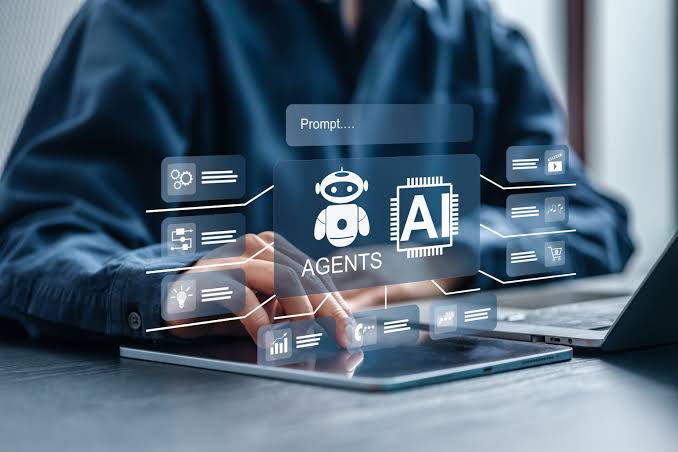
What Businesses Need to Know Before Deploying AI Agents in Real-World Operations
Artificial Intelligence (AI) is moving beyond systems that simply answer questions or generate content. Businesses are increasingly exploring AI agents that can interpret objectives, use software tools, retrieve information, execute tasks, and coordinate multiple steps within a business process.
An AI assistant might explain how to complete a purchase request. An AI agent could potentially retrieve the relevant purchasing policy, check the available supplier information, prepare a purchase request, and submit it for approval through an authorised business application.
This difference creates significant opportunities for operational efficiency. Instead of using AI only to produce information, organisations can integrate it into workflows that involve real business activities.
However, deploying AI agents in real-world operations requires more than connecting a large language model to a collection of tools. Businesses must consider reliability, security, access permissions, data quality, integration complexity, human oversight, and the consequences of incorrect actions.
An agent that produces an inaccurate summary may create a relatively minor problem. An agent that sends an incorrect customer communication, modifies an important business record, or initiates an unauthorised transaction can have much more serious consequences.
The central challenge is not simply making an AI agent perform a task. It is ensuring that the agent performs the right task, using authorised information and actions, within clearly defined operational boundaries.
This article explains how AI agents work, where businesses can use them, what organisations should evaluate before deployment, and how to introduce agentic AI safely and effectively into real-world operations.
What Are AI Agents?
AI agents are software systems that use AI models to interpret goals, determine appropriate next steps, interact with available tools, and carry out tasks within a defined environment.
Unlike a conventional automation workflow that executes a fixed sequence of predefined steps, an AI agent can use contextual information to select among permitted actions.
For example, a traditional workflow might send a reminder email whenever a support ticket remains unresolved for 48 hours.
An AI agent supporting the same process might review the ticket, summarise the customer's issue, retrieve relevant troubleshooting documentation, determine whether the next step is a routine follow-up or escalation, and prepare an appropriate action for execution.
The exact capabilities depend on the agent's design, available tools, permissions, and operating constraints.
A typical AI agent may include several components:
AI model: Interprets instructions, reasons about the task, and determines potential next steps.
Tools and integrations: Allow the agent to retrieve information or interact with business systems through approved APIs, functions, or other interfaces.
Context and memory: Provide relevant information about the current task, previous interactions, and the state of an ongoing process.
Planning and orchestration: Coordinate the steps required to achieve the objective.
Validation and control mechanisms: Check whether proposed actions are permitted and whether their results meet defined requirements.
Monitoring and audit mechanisms: Record relevant activities, identify failures, and support operational review.
Not every AI agent needs a complex planning system, long-term memory, or multiple specialised agents. Many useful implementations involve a single model connected to a small number of carefully controlled tools.
The appropriate design depends on the complexity and risk of the business process.
AI Assistants, AI Agents, and Traditional Automation: Understanding the Difference
Businesses should distinguish between conversational AI, agentic systems, and conventional workflow automation before selecting an implementation approach.
These technologies can work together, but they are not interchangeable.
A conversational assistant primarily responds to user requests. It may explain information, generate content, or recommend actions.
Traditional automation executes predefined rules. It is particularly useful when the process is predictable and the required actions can be specified in advance.
An AI agent can select among permitted actions based on the current situation and the information it receives.
Consider an employee requesting a summary of outstanding customer issues.
A conversational assistant could summarise information supplied by the employee. A traditional workflow could retrieve all open tickets and generate a standard report. An AI agent could retrieve the relevant tickets, classify their issues, identify recurring themes, prepare a summary, and create follow-up tasks when authorised.
The agent provides greater flexibility, but this flexibility also introduces additional uncertainty.
| Capability | Traditional Automation | AI Assistant | AI Agent |
|---|---|---|---|
| Execute predefined rules | Strong fit | Not its primary purpose | Can use rules through tools and workflows |
| Answer natural-language questions | Requires additional components | Strong fit | Can be included |
| Select actions based on context | Usually limited to predefined conditions | Usually focused on responses or recommendations | A core capability |
| Interact with business applications | Through configured integrations | Possible with additional integration | Can select and use authorised tools |
| Coordinate multi-step tasks | Through predefined workflows | May require external orchestration | Can support dynamic task execution |
| Predictability | Generally high when rules are stable | Depends on the model and application | Requires additional controls because actions may vary |
| Suitability for high-risk actions | Appropriate when controls are well defined | Usually better for assistance than independent execution | Requires strict permissions, validation, and oversight |
For many business processes, the best architecture combines all three.
The AI agent can interpret the request and select the next step, while conventional software validates the operation and the workflow engine manages approvals and execution.
This hybrid approach can provide flexibility without sacrificing essential operational controls.
Why Businesses Are Exploring AI Agents
Organisations often operate through processes that involve several systems, documents, decisions, and handovers.
Employees may need to retrieve information from one application, compare it with another source, prepare a communication, update a record, and notify the next person responsible for the task.
These activities create opportunities for agentic AI.
Automating Multi-Step Business Tasks
Traditional automation works well for stable, predictable processes. However, some tasks require interpretation before the next action can be selected.
For example, processing a customer complaint may involve understanding the complaint, retrieving the relevant order information, checking the applicable service policy, and determining whether the request should be escalated.
An AI agent can help coordinate these steps by interpreting the request and selecting among authorised tools.
The application should still use explicit business rules for actions such as issuing refunds, changing account permissions, or approving financial transactions.
Connecting Information Across Business Systems
Important business information is often distributed across CRM platforms, ticketing systems, ERP applications, databases, document repositories, and communication tools.
AI agents can help retrieve and combine relevant information from these sources.
For example, a sales operations agent might retrieve an authorised customer profile, summarise recent interactions, identify outstanding support issues, and prepare a briefing for a sales representative.
This can reduce the time employees spend collecting information manually.
The agent must respect access permissions and distinguish between current system records and information from older documents or conversations.
Supporting Employees with Research and Analysis
AI agents can assist with research-intensive activities such as preparing account summaries, reviewing supplier information, analysing support trends, or gathering relevant material for internal reports.
They can retrieve information, organise findings, identify potential gaps, and prepare a structured output.
For example, a procurement employee might ask an agent to prepare a comparison of supplier quotations.
The agent could extract the quoted prices, delivery conditions, and payment terms, then organise the information into a comparison for review.
The procurement team would still need to confirm that the quotations are comparable and that the information is accurate before making a sourcing decision.
Improving Operational Responsiveness
AI agents can monitor defined events and help initiate appropriate actions.
For example, an operations agent could review a queue of unresolved support requests, identify cases approaching a response deadline, and prepare escalation recommendations.
A more integrated implementation might create tasks or send notifications through approved systems.
The system should operate within explicit boundaries, including which events it can monitor, what actions it can take, and when a human must become involved.
Real-World Business Use Cases for AI Agents
The most promising use cases are often those involving repeated information gathering, interpretation, and coordination across business systems.
However, suitability depends on the process, available data, integration requirements, and consequences of incorrect actions.
1. Customer Support and Service Operations
Customer support agents handle enquiries, retrieve documentation, classify issues, and coordinate resolutions.
An AI agent can help interpret incoming messages, retrieve relevant knowledge-base content, inspect authorised ticket information, and recommend the next action.
For example, when a customer reports a technical problem, the agent could retrieve the relevant troubleshooting procedure and prepare a suggested response.
If the issue remains unresolved, it could create a support ticket containing the conversation summary and the steps already attempted.
More advanced agents may be permitted to perform selected low-risk actions, such as updating a ticket category or assigning a request to an appropriate queue.
Account changes, refunds, complaints involving legal concerns, and other sensitive matters should follow established approval and escalation procedures.
2. Sales and Business Development
Sales teams spend considerable time researching prospects, reviewing customer interactions, preparing proposals, and managing follow-ups.
An AI agent could retrieve information from approved sources, summarise a prospect's stated requirements, prepare a meeting briefing, and draft a follow-up email.
For example, after a discovery meeting, an agent might organise the customer's requirements, identify unresolved questions, and create proposed follow-up tasks in the CRM.
A sales representative can review the results before sending communications or making commitments.
The agent should not invent customer information, make unsupported claims about a prospect, or commit the business to pricing and delivery terms without appropriate authorisation.
3. Finance and Accounts Payable
Finance operations involve document processing, reconciliation, exception handling, and approval coordination.
An AI agent could help review incoming invoices, extract relevant information, retrieve purchase order records, and identify discrepancies for investigation.
It might also prepare an exception report for the finance team.
However, invoice processing must maintain strict financial controls.
An agent should not independently approve payments simply because it believes an invoice is legitimate. Supplier verification, duplicate detection, approval limits, segregation of duties, and payment authorisation should remain enforced through controlled business logic.
A practical initial use case is an agent that prepares a review package rather than one that directly executes payments.
4. Procurement and Supplier Management
Procurement agents can assist with supplier research, quotation comparison, document review, and purchase request preparation.
For example, an agent could extract information from several quotations and organise the results according to price, delivery lead time, warranty terms, and payment conditions.
It could identify missing information and prepare questions for the suppliers.
Procurement employees would then verify the findings and make the final sourcing decision.
Supplier selection should account for more than the lowest quoted price. Quality, contractual terms, delivery reliability, compliance requirements, and the suitability of the offered products may all be relevant.
5. IT Operations and Technical Support
IT teams manage incidents, access requests, system alerts, troubleshooting procedures, and routine maintenance.
An AI agent can retrieve technical documentation, summarise incident reports, classify incoming tickets, and recommend diagnostic steps.
For example, an agent investigating a reported application error could retrieve the relevant logs, identify related incidents, and prepare a troubleshooting summary for an engineer.
Depending on the environment, it might be allowed to perform low-risk diagnostic operations.
Changes to production systems, security configurations, access permissions, or critical infrastructure require stronger controls. In these cases, the agent should operate within a restricted environment and require human approval for consequential changes.
6. Human Resources and Employee Services
HR agents can help employees locate policies, understand onboarding procedures, and navigate standard administrative processes.
An employee might ask how to request leave or which documents are needed for onboarding.
The agent could retrieve the approved policy, explain the procedure, and direct the employee to the appropriate application.
With suitable integrations, it might prepare a leave request or initiate an onboarding task.
However, employment decisions, disciplinary actions, and other consequential HR matters require careful governance. An agent should not make such decisions independently without a clearly justified, legally appropriate, and properly governed framework.
7. Research and Business Intelligence
Businesses often need to collect information from several sources before making a decision.
An AI agent can retrieve approved documents, gather relevant records, summarise findings, and prepare a structured analysis.
For example, a management team might request a summary of customer complaints over the previous quarter.
The agent could retrieve authorised support records, group the issues into categories, identify recurring themes, and prepare a preliminary report.
Quantitative results should be calculated using reliable analytical tools or database queries rather than relying solely on an LLM to count records or perform complex calculations from text.
The final report should distinguish between verified data, model-generated interpretation, and recommendations requiring further investigation.
What Businesses Must Evaluate Before Deployment
Although AI agents offer significant opportunities, deploying them without a clear operational framework can introduce unnecessary risk.
Before implementation, organisations should assess several critical areas.
1. Process Suitability
Not every process benefits from agentic AI.
A workflow consisting of fixed steps and clear conditions may be easier to automate with conventional software.
An AI agent becomes more useful when the task requires interpreting variable inputs, selecting among permitted actions, or coordinating multiple information sources.
Businesses should identify the part of the process that genuinely requires AI reasoning.
For example, an agent may be useful for interpreting customer complaints, while the subsequent ticket creation and assignment process can be handled by a conventional workflow.
This division can improve reliability and reduce operating costs.
2. Data Availability and Quality
AI agents depend on the information they receive from documents, databases, APIs, and other connected systems.
If the source data is incomplete, outdated, or inconsistent, the agent may produce incorrect conclusions or take inappropriate actions.
Before deployment, identify the authoritative sources for important information.
Determine how frequently the data changes, who is responsible for maintaining it, and how conflicts between sources should be resolved.
For example, current order status should come from the order management system rather than from an old email or a previously generated summary.
Data quality should be evaluated as part of the implementation rather than treated as a problem the agent will solve automatically.
3. Integration Requirements
An AI agent is only as useful as the tools and information available to it.
Business applications may expose APIs, database interfaces, workflow connectors, or user-interface-based operations.
The implementation team should evaluate which integration methods are supported, what permissions they require, and how failures will be handled.
For each integration, define the available operations, required inputs, expected outputs, error conditions, and access restrictions.
An agent should not be given unrestricted access to an entire business application when it only needs to retrieve selected records or perform a narrow set of actions.
4. Reliability and Accuracy
Language models can misinterpret requests, select inappropriate tools, or generate unsupported conclusions.
These risks become more significant when an agent can act on its conclusions.
Businesses should evaluate the complete task, including the agent's interpretation, tool selection, data retrieval, decision-making, and final action.
Testing should include routine requests, ambiguous instructions, incomplete information, unusual scenarios, and cases where the correct response is to stop or request clarification.
The system should be designed to fail safely rather than continue when essential information is missing.
5. Security and Permissions
An agent that can access business applications may also create new pathways for unauthorised information access or actions.
Businesses must define which users the agent acts on behalf of, which records it can access, and which operations it can perform.
Access should follow the principle of least privilege.
Sensitive actions should require additional validation, and the system should maintain an audit trail of relevant tool calls and outcomes.
Permissions should be enforced by the application and connected systems, not left to the language model's judgement.
6. Human Oversight
Human involvement should be determined by the risk and reversibility of the action.
A low-risk task, such as preparing a draft internal summary, may not require approval before the draft is generated.
Sending a sensitive external communication, modifying an important record, or initiating a financial transaction may require confirmation or formal approval.
Businesses should define when an agent can proceed, when it must pause, and when it must transfer the task to a human employee.
Human oversight should be designed into the workflow rather than added after problems occur.
7. Cost and Operational Performance
Agentic systems may require multiple model calls, retrieval operations, API requests, and validation steps to complete a task.
This can make operating costs higher than those of a simple chatbot or fixed automation workflow.
Performance should be evaluated using the cost and time required to complete the business task, not only the cost of an individual model call.
Relevant measures include task completion rate, model usage, integration overhead, latency, exception handling, and human review time.
A solution that appears inexpensive at the model level may still be costly if it requires frequent corrections or repeated attempts.
How to Design Safe Permissions for AI Agents
Permission design is one of the most important aspects of deploying AI agents in real-world operations.
The system should have only the capabilities required to perform its assigned tasks.
A useful starting point is to classify agent actions according to their potential consequences.
Read-Only Actions
Read-only actions retrieve information without changing business records.
Examples include retrieving product documentation, reading an authorised support ticket, or querying a permitted database view.
These actions are often suitable for early implementations, provided that the information access is appropriately restricted.
Read-only access is not automatically risk-free. An agent can still expose confidential information through an answer if access controls are not enforced.
Drafting and Preparation Actions
These actions create proposed outputs without immediately committing changes.
Examples include drafting an email, preparing a purchase request, generating a report, or suggesting a ticket update.
Drafting capabilities allow businesses to benefit from AI while retaining human review.
They are particularly useful during early deployment because employees can assess the quality of the agent's work before broader permissions are granted.
Reversible Actions
Some actions change a business system but can be reversed with manageable effort.
Examples may include assigning a ticket to a different queue or updating a non-critical internal status.
Even reversible actions should be validated, logged, and restricted to authorised operations.
The business should determine which actions can be executed automatically and which require confirmation.
High-Impact or Irreversible Actions
Some actions have significant financial, legal, operational, or security consequences.
Examples include issuing payments, approving high-value purchases, deleting important records, changing security permissions, or making binding contractual commitments.
These actions require stronger safeguards.
Depending on the business process, the agent may prepare the required information, but the final action should remain subject to explicit approval, deterministic validation, or another suitable control.
The key principle is that the level of autonomy should increase only when the task has been tested, the risks are understood, and the necessary controls are in place.
A Practical Example: Deploying an AI Procurement Agent
Consider a medium-sized manufacturing business that receives supplier quotations by email.
The procurement team manually reviews each quotation, extracts prices and delivery terms, compares the information with internal requirements, and prepares a recommendation for management.
The business wants to reduce administrative work while maintaining control over purchasing decisions.
Step 1: Receive and Interpret Quotations
The agent retrieves incoming quotations from an authorised mailbox or document repository.
It extracts relevant information, including supplier details, quoted products, quantities, prices, currencies, delivery dates, and payment terms.
The system should identify missing or ambiguous information rather than silently filling in gaps.
Step 2: Retrieve Internal Requirements
The agent accesses approved purchase requests and product specifications through controlled integrations.
It checks which products, quantities, and delivery requirements are relevant to the quotation.
The system should use authoritative records and preserve the source of each important field.
Step 3: Compare the Information
The agent organises the quotations into a structured comparison.
It can highlight price differences, variations in delivery conditions, missing specifications, and terms requiring further review.
Numerical comparisons should use reliable application logic, while the language model can help explain the findings.
Step 4: Identify Exceptions
The system flags cases such as missing quotations, mismatched product specifications, unusually high prices, or incomplete supplier documentation.
These exceptions are routed to the procurement team.
The agent should not assume that the lowest price represents the best supplier or that a quotation satisfies all procurement requirements.
Step 5: Prepare a Recommendation
The agent prepares a summary showing the available options, key differences, unresolved questions, and relevant supporting documents.
A procurement employee reviews the recommendation and determines the next step.
Step 6: Initiate the Approved Workflow
After the necessary review, the system may prepare a purchase request or create a draft record in the procurement application.
The workflow enforces the organisation's approval limits and ensures that the authorised approver makes the required decision.
The agent does not independently commit the organisation to a purchase simply because it has completed the comparison.
Step 7: Measure Performance
The business compares the new process with its original workflow.
Relevant metrics include the time required to process quotations, extraction accuracy, the frequency of corrections, the number of missing details identified, and employee time spent reviewing recommendations.
The company can use these results to determine whether the agent should be expanded to additional procurement tasks.
This example demonstrates how an AI agent can perform meaningful work while keeping important business decisions under appropriate control.
Single-Agent vs Multi-Agent Systems
As organisations explore more advanced AI applications, they may consider using several specialised agents instead of one agent handling the entire task.
A single-agent architecture uses one primary agent to coordinate available tools and perform a defined objective.
A multi-agent architecture divides the work between multiple agents that may have different responsibilities.
For example, a procurement application could use one agent to extract quotation details, another to analyse supplier information, and a coordinating agent to prepare the final summary.
This approach may help separate responsibilities in complex applications.
However, multi-agent systems also introduce additional communication, orchestration, testing, and monitoring requirements.
Multiple agents can repeat work, produce conflicting conclusions, or pass incorrect information between stages.
The use of several agents does not automatically make a system more intelligent or reliable.
For many business applications, a single agent connected to well-designed tools and deterministic workflows is sufficient.
Multi-agent architectures should be considered when the task has clearly separable responsibilities and testing demonstrates a meaningful benefit over a simpler design.
How to Evaluate an AI Agent Before Production Deployment
A successful demonstration does not establish that an AI agent is ready for real-world operations.
Production evaluation should assess both the quality of the agent's reasoning and the reliability of its actions.
Task Completion Rate
Measure the percentage of representative tasks completed correctly from beginning to end.
A task should not count as successful merely because the agent produced a plausible final message. The underlying business outcome must be verified.
For example, if the agent is expected to create a support ticket, success means the ticket was correctly created in the support system with the required information.
Tool Selection Accuracy
Evaluate whether the agent chooses the correct tool for the task.
If a customer asks about a specific order, the agent should retrieve the order information through the appropriate authorised integration rather than attempting to infer the answer from a general policy document.
Incorrect tool selection can undermine the reliability of the entire workflow.
Data and Output Accuracy
Check whether information retrieved from business systems is represented correctly in the final output.
For tasks involving financial values, dates, identifiers, or quantities, compare the generated results with the authoritative records.
Use deterministic validation wherever practical.
Permission Compliance
Test whether the agent respects its defined permissions.
Include attempts to retrieve unauthorised records, execute prohibited actions, or bypass required approval stages.
The expected result should be enforced by the system architecture, not merely requested in the agent's instructions.
Exception Handling
Evaluate how the agent behaves when information is missing, an API fails, a tool returns an unexpected result, or a request is ambiguous.
A reliable agent should pause, retry only when appropriate, request clarification, or escalate the task according to predefined rules.
Latency and Cost
Measure the time and resources required to complete a task under realistic conditions.
Include retries, validation, integration calls, and human review in the assessment.
This provides a more accurate picture of operational performance than measuring model response time alone.
Human Review and Correction Rate
Track how often employees need to correct the agent's output or reverse its actions.
Frequent corrections may indicate problems with the model, tool design, source data, or process definition.
These results should guide improvements before the agent receives broader permissions.
Common Mistakes When Deploying AI Agents
Businesses can reduce implementation risk by avoiding several common mistakes.
Giving Agents Too Much Autonomy Too Early
An agent that performs well in a controlled test may still encounter unexpected situations in production.
Begin with read-only access or draft-generation capabilities where practical.
Introduce more consequential actions gradually, after the relevant tests and controls have been completed.
Connecting Too Many Tools at Once
Providing an agent with a large collection of tools can make it more difficult to predict which actions it will select.
Start with a small set of clearly defined tools.
Each tool should have a specific purpose, validated inputs, predictable outputs, and appropriate permissions.
Expand the tool set only when additional capabilities are required.
Treating Model Reasoning as a Substitute for Business Rules
Language models can interpret context, but they should not replace deterministic validation where explicit rules are required.
For example, an AI agent may identify a purchase request as urgent, but conventional business logic should still enforce the required approval threshold.
Separate interpretation from authorisation.
Ignoring Failure Recovery
Agents can encounter network errors, incomplete records, API failures, and unexpected application responses.
The system should define how to recover from these situations.
For example, it should avoid creating duplicate support tickets when a network timeout occurs after the original ticket may already have been created.
Use appropriate retries, operation identifiers, state tracking, and verification of outcomes.
Deploying Without Auditability
Businesses need to understand what the agent attempted, which information it used, which tools it called, and whether the action succeeded.
Maintain appropriate logs and records while protecting sensitive information.
This helps investigate incidents and identify opportunities for improvement.
Failing to Establish Operational Ownership
An AI agent needs an owner responsible for its performance, permissions, integrations, and ongoing maintenance.
Without clear ownership, outdated instructions, broken integrations, and changing business requirements can undermine the system over time.
A Practical Roadmap for Introducing AI Agents
Organisations can reduce risk by introducing agentic AI through a series of controlled stages.
Phase 1: Identify the business problem. Select a process involving repeated information gathering, interpretation, and coordination. Establish the baseline performance and expected benefits.
Phase 2: Assess feasibility. Review available data, system integrations, process rules, security requirements, and the consequences of incorrect actions.
Phase 3: Design the agent's boundaries. Define its objective, available tools, permissions, prohibited actions, escalation conditions, and required approval stages.
Phase 4: Build a limited prototype. Connect the agent to a small number of approved tools and test it against representative tasks.
Phase 5: Evaluate the complete workflow. Test task completion, tool selection, data accuracy, permission compliance, exception handling, latency, and cost.
Phase 6: Introduce a controlled pilot. Allow a limited group of employees to use the system while monitoring its outputs and reviewing failures.
Phase 7: Expand permissions carefully. Introduce additional actions only after the system has demonstrated reliable performance and the required controls have been validated.
Phase 8: Establish continuous monitoring. Assign ownership for incident handling, access reviews, integration maintenance, performance evaluation, and updates to the agent's tools and instructions.
This approach enables organisations to build operational experience without exposing the business to unnecessary risks at the beginning of the project.
How Bluechip Technologies Asia Can Help Businesses Develop AI Agents
Bluechip Technologies Asia is a Sri Lankan software development and technology outsourcing company providing custom software development, AI and machine learning, cloud technologies, data engineering, and dedicated development teams.
For organisations exploring agentic AI, the development challenge is to connect AI capabilities with real business processes while maintaining appropriate controls over data, decisions, and actions.
Depending on the requirements, an AI agent project may involve LLM integration, API development, workflow orchestration, retrieval-augmented generation, business application integration, data processing, and custom backend development.
For example, a business may want an agent that assists with procurement research, prepares customer account summaries, retrieves internal knowledge, coordinates support workflows, or helps employees analyse operational information.
The appropriate implementation depends on the complexity of the process, the systems involved, and the level of autonomy that can be justified.
Some applications may require only an AI model connected to a small set of approved tools. Others may need a more comprehensive architecture with workflow engines, validation services, monitoring, and formal approval mechanisms.
Bluechip Technologies Asia can support organisations exploring custom AI applications and software integrations through its AI-related services and technology development capabilities.
A successful implementation should begin with a clearly defined operational problem and prioritise reliability, security, maintainability, and measurable business value.
Learn more about Bluechip Technologies Asia and its technology development services.
Final Thoughts
AI agents create new opportunities for businesses to automate complex tasks, coordinate activities across applications, and help employees work more efficiently.
However, their ability to take action makes careful implementation essential.
Businesses must determine whether a process genuinely benefits from agentic AI, ensure that the required information is reliable, restrict the available tools, and establish appropriate validation and approval mechanisms.
The most effective deployments usually begin with a narrow, measurable use case rather than an attempt to build a fully autonomous system for an entire department.
Organisations should test the complete workflow, measure operational outcomes, and expand the agent's capabilities only when its performance and controls justify doing so.
AI agents should complement existing business systems and human expertise, not operate outside the organisation's established responsibilities and safeguards.
Ultimately, the value of an AI agent is determined not by how many actions it can perform, but by how reliably it helps the business achieve its objectives.
#AIAgents #AgenticAI #ArtificialIntelligence #GenerativeAI #BusinessAutomation #IntelligentAutomation #AIForBusiness #EnterpriseAI #WorkflowAutomation #DigitalTransformation #SoftwareDevelopment #AIEngineering #TechnologyOutsourcing #BluechipTechnologiesAsia
Log in with a verified account to post comments.
Log in · Register
Comments