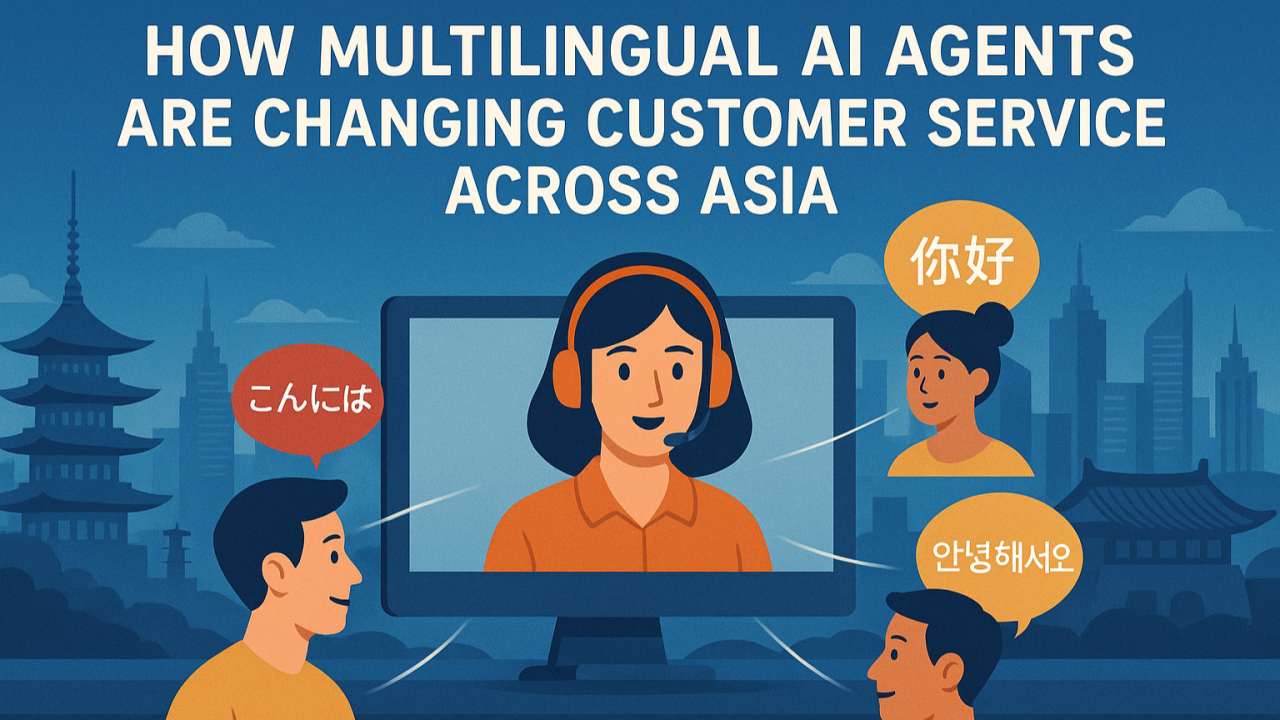
One Continent, Thousands of Languages, One Opportunity
Asia is home to some of the most linguistically diverse populations in the world. For businesses operating across countries like India, Sri Lanka, the Philippines, Vietnam, and Indonesia, this diversity creates a significant customer service challenge. Hiring native speakers in every local dialect isn’t scalable but ignoring those languages means losing customer trust and accessibility. Enter multilingual AI agents: a transformative solution that’s reshaping customer support across the continent.
Article content Language Inclusivity is Not a Luxury It’s a Necessity In markets like South Asia, many users are more comfortable speaking in their native tongue than in English. From rural populations to senior citizens, language barriers often lead to support avoidance, poor customer experiences, or incorrect issue resolutions. Multilingual AI agents bridge this gap by engaging users in their preferred language, improving clarity, trust, and effectiveness.
How the Technology Works: ASR + NLU + TTS Multilingual AI agents are more than chatbots. They use Automatic Speech Recognition (ASR) to transcribe speech in real time, Natural Language Understanding (NLU) to interpret the meaning and intent, and Text-to-Speech (TTS) to generate responses in a natural, conversational tone. These systems are trained not just on language, but on pronunciation variances, slang, and cultural nuances creating human-like, regionally relevant experiences.
Scaling Support Across Borders Without Adding Headcount For fast-growing businesses, these agents unlock something powerful: scalable multilingual support without exponentially increasing costs. A single AI agent can handle thousands of calls daily, work 24/7, and switch between languages as needed. Whether it’s a telecom company offering plans in Sinhala and Tamil or an e-commerce brand supporting customers in Bahasa and English, multilingual AI adapts without breaking the budget.
Personalization That Reflects Cultural Intelligence Language is deeply tied to culture. Great support isn’t just about understanding the words it’s about understanding the context. Leading AI agents now factor in regional etiquette, emotional tone, and even time-of-day preferences. This allows businesses to go beyond translation and deliver truly personalized, culturally aware service experiences.
Conclusion: Language Should Never Be a Barrier to Service
In a region as diverse as Asia, technology must meet people where they are. Multilingual AI agents are no longer futuristic they are essential. For organizations ready to compete on experience, not just cost, they represent a massive opportunity to connect, support, and grow.
Log in with a verified account to post comments.
Log in · Register
Comments