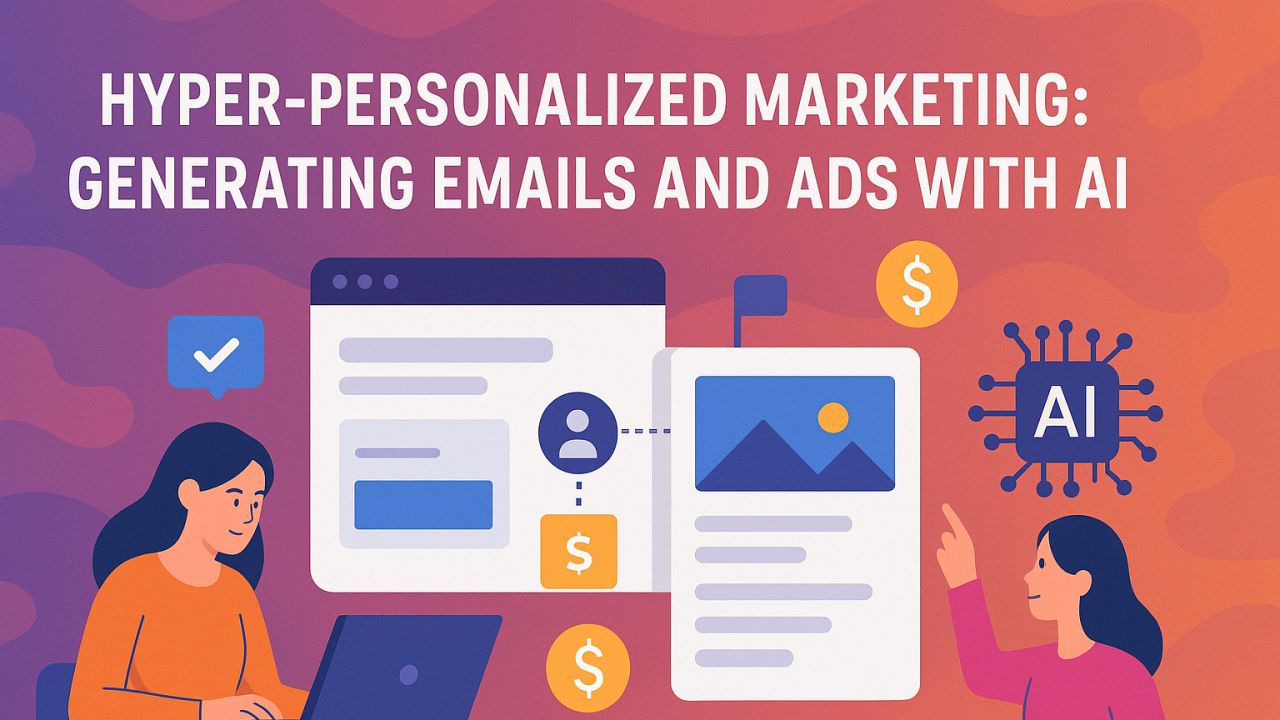
In today’s crowded digital marketplace, consumers are bombarded with countless marketing messages every day. Generic, one-size-fits-all campaigns struggle to capture attention or inspire action because customers now expect brands to recognize their unique preferences and interests. To stand out, businesses must deliver highly relevant and personalized content that feels crafted specifically for everyone.
This growing demand has driven the rise of hyper-personalized marketing powered by AI technologies. By analyzing vast amounts of customer data and behavior, AI can generate tailored emails and advertisements that truly resonate with each recipient. This precise targeting not only increases engagement but also improves conversion rates, creating more meaningful connections between brands and their audiences.
Article content How AI Powers Hyper-Personalization AI leverages vast amounts of customer data such as browsing history, purchase patterns, demographic information, and even real-time behavior to craft messages uniquely suited to each recipient. Machine learning algorithms analyze this data to identify trends, predict preferences, and generate personalized content that feels handcrafted rather than mass-produced.
For example, AI can automatically generate email subject lines designed to capture attention based on a customer’s past interactions or create dynamic ad creatives that adjust messaging, images, and offers depending on the viewer’s profile. This approach not only enhances relevance but also significantly improves open rates, click-throughs, and overall campaign ROI.
Benefits of AI-Driven Hyper-Personalized Marketing · Increased Engagement: Personalized emails and ads grab customers’ attention more effectively by speaking directly to their interests and needs. This relevance encourages recipients to open messages and interact with the content. Higher engagement rates help marketers achieve better campaign results.
· Higher Conversion Rates: Tailored marketing content removes barriers in the buying process by addressing specific customer preferences and concerns. When customers see offers that truly match their needs, they are more likely to take action quickly. This leads to improved sales and revenue.
· Efficiency at Scale: AI automates the creation of personalized content for thousands or even millions of customers simultaneously. This eliminates the need for manual customization while maintaining high relevance. Businesses can deliver unique messages to large audiences without extra effort.
· Data-Driven Insights: AI analyzes customer interactions to reveal patterns, preferences, and behaviors that humans might miss. These insights empower marketers to refine strategies and target audiences more accurately. Continuous learning from data improves campaign effectiveness over time.
· Improved Customer Loyalty: Consistently relevant and timely marketing communications foster stronger emotional connections with customers. Feeling understood and valued encourages repeat business and long-term brand loyalty. Personalized marketing helps transform one-time buyers into devoted advocates.
Enhancing Customer Experience Through Real-Time Personalization · AI analyzes live customer behavior: AI systems track customers’ recent browsing and purchase activities in real time. By understanding what a customer is currently interested in, marketing messages can be adapted instantly. This ensures communication is timely and highly relevant to individual needs.
· Real-time personalization increases relevance: Marketing emails and ads are dynamically tailored to reflect the customer’s present context and preferences. This immediate customization helps messages resonate better with recipients. As a result, customers feel more understood and engaged.
· Dynamic content keeps customers engaged: Updated product recommendations and limited time offers can be inserted into marketing materials on the fly. These personalized, time-sensitive messages encourage customers to act quickly. This strategy boosts interaction rates and drives sales.
· Continuous adaptation enhances the customer journey: By constantly adjusting marketing content based on live data, brands create a more satisfying experience for customers. This ongoing personalization makes interactions feel natural and responsive. It helps build stronger connections throughout the buying process.
· Brands stand out with responsive experiences: Companies using real-time personalization differentiate themselves by offering tailored, immediate interactions. Customers appreciate the responsiveness and relevance, which fosters loyalty. This approach gives brands a competitive edge in crowded markets.
Overcoming Privacy Challenges in Personalized Marketing · Responsible and transparent data handling: With stricter data privacy regulations, businesses must be vigilant in managing customer information ethically and openly. Transparency about how data is collected and used helps build customer confidence. Responsible practices reduce legal risks and enhance brand reputation.
· Privacy-by-design in AI personalization: AI-driven marketing must embed privacy considerations from the start, aligning with regulations like GDPR and CCPA. This approach ensures customer data is protected throughout its lifecycle. Incorporating privacy-by-design helps companies avoid violations and fosters trust.
· Customer control over data: Providing customers with clear options to opt out and manage their data empowers them and respects their choices. Easy-to-understand consent mechanisms make customers feel secure. This control builds loyalty by showing that the brand values privacy.
· Ethical data use and respect: Avoiding overly invasive targeting practices ensures that personalization respects user boundaries and preferences. Ethical marketing balances relevance with privacy, creating a positive customer experience. Respectful data use helps maintain long-term relationships.
· Transparency as a competitive advantage: Being upfront about data practices differentiates brands in a private-conscious market. Clear communication reassures customers, encouraging them to engage more freely. Transparency can build deeper trust and give businesses an edge over less open competitors.
Article content Measuring Success: Key Metrics for AI-Driven Personalization · Open rates: Open rates measure how effectively personalized subject lines and email timing grab the recipient’s attention. A high open rate indicates that the message appeals to the customer right from the inbox. It’s a key indicator of initial campaign engagement.
· Click-through rates: Click-through rates show how well the tailored content motivates recipients to interact by clicking links or calls to action. This metric reveals the relevance and persuasiveness of the email or ad content. Higher click-through rates often lead to better conversion outcomes.
· Conversion rates: Conversion rates track how many recipients complete desired actions such as making purchases or signing up for services. This metric measures the real impact of personalization on driving business goals. Effective campaigns turn engagement into tangible results.
· Customer lifetime value: Customer lifetime value (CLV) assesses the long-term revenue generated from repeat customers influenced by personalized marketing. It reflects loyalty and ongoing satisfaction with brand experience. Increasing CLV indicates successful relationship building.
· AI analytics for optimization: AI-powered analytics tools monitor these key performance indicators continuously, identifying patterns and areas for improvement. They enable marketers to refine personalization strategies in real time. This leads to progressively better campaign performance over time.
Real-World Use Cases · Retail: AI analyzes customers’ browsing and purchase history to send personalized product recommendations and exclusive discount offers via email. This targeted approach encourages shoppers to explore items they are more likely to buy. It helps retailers increase sales while enhancing the shopping experience.
· Travel: Travel companies use AI to generate customized offers and destination suggestions tailored to individual traveler preferences and past trips. These personalized promotions inspire customers to book vacations that truly match their interests. It creates a more engaging and relevant marketing experience.
· Finance: Financial institutions deliver targeted advice, and service offers based on customer profiles, such as age, income, and financial goals. AI helps craft personalized messages about loans, investments, or insurance suited to each individual’s life stage. This builds trust and encourages clients to explore relevant products.
· Entertainment: Streaming platforms and entertainment brands use AI to curate content recommendations and promotional offers aligned with users’ viewing habits. This ensures users discover shows or movies they’re most likely to enjoy. Personalized suggestions increase engagement and subscriber retention.
· E-commerce: AI powers automated cart abandonment emails that include customized incentives like discounts or free shipping to encourage customers to complete their purchases. By addressing individual reasons for abandonment, these messages help recover lost sales. This approach improves conversion rates and boosts revenue.
Looking Ahead As AI advances, hyper-personalized marketing will become even more powerful and precise. Technologies like generative AI and predictive analytics will help brands craft real-time, emotionally engaging messages tailored to individual customers. This evolution allows businesses to connect on a deeper level, enhancing customer experience and loyalty. Companies that adopt AI-driven personalization will gain a competitive edge by consistently delivering the right message to the right person at exactly the right moment.